The arithmetic of the Second World War is often reduced to a ledger of the dead, a staggering column of figures that numbs the mind to the individual fates it represents. Sixty million, seventy million, eighty-five million—the numbers vary depending on the source, but the scale of the catastrophe remains a fixed, horrifying star in the constellation of modern history. Yet, for all the ink spilled on the battlefields, the political machinations, and the ideological fervor that drove the conflict, a more unsettling question lurks at the heart of the Nazi phenomenon.
It is a question that challenges the very taxonomy of tyranny, forcing historians to confront a paradox that defies the conventional understanding of dictatorial power. The question is not simply how Adolf Hitler came to power, but why his exercise of that power, his entire modus operandi, ran so counter to the established playbook of every other despot of the 20th century.
 The standard model of the dictator is a well-worn path, trodden by figures as diverse as Joseph Stalin, Mao Zedong, and Fidel Castro. It is a narrative of violent seizure, ruthless consolidation, and a desperate, all-consuming drive for self-preservation. The dictator claws his way to the top, purges his rivals, cultivates a personality cult, and, crucially, plans for his own survival and the continuation of his regime.
He builds a dynasty, or at least a system designed to outlast him. He amasses personal wealth, often in foreign accounts, and he always, always has an exit strategy for the day the walls come tumbling down. Hitler, as a growing body of historical analysis suggests, was the inversion of this entire paradigm.
He was not the apotheosis of the dictator; he was its antithesis. He was handed power through constitutional means, he never purged his inner circle, he built no dynasty, and he actively ordered the destruction of his own nation before taking his own life in a Berlin bunker. This single, profound inversion—the prioritization of an apocalyptic racial mission over the basic instinct for regime survival—is the master key that unlocks the most confounding aspects of the Third Reich, and it is a key that many have been reluctant to turn.
The circumstances of Hitler’s ascension to power in January 1933 are so well-documented that they risk becoming a mere footnote, a piece of historical trivia. Yet, the sheer anomaly of it bears repeating. He did not storm the gates of Berlin at the head of a paramilitary army, as Mussolini had done in Rome a decade earlier.
He did not fight a protracted civil war across a continent, as Mao would do. He was not installed by a foreign power, as was the case with Kim Il Sung. Instead, on the 30th of January, 1933, the aging President Paul von Hindenburg, the very embodiment of the German establishment, appointed him Chancellor.
The appointment was the result of a backroom deal brokered by the former Chancellor Franz von Papen, a conservative aristocrat who believed, with a fatal arrogance, that he could control the upstart corporal from the provinces. The mechanism was entirely legal, entirely constitutional. The Weimar Republic, for all its flaws, did not collapse in a coup; it was methodically dismantled from within by a man who had been invited to its highest office.
The subsequent consolidation of power followed a similarly legalistic, if coercive, path. The Reichstag fire in February 1933 provided a convenient pretext for the suspension of civil liberties, but it was the Enabling Act, passed by the Reichstag itself in March 1933, that formally sealed the fate of German democracy. By a vote of 441 to 94, the elected representatives of the German people voted to dissolve their own authority, handing Hitler the power to make laws without parliamentary consent.
This was not a seizure of power; it was a surrender. The very institution designed to contain the Chancellor voluntarily signed away its own raison d’être. No other 20th-century dictator was simply given the keys to the kingdom by the very body meant to stop him.
This legalistic veneer was not a mere formality; it was a foundational element of Hitler’s strategy, allowing him to maintain a semblance of order while systematically dismantling the state’s democratic structures.
Once in power, the conventional wisdom dictates that Hitler must have engaged in a bloody purge of his own ranks, eliminating any potential rivals to cement his absolute authority. This, too, is a myth that does not withstand historical scrutiny. The inner circle that surrounded Hitler in 1933 was, in its most critical components, the same inner circle that was with him in the Führerbunker in 1945.
Hermann Göring, the flamboyant air force chief, had been at his side since the early days of the party. Joseph Goebbels, the master of propaganda, joined in 1926. Heinrich Himmler, the head of the SS, had been a loyal follower since 1923.
 Martin Bormann, Albert Speer, Joachim von Ribbentrop, Alfred Rosenberg—the same faces, the same names, the same men, twelve years later. This is a stark contrast to the paranoid bloodletting that characterized Stalin’s regime, where the Great Terror of 1937-38 saw the execution of an estimated 750,000 people, including the near-total annihilation of the original Bolshevik leadership. Stalin gutted his own military, the Red Army, on the eve of the most destructive war in human history, eliminating three of five marshals, thirteen of fifteen army commanders, and eight of nine admirals.
He was more afraid of his own generals than he was of Hitler.
The two exceptions to Hitler’s stable inner circle prove the rule. Ernst Röhm, the chief of the SA (Stormtroopers), was executed in the Night of the Long Knives in 1934. This was a one-off strike against a rival paramilitary faction, a move to appease the traditional army leadership and consolidate his own power.
It was a targeted assassination, not a systemic purge. The other exception, Rudolf Hess, the Deputy Führer, did not fall victim to a purge; he flew himself to Scotland in 1941 on a bizarre, unauthorized peace mission, effectively removing himself from the equation. Hitler’s lack of paranoia regarding his own staff was not born of loyalty or sentimentality.
It was a reflection of a deeper truth: he never saw his team as a threat because the team was never the point. The point was the mission, and the mission was Hitler himself. He was the embodiment of the ideology, and his subordinates were merely instruments, interchangeable in function but not in loyalty.
This inversion of the dictatorial norm becomes even more pronounced when examining Hitler’s conduct of the war. From 1938 onward, and especially after December 1941 when he sacked Field Marshal Walther von Brauchitsch and personally assumed command of the army, Hitler ran the war with a level of micromanagement that was unprecedented among the major leaders of the conflict. He involved himself in decisions down to the level of individual divisions, moving pins on maps in his headquarters at the Wolf’s Lair.
He trusted his own military judgment above that of his professionally trained generals, a judgment that was fundamentally flawed. General Hasso von Manteuffel later noted that Hitler could track the actions of a single division, but the larger picture—how entire armies functioned together—was beyond his comprehension. The historian Geoffrey Megargee argued that Hitler had effectively won a war against his own general staff at the cost of strategy itself, prioritizing tactical whims and ideological dogma over professional military advice.
The Battle of Stalingrad stands as a monument to this catastrophic hubris. In late 1942, the German Sixth Army, a force of over 300,000 men, was encircled on the Volga River. Every senior officer on the Eastern Front understood that the only chance to save the army was a breakout.
Hitler refused. He ordered General Friedrich Paulus to hold the position, promising an airlift that was physically impossible to sustain. On February 2, 1943, 91,000 starving, frostbitten men surrendered to the Red Army.
Fewer than 6,000 of them ever returned to Germany. A dictator who refuses to allow his best general to save his best army is behaving against his own strategic interest. This is a paradox that can only be explained by a fundamental re-evaluation of what Hitler’s interests actually were.
 His interest was not in preserving the German army as a fighting force; it was in the pursuit of a racial war of annihilation, a war in which the army was merely a tool, expendable in the service of the greater ideological goal.
The most chilling evidence of this inversion, however, lies not on the battlefields of the Eastern Front, but in the logistical decisions made in the final years of the war. In 1944, with the Wehrmacht collapsing on both fronts, starved for fuel, ammunition, and rail capacity to move reinforcements to the front lines, Hitler made a conscious decision to divert trains to Auschwitz. Rail cars that could have carried vital supplies to the crumbling armies were instead packed with Hungarian Jews and sent west toward the gas chambers.
The killing came first. The war was a means to the killing, not the other way around. This is the fundamental, horrifying truth that historians like Ian Kershaw, Saul Friedländer, and Timothy Snyder have converged upon from different angles: the Nazi regime was not optimized for survival.
It was optimized for a mission—the apocalyptic, racial purification of Europe. Every other consideration, including the survival of the German state itself, was secondary.
This single, terrifying fact explains the final, desperate acts of the regime. Hitler had no children, no grandchildren, no ruling family waiting in the wings. He named a successor only on April 29, 1945, in his last will and testament, dictated hours before his death.
His initial choice was Hermann Göring, but after Göring’s attempt to take over earlier that month, he grudgingly settled on Grand Admiral Karl Dönitz. It was an afterthought, a decision he had never wanted to make. Compare this to the dynastic dictatorships that have endured: the Kim family in North Korea is now on its fourth generation; the Assads have ruled Syria for over fifty years; the Castro brothers held Cuba for more than sixty.
Even Stalin, who killed anyone who might credibly succeed him, left behind a system that outlasted him by 38 years. Hitler’s state dissolved in eight days. Dönitz’s caretaker government surrendered to the Allies on May 8, 1945, just over a week after the shot in the bunker.
Nothing was built to outlive him because the thing was never supposed to outlive him.
The final expression of this death-wish was the Nero Decree, issued on March 19, 1945. The order was simple and apocalyptic: every piece of German infrastructure—bridges, factories, power stations, railways, food stores, water supplies—was to be destroyed before the Allies could make use of it. He told Albert Speer directly that if the war was lost, the nation also deserved to perish because it had proven to be the weaker one.
The German people, in his eyes, were to be punished for failing him. This was not the act of a man planning for his own survival or the survival of his nation. It was the act of a man who had decided that if he could not win, then everything must be destroyed.
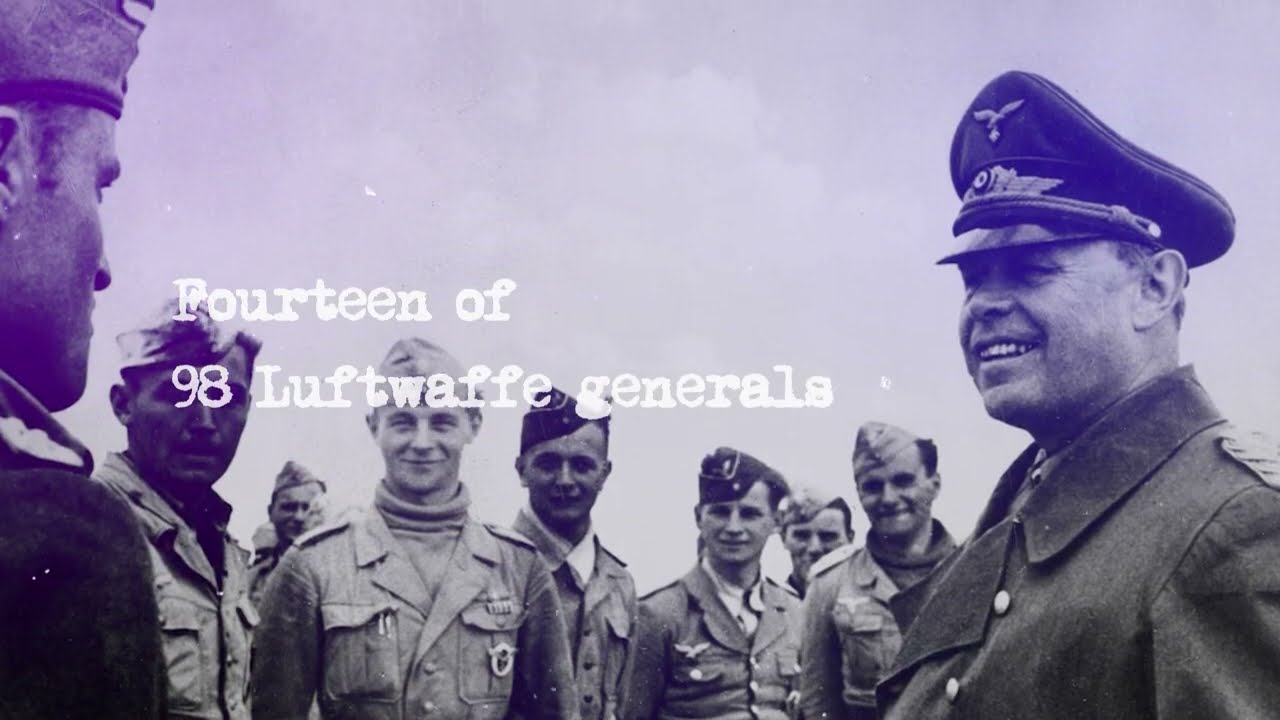 The wave of suicides that followed among the regime’s own officers and officials—eight of 41 regional Gauleiter, 53 of 554 army generals, and more than 7,000 reported suicides in Berlin alone—was not an exception to this pattern. It was the culmination of it. Hitler’s suicide on April 30, 1945, was the apex of a mass self-destruction that has no parallel in modern history.
And yet, even in the face of this ideological commitment, there remains one final, bitter irony. The public image of Hitler as a disciplined ascetic, a vegetarian teetotaler who denied himself every earthly pleasure for the sake of Germany, was a carefully crafted construction. As biographer Robert Payne noted, the ascetic image was effectively a Goebbels invention, designed to dramatize the Führer’s total commitment to the cause.
In private, Hitler ate liver dumplings, drank diluted wine, and maintained a long-term relationship with Eva Braun at his mountain retreat. The financial reality was even more divorced from the public persona. Historian Chris Whetton, in his book Hitler’s Fortune, reconstructed the dictator’s net worth at the time of his suicide as being somewhere between 1.
35 and 43. 5 billion euros in 2003 prices, making him potentially the richest individual in Europe. The revenue streams were enormous: royalties from Mein Kampf, which was effectively required reading for every newly married German couple; royalties on the use of his image on postage stamps; and a slush fund paid annually by the country’s biggest industrialists.
The man who sold the German people self-denial was, in private, quietly hoarding one of the largest personal fortunes on the continent.
The only thing in the public image that was ever actually real was the ideological commitment. And that was the one thing that ended up killing his own country. Hitler was handed power rather than taking it by force.
He trusted the same inner circle for twelve years. He ran the war himself and lost it. He built no dynasty and burned his own country on the way out.
He shot himself in a basement surrounded by cyanide-poisoned staff. And the brand that made all of it possible was a lie. None of this is flattering, and none of it is admirable.
It is the story of what happens when a regime is optimized for a mission instead of for survival. Normal dictators are selfish, which is, in its grim way, the very thing that keeps their countries intact after they die. Hitler’s regime was built to die with him.
And it took somewhere between 60 and 85 million people down with it. That is the real answer to the question at the top of this analysis. He is the opposite of every other dictator because every other dictator, on some level, wanted to live.
The terrifying conclusion is that the very thing that made Hitler unique as a dictator—his willingness to sacrifice everything, including himself, for his ideology—is also what made him uniquely catastrophic. The question that lingers, a question that has no easy answer, is whether the selfishness of other tyrants, for all its horror, is ultimately the lesser evil.






