The last all-American full-size station wagons, the Chevrolet Caprice and Buick Roadmaster, rolled off assembly lines for the final time in 1996. It is a difficult fact to process. In 1976, American buyers could choose from 62 distinct station wagon models. Within two decades, that number fell to zero for American-made cars.
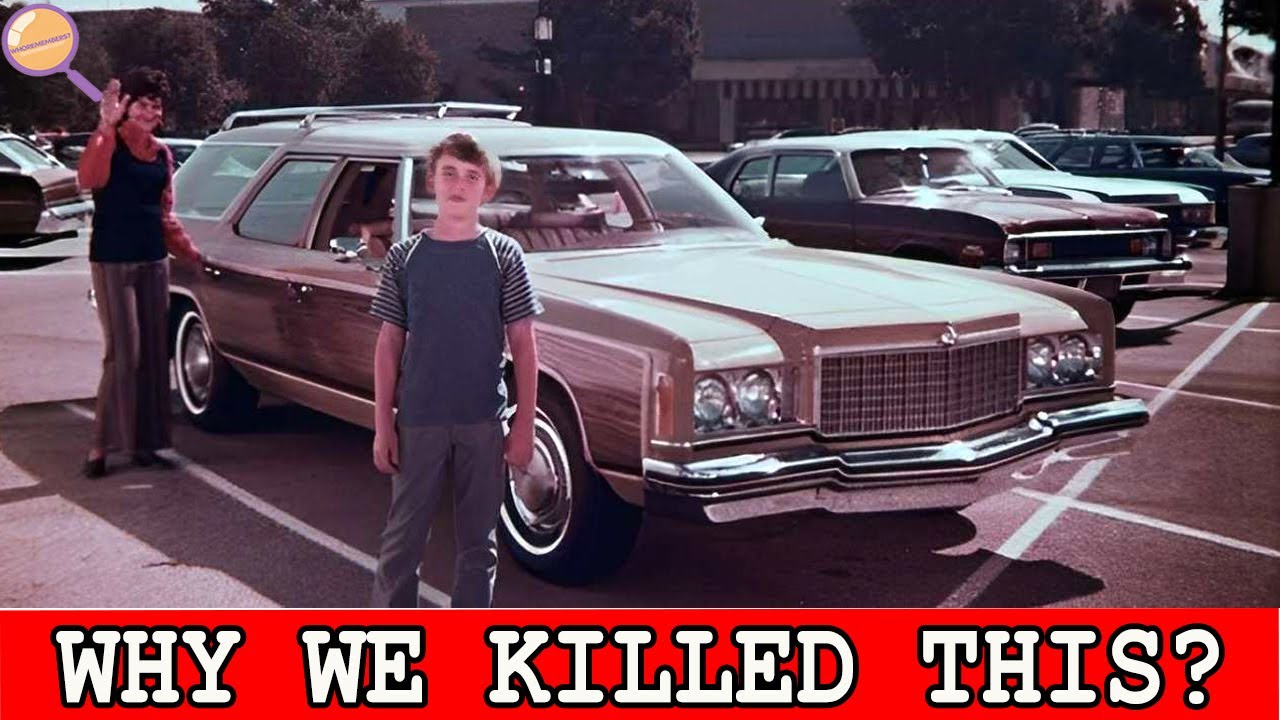
The vehicle once considered an icon of the American dream, the family hauler that carried suburban families to soccer practice, school, and camping trips, simply vanished. The story begins in an America very different from today. In the early twentieth century, trains dominated intercity travel, and the station wagon got its name from its literal function. These vehicles were called depot hacks, with the word hack meaning taxi.
They served railroad depots, hauling passengers and their piles of luggage from the station to their final destination. In essence, they were modified truck chassis with seats and generous cargo space added in the rear. The first major breakthrough came from Henry Ford. In 1910, Ford began selling a bare Model T chassis for seven hundred dollars.
Ford did not build the bodies themselves; instead, hundreds of small companies across America purchased the mechanical components and constructed custom wooden bodies on top. In 1909, there were 551 automobile manufacturers in the United States. The shift from depot hack to station wagon occurred sometime between 1923 and 1929. By 1929, when Ford introduced its Model A station wagon, the name had become firmly established.
The real turning point arrived in 1935. Chevrolet built the first all-steel station wagon, but it did not achieve immediate popularity. People preferred the wooden look. Wood gave cars an air of luxury and social status.
In the thirties and early forties, woody wagons sold at higher prices than standard cars and were considered a mark of prestige. Ford opened its own wagon body plant in Iron Mountain, Michigan, in 1936, using timber from vast company-owned forests near Lake Superior. But the woody wagon had a secret, and it was not a pleasant one. The wood required constant maintenance, regular oiling, checks for rot, and ensuring the joints remained tight.
It was like refinishing a piece of furniture every year. After World War II, the breakthrough came. In 1946, Willys, the company known for building Jeeps, introduced the first mass-produced all-steel family wagon. The sides still featured fake wood grain because consumers still associated wood with quality, but the structure was entirely steel.
By 1949, the days of real wood were nearly over. Plymouth introduced the Suburban, a handsome steel wagon that did not require its owner to be a hobbyist carpenter. After its debut, wooden-bodied station wagons disappeared completely. Some manufacturers kept real wood trim into the mid-fifties, but after that, everything was vinyl imitation.
The postwar era transformed the station wagon into a cultural phenomenon. The birth of the suburbs, the interstate highway system, and the baby boom created millions of American families needing a large vehicle for long trips and growing households. Station wagons rose from less than three percent of American car production in 1950 to nearly seventeen percent by the end of the decade. In 1958, the station wagon was the best-selling body style within Plymouth’s lineup, outselling sedans and coupes.
These cars were enormous. The 1968 Ford Country Squire stretched beyond 218 inches, over eighteen feet, actually larger than a modern Chevrolet Tahoe. They were symbols of the expanding American dream, representing family, home, and leisure. The variety was staggering.
There were two-door and four-door wagons, models with and without pillars, two-row and three-row versions. Some third rows faced backward. Tailgates were engineering marvels, with some opening like doors, others folding down like a truck bed, and General Motors even created a clamshell design where the rear gate disappeared completely when opened. The sixties brought more innovation.
The Vista Cruiser featured a raised roof with skylight panels, proving that panoramic roofs were not a modern invention. Compact wagons like the Ford Falcon competed alongside full-size giants that could seat nine people. By the late sixties, buyers could order wagons with massive V8 engines displacing over four hundred cubic inches. They consumed fuel at a frightening rate, but gasoline was cheap and America was prosperous.
Marketing reinforced the image. Ford named its top model the Country Squire to evoke countryside nobility. Chrysler offered the Town and Country. Each manufacturer had its own wood-grain package, even if it was just fake vinyl, because that faux wood said success louder than any chrome emblem.
The business was profitable on the surface, but there were warning signs. Station wagons were expensive to manufacture, requiring all the mechanical components of a regular car plus a longer body, bigger roof, more glass, extra seats, and heavier suspension. Yet manufacturers could not charge significantly more for them. In 1970, wagon sales peaked at 972,212 units, about ten percent of the market, generating decent but not spectacular profits.
Sedans were simpler and more profitable, but as long as volume remained high, everything worked. Then came October 1973. The Organization of Arab Petroleum Exporting Countries announced a comprehensive oil embargo. Oil prices tripled almost overnight, from three dollars a barrel to around twelve.
Gasoline became scarce and expensive. Drivers waited hours at filling stations, were limited to ten gallons or fewer, and some stations rationed fuel based on whether license plates ended in odd or even numbers. Station wagons were especially vulnerable. They averaged ten to twelve miles per gallon at best.
When fuel prices quadrupled and became difficult to find, the big wagon in the driveway no longer looked like the American dream. It looked like a burden. Sales collapsed. After peaking at nearly one million units in 1970, wagon sales fell dramatically between 1974 and 1975, especially for the large models.
Chrysler was the first to recognize the trend, completely abandoning full-size wagons in 1978. New emissions standards introduced in 1972 forced manufacturers to spend millions redesigning engines, and the powerful V8s at the heart of these cars were detuned, becoming less efficient. By the late seventies, the station wagon was in serious trouble. The fuel crisis was only the beginning.
The knockout blow came from an unexpected source. In 1984, Chrysler, under Lee Iacocca, introduced the minivan. The Dodge Caravan and Plymouth Voyager changed everything. The minivan carried families better than the wagon and was more profitable.
It offered more interior space in a shorter vehicle, sliding doors that made loading children in parking lots far easier, and a higher seating position for better visibility. Built on a car platform, it drove better than a truck while hauling more than a wagon. The minivan also benefited from an image problem plaguing the station wagon. By the eighties, wagons were considered hopelessly uncool.
They were associated with boring suburban conformity and the traditionalism of the fifties and sixties. The baby boom generation that had grown up in the back seats of their parents’ wagons did not want to buy one for themselves. The minivan was different enough to feel new. Then came the real death blow from Japan.
The 1984 Jeep Cherokee launched the modern SUV revolution. Earlier SUVs like the Suburban, Wagoneer, and Bronco were truck-based and drove like trucks. The Cherokee was different. It was smaller, had four doors, and a modern design.
Crucially, it was marketed as a lifestyle vehicle, not just a truck. Buyers purchased an image of outdoor adventure and off-road capability. The Toyota 4Runner arrived in 1984, the Pathfinder in 1986, and the Explorer in 1990, each carving away more of the wagon market. By the early nineties, the few American companies still building wagons were losing money on every unit sold.
The decline was rapid. By 2004, only twenty-six wagon models remained. By 2016, there were just eight. The final gasps were particularly sad.
The Ford Taurus wagon ended in 2005, the Focus wagon in 2008. General Motors held on longest with the Caprice and Roadmaster before surrendering in 1996. Many of these final cars were barely disguised rebadges of one another, like watching an aging boxer who could barely stand but refused to fall. Several factors sealed the wagon’s fate.
Corporate Average Fuel Economy standards made it difficult to justify building large, fuel-thirsty cars, but trucks and SUVs were held to different and more lenient standards. Manufacturers could build a Suburban that consumed more fuel than a Caprice wagon while facing less regulatory pressure. Profit margins on SUVs were extraordinary. An Explorer might cost one thousand dollars more to build than a wagon, but it sold for five to ten thousand dollars more.
Given limited production capacity, the choice was obvious. Americans convinced themselves they needed SUVs for safety and off-road capability, though most never left paved roads. The station wagon did not completely die in America, but it slipped into a coma kept alive by European doctors. Audi, Volvo, BMW, and Mercedes-Benz still offer wagons in the North American market, though they call them Avant, Touring, or Estate, because the name station wagon became a pariah word.
In 2015, wagons accounted for just 1. 1 percent of the American car market, 188,959 vehicles, fewer than Ford sells of its F-150 pickup in two months. There is an irony. The crossovers that dominate American roads today are essentially raised station wagons.
The Honda CR-V and Toyota RAV4 are built on the same platforms as regular cars, have rear hatches, and seat five to seven people. The only differences are a few inches of ground clearance and plastic cladding around the wheel arches. Subaru understood this early. The Outback, introduced in 1994, was literally a raised Legacy wagon with rugged styling touches.
But Subaru marketed it as something new, not as a wagon, and it worked. The Outback became one of Subaru’s best-selling models, proof that Americans will still buy wagons as long as you do not call them wagons. A few revival attempts failed. Cadillac offered the CTS Sport Wagon from 2010 to 2014.
It was beautiful and capable, but sales were minimal. BMW sold just forty examples of its 5 Series Touring in 2009 before giving up. The last victim was the Buick Regal TourX, which lasted from 2018 to 2020, only two years. It was comfortable, practical, attractive, and reasonably priced, but Americans chose the Encore instead, a near-identical vehicle that was taller and consumed more fuel.
The station wagon was the family car of an era when family had a very specific meaning. It was the place where life happened, where children fought with siblings on the way to grandma’s house, where families played license plate bingo on long trips, where kids in rear-facing seats made faces at the cars behind them. No seat belts, no airbags, just a thin layer of glass separating them from the highway. These cars were a testament to American optimism.
With the disappearance of the wagon, something was lost, not just practicality but personality. Every wagon was different, sporty ones, luxury ones with leather and chrome, basic ones that were honest transportation. Now crossovers all look alike, as if someone inflated a sedan and added plastic trim. The decline of the station wagon teaches a lesson about American consumer culture.
People do not always buy what makes sense. They buy what makes them feel good about themselves. SUVs and crossovers make people feel safe, capable, and adventurous, even if they never leave the suburbs. The station wagon made people feel practical, and that was not enough.
In a single generation, the wagon fell from seventeen percent of the market to nearly nothing. The same could happen to the SUV if the right combination of factors appears, perhaps electric vehicles or autonomous cars or something not yet imagined. The only constant is change.






