On the morning of February 2, 1943, the last German soldiers still fighting in Stalingrad laid down their weapons. The battle that had drained the city for five months was over. Among the men who emerged from the ruins were some of the highest-ranking officers of the German army: Field Marshal Friedrich Paulus and the generals who had led entire corps and divisions. Weeks earlier, these men had believed they could hold the Volga forever.
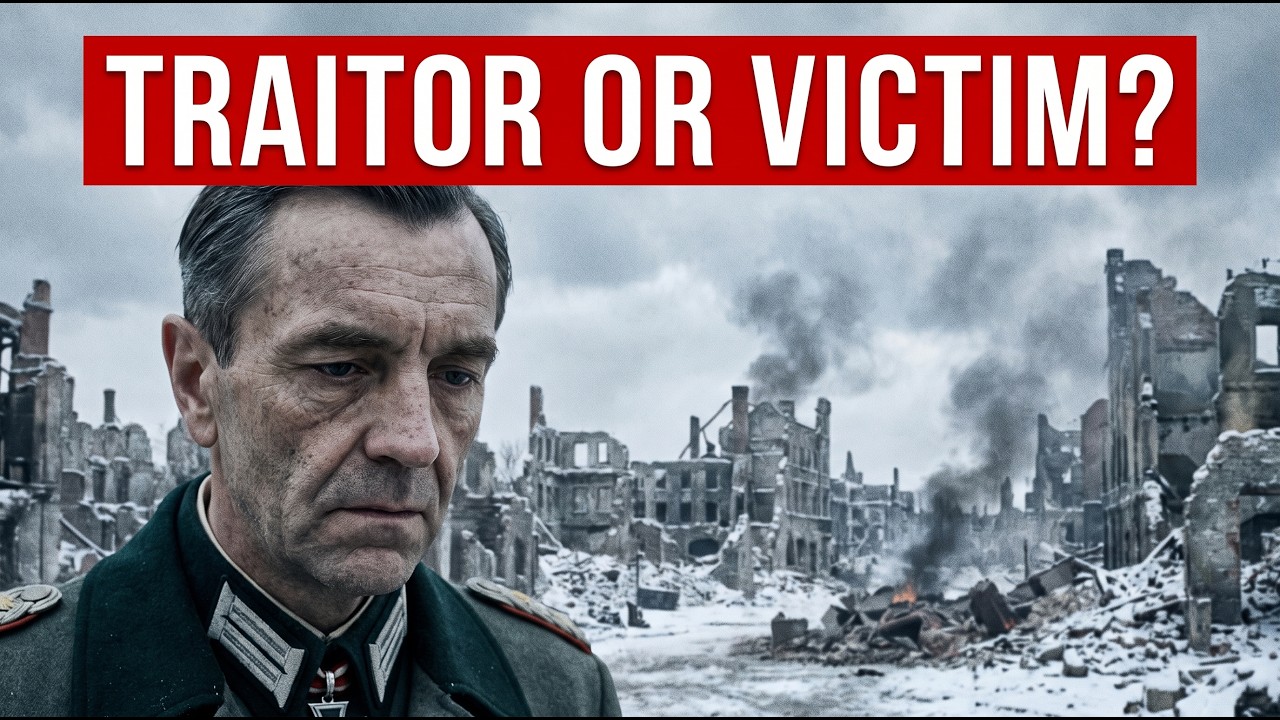
History remembers Stalingrad as the turning point of World War II in Europe. It remembers the siege, the starvation, the frozen steppes. But it rarely follows what happened afterward to the officers who survived. What became of the generals who surrendered?
Where did the Soviets take them? How long did they remain in captivity? And why did almost all of them survive while the ordinary soldiers they commanded died by the tens of thousands? This is the story of the German generals captured at Stalingrad and of a captivity that lasted longer than the war itself.
Before following them into captivity, consider what Stalingrad had already taken from the Sixth Army. By January 1943, the pocket had shrunk to a few square kilometers of rubble. Temperatures dropped to thirty degrees below zero. There was no fuel for stoves, food was scarce, and ammunition was dwindling.
Wounded men froze to death in basement hospitals. Soldiers still able to walk searched the bodies of the dead for bread and cigarettes. Paulus sent daily situation reports to the Führer’s headquarters. The responses were always the same: hold, resist, trust in relief.
General Erich von Manstein’s attempt to break through to the pocket, Operation Winter Storm, had failed in December. From that moment, the fate of the Sixth Army was sealed. What remained was a question of how it would end, not whether it would end. Among the officers trapped with Paulus were men who would become familiar names in the story of captivity.
General Walther Heitz commanded the Eighth Army Corps and ordered his troops to fight to the last round. General Karl Strecker held the northern pocket until the final hours. General Hans Hube flew into the cauldron on January 9 carrying a message from Hitler to hold firm. General Karl Rodenburg led the 76th Infantry Division through the worst of the urban fighting.
Every one of them would surrender. Every one of them would march east. Every one of them would live years longer than most of the men under their command. The surrender itself was chaotic and took place in stages over several days.
Paulus’s southern pocket collapsed first. Strecker’s northern group, positioned near the Barricade weapons factory, held out for an additional forty-eight hours, partly because radio communications had failed and partly because Strecker believed honor demanded one final refusal. When he finally surrendered, Soviet cameramen were already filming columns of prisoners moving west through the snow. The newsreels from that period show the scale of the catastrophe: lines of soldiers without coats, without boots, without hope, dragging their feet toward assembly points.
Officers were pulled from the ranks. The generals were identified by their insignia and separated within hours. The Soviet Union understood the propaganda value of captured leaders. Within days, photographs of Paulus were circulating around the world.
Interrogations began immediately. Soviet intelligence officers had prepared for years to question senior German commanders. They wanted operational details, but they also wanted political insights. How strong was the resistance against Hitler?
Would the German officer corps split? Paulus was interrogated at Zavarikino, headquarters of the Don Front, before being moved to the Moscow region. Schmidt was interrogated separately. The two men, so closely linked in command, were already being treated as different types of prisoners.
For the ordinary soldier, the first weeks of captivity were the most deadly. Weakened by hunger and wounds, thousands died on the march to railway stations. Trains carried them east in packed freight cars. Sanitary conditions were catastrophic.
Typhus and dysentery spread. Guards who had seen their own cities burn felt no sympathy. Many prisoners who survived Stalingrad died within months, long before they reached permanent camps. The generals traveled differently.
They were transported by car or in separate train compartments. They were fed adequately. They were not beaten the way prisoners in the columns often were. This was not kindness in any moral sense.
It was policy. The Soviet state invested in keeping senior officers alive because dead generals could not be displayed, interrogated, or converted into propaganda. In Krasnogorsk and Suzdal, Paulus was kept under close watch but without humiliation. He was allowed to walk in guarded courtyards.
He read. He wrote censored letters that were not always destroyed. Other generals joined him in rotating groups. They discussed the war, their decisions, and their uncertain futures.
Some blamed Hitler. Some blamed Paulus. Seydlitz, already separated for his opposition, was forming alliances that would define the postwar narrative of German guilt. When the group moved to Voykovo in mid-1943, the purpose of the camp became clearer.
This was not a labor camp. It was an officers’ prison designed for long-term detention and political work. The barracks were divided by rank and level of cooperation. Senior German and Romanian officers, and later Japanese and Italian prisoners, occupied adjacent sections.
The camp had a library, a small hospital, and workshops where prisoners could repair furniture or bind books. From the outside, it might almost have resembled a strict boarding school if one ignored the barbed wire. Inside, the League of German Officers was recruiting members. Seydlitz and others drafted appeals to German soldiers at the front, urging them to surrender as a patriotic act against Nazism.
Pamphlets were printed and in some cases dropped behind German lines. Radio broadcasts carried the voices of men listeners had known before the war. The National Committee for a Free Germany, formed in 1943, expanded this work. It held conferences inside the camp, issued statements condemning Hitler, and prepared for a future Germany without a Führer.
Paulus hesitated before joining. He had been a loyal officer for most of his career. He had obeyed orders that led his army into the siege. Eventually, he signed statements and appeared in radio broadcasts.
In East Germany, after his release, he argued that he had acted out of conscience. In West Germany, veteran groups called him a traitor. Both views contained part of the truth. Neither fully described the pressures of captivity.
Schmidt’s refusal to cooperate made him a counter-symbol within the camp. He represented the old officer spirit: loyalty to the army, hostility toward the enemy, silence during interrogations. Soviet officers both respected and resented him. He was not useful for propaganda, but he was useful as proof that not every German general had broken.
Schmidt died in captivity in 1957 and never returned to divided Germany. The Romanian and Italian allies captured at Stalingrad shared the Voykovo camp in separate sections. Their governments negotiated differently after the war. Their fates remind us that Stalingrad was not only a German catastrophe.
The Sixth Army included allied forces that suffered the same siege, often with worse outcomes than the German officers who led them. As the Voykovo population grew with generals from other fronts, the camp became a strange mirror of the German officer corps in exile. Men who had led panzer divisions on the Don sat beside officers captured in Normandy or East Prussia years later. They traded news, argued politics, and waited.
Some studied Russian. Some wrote memoirs that were never published. Some fell into depression and drank when alcohol could be obtained. Outside the barbed wire, the war ended.
Berlin fell. Hitler died in his bunker. Germany surrendered unconditionally. The generals at Voykovo expected repatriation.
It did not come. Stalin’s government tied release to political recognition, reparations, and the emerging division of Europe. German prisoners became one of the largest remaining prisoner groups in the Soviet Union, estimated in the hundreds of thousands across many camps. Western governments pressed for their return.
Relations between East and West deteriorated. The Cold War replaced the alliance against Nazism. For the generals, this meant years of additional waiting while the world they knew was being divided. Some, like Paulus, were offered roles in the new East German state if they cooperated after release.
Others would return to West Germany and face legal and social scrutiny for their wartime commands and their choices during captivity. The cemetery at Cherntsy, near Voykovo, holds the graves of German generals who died in Soviet detention. Their headstones represent a captivity that lasted longer than the Third Reich itself. Walking among those graves, a visitor realizes that Stalingrad was never a single day of defeat, but the beginning of a sentence measured in years.
When Adenauer finally secured the return of remaining prisoners in 1955, families gathered at railway stations across West Germany. Many did not recognize the men who stepped onto the platforms. Twelve years had changed them. Some had been boys when they left for the Eastern Front.
They returned middle-aged, broken or hardened. The generals who descended from separate transports received a different reception: journalists, curiosity, suspicion. Paulus returned east again, to Dresden in the German Democratic Republic. Seydlitz returned west and lived until 1976, remaining a controversial figure.
Rodenburg, the last survivor among the Stalingrad generals, lived quietly until 1992, almost fifty years after the war. His longevity was exceptional. For the soldiers he commanded, survival was the exception. Today, memorials in Stalingrad, now Volgograd, commemorate the Soviet victory and the human cost on both sides.
Museums display Paulus’s personal effects, photographs of prisoners, and maps of the cauldron. They say little about Voykovo, Krasnogorsk, and the long years that followed. The captivity of the generals is merely a footnote in many popular accounts. It should not be.
It reveals how the Soviet Union fought not only on battlefields but through prison, propaganda, and the careful management of defeated enemies. The question of why the generals survived while their soldiers did not has no single answer. Utility, symbolism, and politics all played a role. So did the brutal calculations of mass captivity, where the strong and the high-ranking were preserved while the weak faded away.
It is easy to make moral judgments from a distance. For the men who surrendered in February 1943, the judgment had already begun and would never fully end. To understand their fate, one must return to the autumn of 1942. After a summer of sweeping victories, Adolf Hitler ordered the Sixth Army to take Stalingrad.
The city bore the name of his enemy. Its fall would be symbolic as well as strategic. General Friedrich Paulus, a precise staff officer promoted to field command, led the assault. For weeks, German and Soviet forces fought building to building among the ruins.
Stalingrad no longer existed as a city; it had become a battlefield measured in meters. Then, on November 19, the Soviet Union launched its counteroffensive. Operation Uranus encircled the entire Sixth Army in a pocket on the western bank of the Volga. Nearly 300,000 German and allied soldiers were trapped.
Hitler forbade any attempt to break out. Hermann Göring promised the Luftwaffe would supply them by air. That promise was pure fantasy. Rations dwindled.
Horses were eaten. Frostbite and typhus spread through the cauldron, as the German soldiers called their shrinking perimeter. Inside the pocket, the command structure began to crack. General Walther von Seydlitz-Kurzbach, commander of the LI Army Corps, argued forcefully for surrender or breakout.
Paulus refused. He had explicit orders from Hitler to hold every position. On January 25, Seydlitz told his subordinate commanders they were free to decide for themselves whether to continue fighting. Paulus immediately relieved him of command.
Yet in those final days, Paulus was often not the one making operational decisions. Colonel General Arthur Schmidt, chief of staff of the Sixth Army, was widely regarded as the most rigid and unyielding figure in the command. Soviet investigators later concluded that Schmidt, not Paulus, pushed for refusal to negotiate when envoys arrived with surrender terms on January 8 and 9. When the envoys were shot, Paulus denied giving the order.
Many historians believe Schmidt did it. On January 30, Hitler promoted Paulus to field marshal. No German field marshal had ever surrendered. The promotion was widely seen as an order to die.
But Paulus did not comply. On January 31, Soviet forces reached the Sixth Army headquarters beneath the Uniwearmach department store on Red Square. Paulus surrendered from a side room while Schmidt negotiated terms in the room next door. Two days later, on February 2, General Karl Strecker surrendered with the last northern pocket near the Barricade factory.
The Battle of Stalingrad was over. In the hours and days that followed, Soviet forces sorted the prisoners. Officers were separated from ordinary soldiers almost immediately. This distinction would govern everything that came after.
The generals were registered, photographed, and interrogated. Soviets searched their baggage. It is said that Schmidt shouted at the Soviet officers when they examined Paulus’s belongings, insisting they were the field marshal’s personal effects. The numbers are often rounded in popular memory.
Twenty-two German generals surrendered alongside Paulus at Stalingrad, plus allied officers from Romania and Italy. Some accounts say twenty-four, depending on whether certain senior colonels or late arrivals were included. What is beyond dispute is that this was the largest single gathering of German officers of general rank ever captured by the Soviet Union. They were not sent to the same camps as ordinary soldiers.
Of the roughly 91,000 Axis soldiers who surrendered at Stalingrad, only about 6,000 ever returned home. The generals were held separately under conditions that, by the standards of Soviet POW policy, were relatively controlled and even comfortable. Their journey began in the Moscow region. Paulus and his senior officers were first held at NKVD special camp No.
27 in Krasnogorsk. They were then moved to the Monastery of Saint Euthymius in Suzdal, where a dedicated POW facility was established. Soviet security officials, according to later accounts, worried that German paratroopers might attempt a rescue. Paulus was too valuable as a symbol to risk losing.
In June 1943, the first large group of senior Axis prisoners arrived at NKVD special camp No. 48 in Voykovo, northeast of Moscow. The camp became the main site for holding German generals for the rest of the war and for years afterward. By 1954, nearly 190 German generals from various campaigns were held there or in subsidiary facilities.
Life at Voykovo was not the hell of the Siberian labor camps to which ordinary Stalingrad prisoners were sent. The generals received better rations, medical care, and living space. They were allowed books, writing materials, and limited correspondence. They were also under constant surveillance.
Every conversation was a potential interrogation. Every letter was read. The Soviet Union had plans for these men that went beyond simple imprisonment. As early as 1943, Moscow sought to exploit the moral collapse of the Sixth Army for propaganda purposes.
The National Committee for a Free Germany and its predecessor organization, the League of German Officers, recruited captive officers to broadcast and write against Hitler and the Nazi regime. Walther von Seydlitz-Kurzbach became one of the most prominent collaborators. He had already challenged Paulus in the cauldron. In captivity, he went further, helping to form anti-Nazi organizations and calling on German soldiers at the front to surrender.
Hitler sentenced him to death in absentia. The Nazis arrested his family under Sippenhaft, collective punishment for a relative’s crimes. Paulus himself eventually joined the committee. His broadcasts from Soviet captivity were used as evidence that even senior German leaders had repudiated Hitler.
For many in Germany, this was unforgivable. For the Soviet leadership, it was precisely the goal. A marshal in exile was worth more than a marshal dead. Not every general cooperated.
Arthur Schmidt remained defiant, hostile to his captors, and contemptuous of Seydlitz. Other officers took a middle position, signing statements under pressure while refusing genuine cooperation. Voykovo became a political battlefield as much as a prison. The generals struggled with ideology, pride, and survival.
The ordinary Stalingrad prisoners shared none of these dilemmas in comfort. They were marched east in columns stretching for miles. Many died of exhaustion, disease, and violence before reaching permanent camps. Those who arrived faced meager rations, hard labor, and winters that killed thousands monthly.
The contrast with Voykovo was stark and deliberate. Rank had always mattered in the German army. In Soviet captivity, it mattered far more. As the war continued, the generals at Voykovo followed developments through newspapers and radio broadcasts.
They learned of the Allied landings in Normandy, of the July 20 plot against Hitler, of the Red Army’s advance into East Prussia and beyond Berlin. Some hoped a rapid German collapse might lead to their release. Others realized their captivity would outlast the fighting. When Germany surrendered in May 1945, the generals were not released.
The war between the Reich and the Soviet Union had ended, but the Cold War was beginning. Prisoners of war became bargaining chips. Stalin’s government insisted that Germany, then divided, bore responsibility for the crimes of Hitler’s regime. Repatriation was slow, selective, and political.
Paulus remained in Soviet hands for twelve years after his surrender at Stalingrad. He was released in 1953, after Stalin’s death, and settled in the German Democratic Republic. He worked for the police and the military research institute in East Germany. He gave many interviews.
He defended his decisions and condemned Hitler’s. For many in West Germany, he remained the marshal who had not died when he was supposed to. On February 1, 1957, exactly fourteen years after the surrender at Stalingrad, Paulus died in Dresden. His body was taken to Baden-Baden in West Germany and buried beside his wife.
Even in death, he crossed the border that had divided his years of captivity. Other generals took different paths. Walther von Seydlitz-Kurzbach was released in 1955 and returned to West Germany. He faced criticism from veteran organizations and fellow officers for his collaboration.
The Soviet Union granted him a posthumous pardon decades later, an implicit acknowledgment of the complexity of his case. Arthur Schmidt remained in captivity until 1957 and died without the public rehabilitation Paulus received. General Walther Heitz, who ordered his men to fight to the last round, did not live long after his release. Karl Rodenburg, who led the 76th Infantry Division, outlived them all.
He died in 1992 at the age of ninety-eight, the last of the Stalingrad generals. The mass repatriation of German prisoners from the Soviet Union came in 1955, negotiated by West German Chancellor Konrad Adenauer. About 15,000 prisoners returned, including many held at Voykovo and its subsidiary camps. This was only a fraction of those who had gone east.
Of the 91,000 who surrendered at Stalingrad, the vast majority perished in camps, on marches, and in mines across the Soviet interior. The generals survived because they were useful, because they were symbols, and because the Soviet state chose to keep them alive. Their soldiers died because they were numerous, expendable, and condemned by the system they served and the system that captured them. This disparity is one of the least remembered facts about Stalingrad.
The battle did not end on February 2, 1943. For the men who marched east, it lasted for years. For the majority, it never ended at all. Twenty-two German generals walked out of a frozen city into a captivity that lasted longer than the war itself.
Their fates were shaped by the same forces that reshaped postwar Europe: ideology, propaganda, the Cold War, and impossible choices made under pressures no military tribunal could ever recreate. Some collaborated, some resisted, and most simply endured, watching the world they had fought for disappear while a new one took root around them. Stalingrad broke the Sixth Army. Captivity broke what remained of its leaders’ certainty.
The city on the Volga became a name for defeat. Voykovo became a name for waiting. And for the handful of generals who finally returned home, the question that haunted them was the one they could never fully answer: why did they live while so many of their soldiers did not. Their last survivor died nearly half a century after the surrender.
Their last soldiers died long before that. That distance, measured not in miles but in survival, is the final legacy of the generals captured at Stalingrad.






