On the morning of January 24, 1948, Maria Mandl was dragged across the courtyard of a Krakow prison toward the gallows, screaming and fighting the guards who gripped her arms. She was the last of the condemned to be hanged that day, and she had watched the others go before her. The prosecutor, the prison guards, and the prison director were all intoxicated, and as they forced her forward they laughed, ridiculed her, and poked fun at the woman who had once held near-total power over thousands of prisoners.
Mandl closed her eyes and spoke her last words: "Poland lives." Then, still struggling, she was hanged. At 7:32 a.
m. , the execution was completed.
She was 36 years old.
How a woman from a respectable Catholic family in rural Austria came to that courtyard is a story that begins more than three decades earlier, in a village called Münzkirchen.
Maria Mandl was born there on January 10, 1912, when the region was still part of Austria-Hungary. Her father, Franz Mandl, was a master shoemaker who supported the Christian Social Party and openly opposed the Nazis in Austria. Her mother, Anna Schreiber, was a housewife raising Maria and three other children, and she suffered from depressive episodes, including a nervous breakdown during her daughter's childhood.
The family was well-known locally and considered respectable.
Maria's formal education ended early. At the age of 12, she was withdrawn from school to help on the farm, a common practice in rural communities at the time. Later she graduated from a Catholic boarding school, but steady employment proved hard to find.
In her late teens and early twenties she moved repeatedly, working as a domestic servant in the town of Brig in southern Switzerland before homesickness brought her back to Austria. She found work as a chambermaid in Innsbruck, then returned home to care for her parents. Eventually she secured a stable job at the local post office and became engaged to a soldier of the German army.
Her prospects were modest but solid.
The annexation of Austria by Nazi Germany in March 1938 shattered that stability. German troops crossed the border without resistance. Crowds gathered to cheer and wave flags, flowers were thrown, church bells rang, and the new order announced itself with confidence and noise.
At the same time, fear spread quietly through Jewish homes, left-wing circles, and families marked as enemies of the regime. Jobs were lost, loyalties were tested, and opportunities opened for those willing to serve power without question.
Maria Mandl lost her job because of her family's political background. Her fiancé ended their engagement, fearing that association with her could harm his future within the Third Reich. Suddenly excluded from normal life in a rapidly Nazifying society, she learned quickly that the new system rewarded obedience and punished those who did not conform.
In September 1938, Mandl left Austria and moved to Munich to live with her uncle, a policeman. Her intention was for him to get her a position in the police force, but none were available. Instead, he encouraged her to apply for a position at the Lichtenburg concentration camp in the town of Prettin.
Later she would say that she took the position only because the salary was higher than that of a nurse, and that she had known nothing about concentration camps.
On October 15, 1938, she began working as a guard at Lichtenburg, one of the earliest camps operated by the SS, the Nazi paramilitary unit responsible for guarding the camps. At that time, the camp held only female prisoners. Mandl underwent ideological training and swore loyalty to the Nazi Party and Adolf Hitler.
She undertook this training with her cousin, Maria Gruber, but Gruber resigned early on, disgusted by the violence of the camp.
Maria Mandl adapted quickly. According to testimonies from survivors, including Emilia and Lina Haag, Mandl subjected prisoners to whippings, beatings, and strenuous exercises. In one incident, she struck a prisoner repeatedly with a metal key until the woman lost consciousness, then dragged her across the camp and put her in a solitary cell.
On May 15, 1939, Mandl was transferred to Ravensbrück, the main women's camp in the Nazi system. More than 130,000 women passed through the camp during its existence, and the majority of them did not survive. At Ravensbrück, Mandl patrolled with a dog.
If she took a disliking to someone, she would set the animal on the prisoner until the inmate was torn to pieces. When she approached, prisoners would whisper warnings that Mandl was coming, and everyone would fall silent. She always carried a whip, using it to beat and kick prisoners all over their bodies.
On one occasion, she viciously beat a prisoner who dared to pick up scraps of discarded food. On another, she brutally kicked and beat an elderly prisoner in the corridor near the camp cells, causing the woman to collapse on the stone floor. Mandl continued to kick her until the old prisoner was dead.
She often confined prisoners in cells in straight jackets and beat them unconscious.

Her presence became a symbol of relentless cruelty and terror. Roll calls were among the worst experiences inmates had to endure. In the early spring and autumn, when the ground was covered with frost, she forbade prisoners from wearing shoes, allowing them only during work.
Otherwise they had to walk barefoot, often standing from 4:00 a. m. through the entire roll call until about 6:00 a.
m. If a prisoner, usually an older woman, placed a piece of paper under her feet for some relief, Mandl would punch and kick her senseless. The beaten victims were often carried away to a dark cell or the penal block.
The Second World War began on September 1, 1939, with the German invasion of Poland. As the war expanded, the concentration camp system became central to German occupation and the policy of mass murder. In 1942, the SS leadership decided to establish a large women's camp at Auschwitz.
Mandl was promoted and transferred to Auschwitz II Birkenau, where she became the chief guard of the women's camp.
At Birkenau, Mandl exercised near total power. Her only superior was the camp commandant, Rudolf Höss, who trusted her completely. She controlled all female guards and thousands of prisoners, and decided who would live or die.
According to survivor Anita Lasker-Wallfisch, Mandl would stand in front of the camp's front gate while prisoners were lined up. If a prisoner made eye contact with her, they were removed from the line and killed. She signed death lists on a weekly basis and showed particular cruelty toward Jewish prisoners and Polish women.
She tore children from their mothers' arms and sent them to be killed. When mothers tried to follow, she beat them until they collapsed.
Mandl also embodied the contradictions of the camp system. She organized the famous women's orchestra of Auschwitz, formed in 1943 from the inmates in the camp. In this way, she cynically forced music into a place built for mass murder.
Prisoners played as others marched to forced labor, returned exhausted, or were led to their deaths. Concerts were held every Sunday for SS personnel. A small number of women survived because of their role in the orchestra while millions of others were murdered.
Under Mandl's authority, culture and killing existed side by side.

As the Soviet Red Army advanced in late 1944, Mandl was transferred to the Mühldorf concentration camp complex, a subcamp system of Dachau. She arrived in December 1944. At Mühldorf, prisoners were worked to death constructing underground factories for German jet aircraft like the Messerschmitt Me 262.
Conditions were brutal. Food was scarce and mortality was extreme. In this brutal territory, Mandl began an intimate relationship with Walter Adolf Langlist, the commandant of the Mühldorf camp.
As Allied forces closed in during the spring of 1945, Mandl and Langlist fled. Soon afterward, she turned up in her birthplace of Münzkirchen. Her father refused to let her stay in her parents' house, so she sought refuge with her sister.
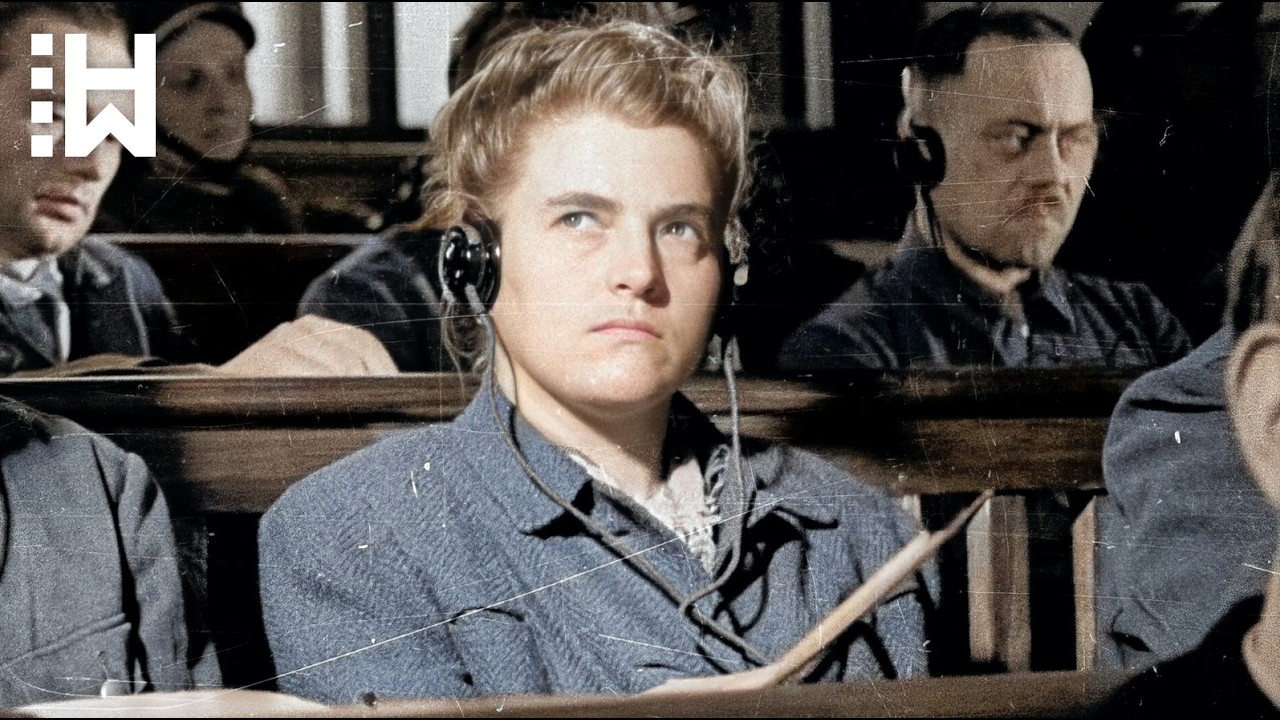
On August 10, 1945, she was arrested and imprisoned at the premises of the former Dachau concentration camp, where she was interrogated by the Americans. Later she was extradited to Poland, imprisoned in Krakow, and tried before the Polish Supreme National Tribunal during the Auschwitz trial, which began on November 24, 1947. A total of 44 SS personnel were accused, with Mandl being one of only five women brought before the tribunal.
During the trial, survivor testimonies described her beatings, selections, and killings in detail. At first Mandl denied responsibility. Later, she admitted.
Based on the number of lists signed with her name, Mandl is believed to have been complicit in the deaths of approximately 500,000 people during the war.
On December 22, 1947, the Polish Supreme National Tribunal in Krakow sentenced Maria Mandl to death by hanging. Mandl decided to fight for her life. She begged for mercy and asked for clemency, but the Polish president, Bolesław Bierut, rejected her request.
In the days leading up to her execution, she cried, prayed in her cell, and withdrew into herself.
On the morning of January 24, 1948, she was hanged. Because she had probably witnessed the first executions, she showed the most resistance. Her execution turned into a grotesque scene, with the intoxicated officials laughing and taunting her as she screamed and struggled.
Hours after her execution, Mandl's body was sent to the Jagiellonian University Medical College for students to experiment on for a six-week period. On March 6, 1948, her body was moved to the Rakowicki Cemetery in Krakow and buried in a wooden box at an unmarked spot.
Her father had been aware of the atrocities his daughter committed and did not request for her remains to be sent home. Her mother had already died by that time. But while she lived, she prayed for her daughter's eternal soul.
Yet prayers could not erase the harm done, nor the lives lost because of Mandl's actions.






