The man who wrote the Japanese attack plan before the Japanese did spent the rest of the war in a windowless basement, listening to the ocean he could not see, waiting for the enemy he had accidentally armed to arrive.
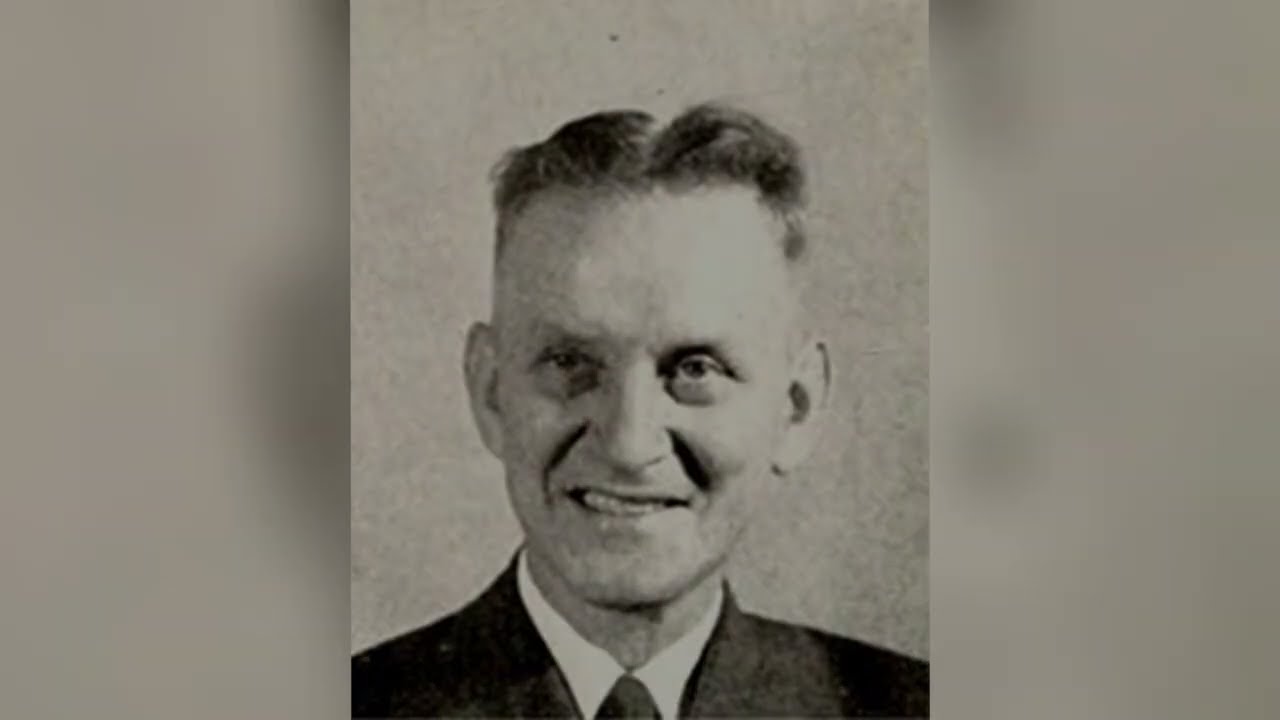
In August 1941, four months before the fires of Pearl Harbor consumed the American Pacific Fleet, a crippled naval officer named Wilfrid Holmes published a work of fiction in the Saturday Evening Post that contained a blueprint for the impossible. The story, titled Rendezvous, detailed a technique so audacious that the U. S.
 Navy censors had locked it in a drawer for a full year before reluctantly allowing its release. The premise was simple: submarines surfacing at a remote, undefended Pacific atoll to refuel long-range flying boats, extending their striking distance by thousands of miles to hit a harbor far beyond their normal operational reach.
Holmes, writing under the pen name Alec Hudson, imagined American planes striking Japan. He had no idea that across the Pacific, in the war rooms of the Imperial Japanese Navy, a young intelligence officer was likely reading the same pages, translating the same concept, and filing it away for a future that would bring the idea roaring back to life against its own creator. The Navy had buried the manuscript for a year, terrified that the idea was too dangerous to print.
When they finally released it in August 1941, almost nobody noticed. Four months later, Pearl Harbor burned.
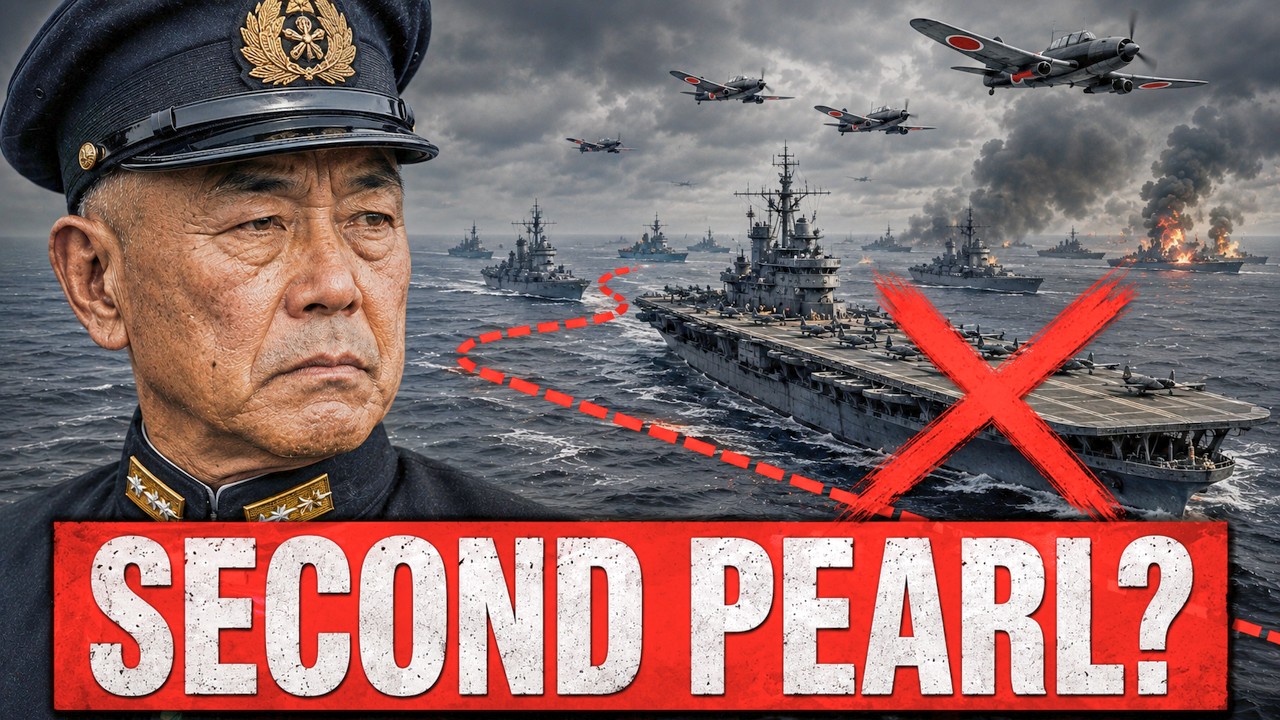
In the spring of 1942, the Imperial Japanese Navy launched an operation that mirrored Holmes’s story so closely that the men who had buried his manuscript would wonder, for the rest of their lives, whether Tokyo had read it after all. The operation was called Operation K, and it was designed to finish what the December 7th attack had started. Admiral Isoroku Yamamoto, the architect of the Pearl Harbor strike, was not celebrating the victory he had won.
He was a man who had walked the assembly lines of Detroit and driven across the wheat plains of Kansas. He knew what America was. He knew what America could build.
By January 1942, American salvage crews were pumping out the harbor, raising battleships from the mud, and operating dry docks around the clock. The damage Yamamoto had inflicted in two hours was being undone in two months. He needed another blow, quickly, before the giant fully woke.
But Pearl Harbor was no longer a sleeping base. American patrols extended hundreds of miles, and the Pacific Fleet had scattered. Sending the Kido Butai back to Hawaii would be suicide.
Yamamoto needed something smaller, stranger, something the Americans could not anticipate.
He got it from the Naval Aviation Bureau: a new aircraft just out of testing at Yokosuka. The Kawanishi H8K, later code-named Emily by the Allies, was a four-engine flying boat with a wingspan of 38 meters and a maximum range of over 7,000 kilometers. It was the longest reach of any flying boat in the world.
The aviation officers briefed Yamamoto on its capabilities. The H8K could fly from the Marshall Islands to California. It could drop bombs on Los Angeles.
It could hit Texas. For several days in late January 1942, the naval staff seriously considered bombing the American mainland. Then a different report landed on Yamamoto’s desk.
The American repairs at Pearl Harbor were progressing faster than expected. The dry docks were intact. The fuel farm was intact.
The submarine base was intact.
Yamamoto canceled California. The target changed to Pearl Harbor. The flying boats would not bomb cities.
They would bomb dry docks. They would photograph repair work. They would make the Americans afraid to sleep.
But there was a problem. Even the H8K could not fly from the Marshall Islands to Hawaii and back. The distance was too great, and the fuel did not stretch.
Then a staff officer proposed a solution that no major navy had yet attempted in combat: submarines refueling aircraft on the open sea. A remote, undefended atoll. A rendezvous beyond the reach of American patrols.
The room went very quiet. The idea was audacious. The idea was also, as some present may have quietly recalled, not original.
An American naval officer had described almost exactly this technique in a magazine story the previous summer.
Within 48 hours, the plan had a name: Operation K. On January 25th, 1942, Naval Ministry secret radio dispatch number 572 went out from Tokyo. The orders were precise.
Two H8K flying boats would depart from Wake Atoll in the Marshall Islands. They would fly 2,500 kilometers northeast across the International Date Line to a place almost no one had heard of: French Frigate Shoals, a bone-shaped reef 500 miles northwest of Honolulu. Two tiny sand islets.
A lagoon. No people. No garrison.
No defenses. There, three submarines would be waiting on the surface, their fuel tanks filled with aviation gasoline. The H8Ks would land in the protected lagoon, refuel from the submarines, take off again at midnight, and fly the remaining 900 kilometers to Oahu.
Bombs on the harbor, then back.
Submarines I-15 and I-19 would do the refueling. I-26 would stand by as reserve. A fourth submarine, I-9, would float halfway along the flight path, broadcasting a continuous radio signal for the pilots to home in on like moths.
A fifth submarine would take station south of Oahu to report the weather and pick up the airmen if they were shot down. Her number was I-23, a brand new fleet boat commissioned only weeks before, with 94 men aboard. The pilots were chosen next.
Lieutenant Hashizume Hisao, around 27 years old, slim, quiet, a graduate of the Naval Academy, would fly the lead aircraft. His wingman was Ensign Sasao Shusuke, slightly younger, less experienced. Their crews numbered about ten men per aircraft.
Most of them would never become famous. Most of them would never even be named outside Japanese fleet records.
On February 15th, 1942, both flying boats lifted off from Yokosuka Harbor near Tokyo, beginning the long ferry south: Saipan, Truk, Jaluit, Wotje, each leg testing the endurance of the new engines. Meanwhile, at sea, something was going wrong. On February 14th, the submarine I-23 reported her position south of Oahu.
She was on station. She was broadcasting weather. The plan was on schedule.
That was the last anyone heard from her. For three days, Tokyo waited. Nothing.
The radio silence grew louder than any signal. Naval headquarters called her again. Nothing.
A week passed, then two. Ninety-four men had vanished. No oil slick, no wreckage, no survivors.
The American Navy never even claimed a 𝓀𝒾𝓁𝓁. She had simply ceased to exist.
The lifeguard submarine, the weather observer, the pilot’s insurance against the empty ocean, was gone. In Tokyo, the planners held a meeting. The mission could be postponed.
The mission could be canceled. The flight path was now naked over the central Pacific. If a plane went down, no one would come.
The meeting ended in fifteen minutes. The mission proceeded. Hashizume was told.
Sasao was told. They were told that the I-23 was missing, and that no one would be coming for them if their aircraft failed. They were told this calmly, the way you might be told the weather forecast.
They nodded. They saluted. They said nothing.
That night, in Wotje, Hashizume wrote a letter home. The letter did not survive the war. We know only that he wrote it.
Five thousand kilometers away, in a basement in Honolulu, a different kind of war was starting. On the night of February 25th, 1942, Pearl Harbor’s lights were doused, and sentries patrolled the cane fields. Underneath the headquarters of the 14th Naval District, in a windowless concrete room nicknamed the dungeon, a man in a bathrobe was sorting through telegraph slips.
His name was Joseph Rochefort. He was 41 years old, and he commanded a unit so secret most admirals did not know it existed. The cover name was the Combat Intelligence Unit.
Inside the building, it was called Station Hypo. Rochefort was brilliant. He was also strange.
He worked twenty hours at a stretch. He slept on a cot. He wore slippers with his bathrobe because the concrete floor was freezing.
Beside him, walking slowly because of his bad back, was Jasper Holmes. Holmes was no longer a writer. He was a Navy Lieutenant Commander attached to Fleet Intelligence.
He had not written a short story since Pearl Harbor burned.
That night, Rochefort handed him a folder of intercepted Japanese naval traffic. Routine, mostly, but buried in the routine was something odd. Three submarines ordered to a position they had never been ordered to before.
A flying boat unit training in unusual patterns. A code phrase the analysts had never seen: K Sakusen Ke. Rochefort tapped the page.
His voice was quiet. “They’re going to refuel from submarines.” Holmes went very still.
He knew that idea. He invented it. He stared at the intercept.
He stared past the intercept. He was remembering an afternoon in 1940. A typewriter, a trade wind, a story called Rendezvous that the censors had held back for a year because they said it might give the wrong people ideas.
The wrong people had read it anyway.
Outside the dungeon, the Hawaiian night was warm and still. Somewhere west of Pearl Harbor, beyond the dark horizon, two flying boats sat on a coral lagoon fueling up for the longest bombing raid in human history. They were coming, and the man who wrote the script was waiting in the basement, trying to read his own handwriting in a language that was not his own.
The dungeon did not sleep. Late February 1942, in the basement beneath the 14th Naval District Headquarters, fluorescent tubes hummed 24 hours a day. The air smelled of cigarettes and machine oil and stale coffee.
The men inside worked in shifts, but the work itself never stopped. Rochefort sat at a wooden desk piled with intercept slips, translations of pieces of Japanese naval traffic decrypted from the Japanese naval code known to the Americans as JN-25. Beside him, working from a different angle on the same puzzle, was Holmes.
Holmes had noticed something. Three submarines had been ordered to French Frigate Shoals. He stared at the name on the page.
A bone-shaped reef in the middle of nothing, 500 miles northwest of Honolulu. No fuel depot. No airfield.
No reason for a submarine to be there. Unless. He carried the intercepts up the stairs and across the compound to the office of Commander Edwin Layton, the fleet intelligence officer of Admiral Chester Nimitz.
Layton listened. His face did not change. Then he walked down the corridor and laid the same intercepts on the desk of the four-star admiral himself.
Nimitz was 56, quiet-voiced, white-haired. He had taken command of the Pacific Fleet on the last day of 1941 on the deck of a submarine because every battleship in the harbor was either sunk, burning, or capsized. He read the file.
He looked up. “Tell Washington.”
 The signal went out. Washington read it. Washington filed it under speculation.
A man in Honolulu writing a short story about submarines refueling aircraft was one thing. Believing the Japanese were actually about to do it in real life in March of 1942 was another thing entirely. Washington did nothing.
Holmes walked back to the dungeon and stared at the calendar on the wall. It was the 1st of March, 1942. The attack was supposed to happen tonight.
It did not. Across the Pacific, the Japanese refueling submarines had been delayed by an American carrier raid on Marcus Island. They could not reach French Frigate Shoals in time.
Tokyo postponed the mission by 48 hours.
Two days later, 5,000 kilometers to the southwest in the lagoon at Wotje, the engines of two Kawanishi H8K flying boats turned over before dawn. The morning was humid and gray. Salt crystals dusted the wing roots.
Mechanics in white shirts moved from float to float checking lines, checking fuel caps, checking the bomb racks one final time. Each aircraft carried four bombs of 250 kilograms each. Four bombs.
That was all. The Japanese Naval Aviation Bureau had wanted five flying boats for this mission. Five aircraft, twenty bombs, real damage to the American salvage operations.
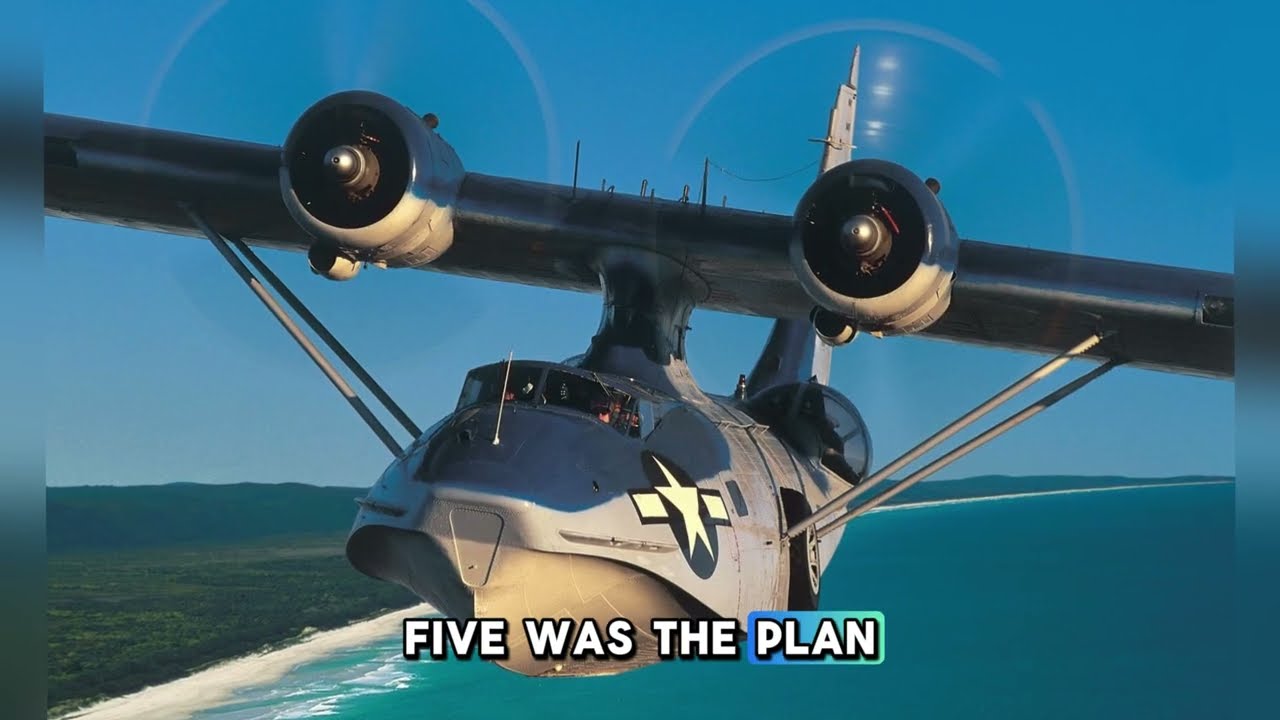
Five was the plan, but the Kawanishi H8K was so new that only two airframes had completed acceptance testing. The other three were still being assembled at Yokosuka. They would not be ready for months.
So Operation K would be flown by two.
Lieutenant Hashizume Hisao climbed into the cockpit of the lead aircraft. He wore a leather flight helmet and a parachute harness over his summer uniform. In the second aircraft, Ensign Sasao Shosuke completed his cockpit checks.
He was the junior pilot. He had flown the H8K only a handful of times. He had never flown her at night.
He had never flown her in combat. Both men knew that the lifeguard submarine, the I-23, was gone. Ninety-four dead.
No one would be coming if their engines failed over the open ocean. The sky from here to Hawaii was empty of any friend. They started the engines.
Four Mitsubishi radials roared to life on each aircraft, spray fans behind them. The H8K was the heaviest seaplane ever built by Japan, 32 tons fully loaded. To get her off the water required a takeoff run of nearly two kilometers.
The first aircraft accelerated, spray, foam. Then the long hull broke free of the surface and she was climbing. Sasao followed two minutes later.
They turned northeast. Ahead of them, only ocean, 2,500 kilometers of it.
The flight lasted thirteen and a half hours. There were no enemy aircraft. There were no enemy ships.
There was only the slow rotation of the Pacific beneath them, the curve of the horizon, the muffled hammering of four engines burning fuel at a rate that no one had ever before sustained from a single load tank. Hashizume crossed the International Date Line at some point during the morning. The calendar in his cockpit, by Japanese reckoning, said it was the 4th of March.
The calendar at Pearl Harbor, by American reckoning, still said the 3rd. The day moved with them, then refused to. At 18:30 local time, the two flying boats spotted the white reef of French Frigate Shoals on the horizon ahead.
The shoals were not an island in any meaningful sense. They were a fish hook of submerged coral, broken only by two pinpricks of sand. The lagoon inside the hook was calm.
The ocean outside it was not.
Two submarines waited on the surface inside the lagoon. I-15 and I-19. Their hulls were crusted with salt.
Their crews stood on deck with mooring lines coiled in their hands. The flying boats landed in formation. Spray burst.
The H8Ks taxied slowly to the submarines. Mooring lines passed from hand to hand. Fuel hoses were hauled across.
It should have been a routine refueling. It was not. The lagoon was rougher than expected.
A steady swell rolled in from the open ocean. The flying boats rocked against the submarines. The mooring lines popped.
Twice, three times, crewmen leaped from deck to wing trying to reattach them. Fuel sloshed, hands tore, curses flew in two languages because the submarine crew was Imperial Navy and the aircraft crew was Imperial Naval Aviation and the two services had always disliked each other. It took nearly four hours to transfer the fuel.
By the time the hoses were secured and the lines coiled away, it was past midnight.
Hashizume gave the order. “Engines start.” The H8Ks rumbled toward the lagoon mouth, spray, roar, lift.
Then the lagoon was gone behind them, and the last lights of the submarines faded into the darkness, and they were alone again. Nine hundred kilometers to Oahu. The night was moonless at first.
Hashizume climbed to 15,000 feet. He breathed oxygen from a rubber mask. Inside the long hull, his crew checked the bomb racks, the cameras, the radio.
The radio operator listened to the navigation beacon broadcast by the submarine I-9 floating somewhere far below them in the dark. The beacon brought them to Hawaii. What did not bring them to Hawaii was the weather.
Around 0100, the cloud came in. Hashizume saw it first, a wall of nimbus, thick and dark, building over the island. The H8K bored into the layer.
The cockpit went blind. Ice crystals tapped the windscreen. The weather forecast from I-23 would have warned him, but I-23 was at the bottom of the Pacific.
There was no forecast. There was only the cloud.
At 0200 Hawaiian time on the 4th of March, 1942, Lieutenant Hashizume Hisao crossed the coast of Oahu in zero visibility. He could not see the island. He used the only landmark he could find: the Kaena Point Lighthouse on the western tip of Oahu, still operating despite the war.
He saw the beam pierce the cloud below him. He fixed his position. He turned east toward Pearl Harbor.
Below him, Honolulu was blacked out. Streetlights extinguished, windows curtained, no glow betrayed the city. Hashizume saw a faint break in the cloud.
He saw, or thought he saw, the outline of an island. He saw what he believed was Ford Island, the long flat shape of it, the runways radiating from the center. He gave the order.
“Bombs away.”
Four bombs fell from his racks, released on the strength of a bombardier’s belief that he could see Pearl Harbor through a hole in the cloud. The bombs fell through the silence. They struck the slope of a dead volcano called Mount Tantalus.
The volcano was 2,000 feet high. It was north of Honolulu in the green hills above the city. There was no harbor here, no dry dock, no naval installation.
There was a high school named Roosevelt, and 300 meters from its empty classrooms, four craters appeared in the dirt. Two to three meters deep, six to nine meters wide, a few windows shattered. A maintenance man heard the bombs and ran into the street thinking it was an earthquake.
Nobody died. Nobody was even seriously injured.
In the cockpit of the H8K, Lieutenant Hashizume Hisao banked his aircraft and turned for home. He believed he had bombed Pearl Harbor. Behind him, somewhere in the cloud, Ensign Sasao Shosuke was lost.
Sasao never received the order to attack from the north. He turned south to skirt the coast of Oahu and try a separate approach. He could not find his commander.
He could not find Pearl Harbor. He could not find anything. In the end, somewhere over the dark Pacific southwest of Waianae, he released his bombs into the open ocean and turned away.
The two flying boats flew home alone, never seeing each other again that night. It was the longest bombing sortie ever flown without fighter escort. Nearly 5,000 miles, almost 36 hours of total mission time.
Two aircraft, eight bombs, zero damage.
The flight home was the longest part. Hashizume’s H8K had been damaged during the takeoff from French Frigate Shoals. The hull was breached below the waterline.
He could not risk landing at Wake Island, where the repair facilities were primitive and the damaged hull might sink the aircraft. He flew on, exhausted, over the empty Pacific, another 1,000 kilometers to Jaluit Atoll, where the docks were deeper, where the technicians were better, where the H8K could be cradled and saved. He arrived over Jaluit on the afternoon of the 5th.
He landed in shallow water. His crew climbed out onto the wings, unshaven, hollow-eyed, alive. They had flown the longest unescorted bombing mission in the history of warfare.
They had hit nothing.
Hashizume did not know this. He believed the bombs fell on the harbor. He believed the fires he glimpsed through the clouds were the burning oil tanks.
He wrote his after-action report on the flight to Tokyo. The report said the mission was a success. The report said he struck the dock area.
In Tokyo, the report was celebrated. In Honolulu, on the morning of March 4th, an American Army patrol climbed the slope of Mount Tantalus to investigate reports of explosions in the hills above the city. The patrol found four shallow craters.
They found broken school windows. They found scraps of metal, and engineers later identified them as fragments of 250-kilogram bombs of Japanese manufacture. The harbor was untouched.
The harbor did not even know it had been attacked.
The Japanese press, however, had heard rumors. Specifically, a Los Angeles radio station had broadcast a story claiming Pearl Harbor was struck hard in the night with 30 sailors killed. The Los Angeles report was invented.
 A reporter had heard a rumor about explosions on Oahu, knew nothing, and broadcast the lie. In Tokyo, the lie was repeated as confirmation. Newspapers printed headlines about a second blow against the enemy fleet.
Hashizume read these papers from a hospital bed in Jaluit, where he was recovering from exhaustion. He read that he killed 30 Americans. He believed it.
He had bombed a sleeping mountainside above an empty high school. The empire told him he had bombed the harbor. This is the way it works in every war.
Back in the dungeon at Pearl Harbor, Joseph Rochefort held a small piece of twisted Japanese metal that was carried down off Tantalus on the morning after. He turned the fragment in his fingers. He did not know the name Hashizume.
He did not know the name Sasao. He did not know exactly which aircraft had dropped this metal on his hillside, but he knew what the metal meant. It meant the warning was right.
It meant submarines refueled aircraft at a remote atoll. It meant Jasper Holmes wrote the script for the Japanese without intending to, and the Japanese had read the script, and now the script must be turned against them. Holmes himself stood in Rochefort’s office and looked at the piece of bomb fragment and said nothing for a long time.
What was there to say? He went back to his desk. He pulled out a folder.
The folder contained his own carbon copies of his stories for the Saturday Evening Post. The August 1941 issue was on top with the title Rendezvous, the byline reading Alec Hudson, the editor’s note praising the author’s vivid imagination. He put the folder away.
He never spoke of it.
Later that same week, Admiral Nimitz made a small decision that would change everything. He summoned Captain Cyril T. Simard at Midway.
He gave an order that did not appear in any newspaper, that was not announced to the fleet, that did not even make sense to most of the men who carried it out. He ordered a seaplane tender stationed permanently at French Frigate Shoals. He ordered a flight of PBY Catalinas to patrol the reef.
He ordered the lagoon mined. He ordered the water barrels onshore destroyed so that any future Japanese submarine arriving thirsty would find no comfort. It was a small order, a handful of ships, a handful of aircraft, a handful of marines on a barren atoll.
Nimitz told no one its real purpose. He was preparing a trap that nobody yet knew was a trap. Three months from now, in early June 1942, the trap would close on the Imperial Japanese Navy, and four aircraft carriers and 3,000 men would pay the price.
But that was not yet. For now, on the 7th of March 1942, Lieutenant Hashizume Hisao was released from hospital in Jaluit. He was told that his Emily flying boat had been repaired.
He was told that he had been selected for a follow-up mission. A reconnaissance run, a different target this time. The target was an American base in the central Pacific.
It was small. It was poorly defended. It was, the naval staff believed, only weakly held by Marine fighter aircraft.
The base was called Midway. Hashizume nodded. He said yes.
He prepared to fly.
On the morning of March 10th, he climbed into the cockpit of his flying boat. It may have been the same H8K he flew over Pearl Harbor. It may have been an older H6K.
The records disagree. He took off from Wotje at first light. He climbed to altitude.
He turned north toward Midway. The flight was long. The flight was quiet.
What Hashizume did not know was that American radar at Midway had been improving steadily for months. What Hashizume did not know was that VMF-221, a Marine Corps fighter squadron of obsolete Brewster F2A Buffaloes, had been ordered to scramble on any contact. The radar picked him up at long range.
Six Buffaloes clawed into the sky from the coral runway. They climbed above the incoming Japanese flying boat. They rolled over and dove.
Hashizume saw them at the last second. His tail gunner fired a brief burst. The Buffaloes attacked from the rear quarter.
Bullets stitched the long hull from cockpit to tail. Fuel ignited, smoke streamed, the aircraft slowed, the aircraft fell. It crashed into the Pacific Ocean a short distance from Midway Atoll.
There were no survivors. The bodies were never recovered.
Lieutenant Hashizume Hisao was 27 years old, perhaps 28. He had been dead for six days when the Japanese papers finally stopped celebrating his strike on Pearl Harbor. He died in the sky above the very place where, three months later, the Imperial Japanese Navy would suffer the greatest single defeat in its 300-year history.
Nobody noticed the omen. Nobody was looking. In the dungeon at Pearl Harbor, Joseph Rochefort opened a new folder.
The folder was marked with a two-letter code that had appeared in increasing frequency in Japanese fleet traffic. The code was AF. He did not yet know what AF meant.
He would soon.
Six weeks after the strike on Tantalus, on the 18th of April, 1942, sixteen American Army medium bombers launched from the deck of the carrier USS Hornet appeared without warning in the sky above Tokyo. They bombed factories. They bombed shipyards.
They bombed the Imperial City itself. The Doolittle Raid. The bombers could not return to the carrier.
They flew on to China, ditching when their fuel ran out. The damage they inflicted was minor. The damage they inflicted on the Japanese mind was enormous.
Admiral Yamamoto was summoned to Imperial Headquarters. He was held responsible. His face was calm.
His hands, by some accounts, trembled. For the first time in the war, the home islands had been bombed. For the first time, the Imperial Navy had failed in its single most sacred duty.
Yamamoto had a plan. He had had it for months. He had been arguing for it against the Naval General Staff since January.
They had resisted. They had preferred a southern strategy, Australia, New Guinea, the Indian Ocean. After Doolittle, the resistance ended.
The plan was approved within 48 hours. The plan was to lure the surviving American carriers, Enterprise and Hornet, and the wounded Yorktown, into a trap in the Central Pacific. The bait was the small atoll of Midway.
The hook was the entire Imperial Combined Fleet. For the plan to work, Yamamoto must know where the American carriers were. He must know whether they were still in Pearl Harbor.
He must know in late May, with absolute certainty, the location of every American flat top in the Pacific.
His Naval General Staff considered the options. Submarines outside Pearl Harbor. Long-range patrol aircraft.
Sympathetic civilians in Honolulu. None of these could do what was needed. Only one method could confirm the carriers were still in port: send a flying boat over Pearl Harbor at night, photograph the harbor from 15,000 feet, and bring the pictures home.
The Naval Staff had a name for this idea already. They had flown it once before, Operation K. Now, it would be flown again.
This time, it would be called Operation K-2. This time, they assured themselves, they would not make the same mistakes. This time, they were walking into a trap that was set the morning Mount Tantalus burned.
This time, the man in the bathrobe in the basement was waiting.
May 1942. In Tokyo, the planning room for Operation K-2 hummed with quiet confidence. The first mission was a partial failure, the staff officers admitted that, but only because of the weather, only because of the clouds.
This time the planners had learned. This time the moon would be full. This time the cameras would work.
Six submarines were committed. I-121 and I-123 would refuel the flying boats. I-122 would stand off the southern coast of Oahu as lifeguard.
I-171 would float between the Marshalls and Hawaii as a radio beacon. Two more would picket the approaches. Six boats, two Emilys, one photograph, the location of every American aircraft carrier in the Pacific.
The mission was scheduled for the night of the 30th into the 31st of May, 1942. By that night, the Combined Fleet would already be at sea. Nagumo’s carriers departed Hashirajima on the 27th.
Yamamoto’s flagship Yamato on the 29th. The fleet was committed. The fleet could not turn back.
The photograph from Pearl Harbor was now the only insurance against a trap nobody yet saw.
Five thousand kilometers east, in the basement at Pearl Harbor, Joseph Rochefort had been awake for most of the month. He had identified a Japanese code letter that kept appearing in fleet traffic. The code was AF.
Rochefort believed AF was Midway. His analysts believed AF was Midway. The cryptographic evidence pointed to Midway.
The geography pointed to Midway. The Japanese carrier movements, when plotted on a chart of the Pacific, pointed to Midway. Washington did not believe him.
The Office of Naval Intelligence in Washington had its own analysts. They argued that AF referred to the Aleutian Islands. They argued that AF referred to the American west coast.
They argued that AF referred to any number of places that were not Midway. Admiral Nimitz had to choose. He had to choose where to send his last three aircraft carriers.
He had to choose with the future of the United States Navy resting on a two-letter code.
Jasper Holmes walked into Rochefort’s office on the morning of May 10th. He had an idea. He proposed that the small garrison at Midway transmit by uncoded radio a routine maintenance signal saying that their freshwater distillation plant had broken down.
Send the signal in clear. Let the Japanese listening post pick it up. Wait.
 Rochefort agreed. Layton agreed. Nimitz agreed.
The signal went out from Midway on the evening of May 19th. The garrison reported a water shortage. The signal was uncoded.
The signal was, on its face, an embarrassing breach of operational security. Any officer reading it would write up the Midway commander on a list of reprimands. Two days later, a Japanese intelligence station in the Marshall Islands transmitted an encrypted report to Tokyo.
The transmission was intercepted by Station Hypo. The transmission was decoded. The transmission said, “AF is short of water.”
Rochefort carried the slip up to Layton’s office at 3:00 in the morning. Layton walked it down the corridor to Nimitz. Nimitz read it under the desk lamp.
He looked up. “Now we know.” The trap was set.
What Nimitz did not yet know was that the trap was set twice, that a second mechanism, laid down quietly three months earlier on a coral reef in the middle of nowhere, was about to close on a submarine commander he had never heard of.
May 26th, 1942. French Frigate Shoals. The submarine I-123 held at periscope depth just before dawn.
Her commander, Lieutenant Commander Ueno Toshitaka, raised the search periscope and turned the eyepiece slowly across the lagoon. He was looking for an empty lagoon. He was expecting an empty lagoon.
The flying boats were not due to arrive for four more days. His job was simple. Confirm the anchorage.
Wait. Refuel the Emilys when they landed. What he saw through the periscope was not empty.
What he saw was the United States Navy. USS Thornton, hull number AVD-11, a converted destroyer now serving as a seaplane tender, lay at anchor inside the lagoon. Beside her, USS Ballard, AVD-10, identical in silhouette, identical in purpose.
Above them, circling slowly in the morning light, two PBY Catalina patrol aircraft. Painted dark blue, heavy machine guns visible in the waist blisters, looking down.
Ueno lowered the periscope. For several minutes, he said nothing. Then he ordered his radio operator to encrypt and transmit the message that would save the United States Pacific Fleet without the United States Pacific Fleet ever knowing it had been saved.
The message read, in substance, “French Frigate Shoals is occupied by the enemy. Refueling rendezvous is impossible.” In Tokyo, the planners received the message and did not at first believe it.
They delayed the mission by 24 hours. They sent orders to Ueno to surface again the following day and look once more. He did.
The Americans were still there. The Catalinas were still circling. The seaplane tenders had not moved.
The planners considered an alternate refueling site, a smaller atoll called Necker Island, closer to Hawaii, harder to reach. They studied charts. They calculated fuel loads.
They argued. In the end, they canceled the operation outright.
Operation K-2 was dead. There would be no reconnaissance flight over Pearl Harbor. There would be no photograph of the American carriers.
The Imperial Japanese Navy would sail into the Battle of Midway with no idea where the United States Pacific Fleet actually was. What the Imperial Japanese Navy did not know, what they could not know, was that on the very same week their submarine was staring through a periscope at the trap they could not enter, the carrier USS Yorktown was limping into Pearl Harbor with a hole in her side from the Battle of the Coral Sea. She arrived on May 27th.
Her engineers estimated three months in dry dock to repair the damage. Admiral Nimitz gave them 72 hours. Welders climbed into her flooded compartments before the water had finished draining.
Plates were cut to shape on the dock and lifted in by crane. Men worked in shifts of six hours on, two hours off. The lights of the dry dock burned all night, every night.
The yard ran on coffee and amphetamines.
On the morning of May 30th, USS Yorktown moved out of Pearl Harbor under her own power. Her decks were still smelling of welding smoke. Her flight deck was still warm from repair.
Task Force 17, under Rear Admiral Frank Jack Fletcher, steamed northwest into the open sea. The same morning, on the other side of the Pacific, Operation K-2 was supposed to launch. It did not launch.
The submarine sat silent at French Frigate Shoals. The flying boat sat silent at Wotje. The cameras sat silent in their cases.
The Imperial Combined Fleet sailed for Midway believing the American carriers were still in port at Pearl Harbor, 2,000 kilometers from any threat to the operation. The American carriers were already at sea. The American carriers were already northeast of Midway.
The American carriers were already waiting.
June 4th, 1942, just before sunrise. Vice Admiral Nagumo Chuichi on the flagship Akagi launched his first strike against Midway. 108 aircraft, bombs and torpedoes.
He did not know that the American carriers were within striking distance. He had been told they were at Pearl Harbor. He had no reason to doubt the intelligence.
The intelligence was a void where Operation K-2 was supposed to be. At 9:30 in the morning, his lookouts spotted the first American torpedo planes, Devastators. Slow, obsolete, dying.
Japanese fighters tore them out of the sky. Forty-one Devastators attacked. Six returned.
The Imperial Navy laughed. At 10:20 in the morning, the laughing stopped.
High above the Japanese task force, descending out of the sun in two long curving dives, came nearly fifty Dauntless dive bombers. Wade McClusky led 32 from USS Enterprise. Maxwell Leslie led 17 from USS Yorktown.
For approximately six minutes, between 10:22 and 10:28 in the morning, the dive bombers fell. A 1,000-pound bomb pierced the flight deck of Akagi and detonated among armed and fueled aircraft preparing for the next strike. The hangar deck became a single sheet of flame.
A 1,000-pound bomb struck Kaga at the forward elevator. Then another. Then another.
The ship was opened like a book, and the pages were on fire. A 1,000-pound bomb struck Soryu. Then another.
Then a third. She was dead within minutes, drifting, burning, abandoned. Three of the six Japanese aircraft carriers that bombed Pearl Harbor six months earlier were mortally wounded in approximately six minutes.
The fourth carrier, Hiryu, launched a counterattack that afternoon. She hit USS Yorktown. She did not sink her.
She herself was found by American scouts and bombed into ruin before sunset. By midnight on the 4th of June, all four of the Pearl Harbor carriers that came to Midway, Akagi, Kaga, Soryu, Hiryu, were sinking or sunk. 248 aircraft were gone.
3,057 Japanese officers and men were dead. Among them were most of the irreplaceable veteran air crews who had been the spear of the Imperial Navy. The Pacific war was decided in six minutes of a Thursday morning.
It would take three more years to play out. But it was decided.
Now consider the chain. If Operation K had never been flown in March 1942, if the flying boats had stayed in their hangars at Yokosuka, if Hashizume and Sasao had been ordered to other missions, if no Japanese aircraft had dropped four bombs on a sleeping volcano in the green hills above Honolulu, then the Americans would have had no reason to suspect French Frigate Shoals. Then no PBY Catalinas would have circled the lagoon in May 1942.
Then no seaplane tenders would have been waiting for I-123 to surface. Then Operation K-2 would have flown. Then Lieutenant Commander Ueno would have refueled two flying boats under a full moon.
Then those flying boats would have photographed Pearl Harbor and found the docks empty. Then Yamamoto would have known that the American carriers were already at sea. Then Nagumo would have known that an ambush was coming.
Then Midway might have ended differently.
The cloud that hid Pearl Harbor from Hashizume on the night of March 4th, 1942, the cloud that turned his bombs aside and sent them onto an empty mountainside, the cloud that everyone in Tokyo cursed as bad luck and counted as a failure, was the single greatest gift the Pacific War ever gave to the United States Navy. The failure was the victory. The hit was the miss.
The miss was the catastrophe.
Three years later, the summer of 1945, the same basement at Pearl Harbor, older now, quieter. Most of the men who once worked here had been transferred to bigger commands, larger stations, fleets steaming toward the home islands of Japan. Jasper Holmes still walked with a limp.
The limp was worse than before. He was 45 years old and looked 60. He sat at a desk that had been his desk since the war began.
He opened a drawer. Inside the drawer was a yellowing copy of the Saturday Evening Post from August 1941. The story was still inside it.
The byline still read Alec Hudson. The title still read Rendezvous. He did not open it.
Beside the magazine on the desk sat a sealed bottle of Scotch whiskey. The bottle was addressed to a submarine captain whose boat had just sunk another Japanese transport. Holmes did not know the captain well.
He had never met the captain. He sent a bottle for each Japanese ship sunk that participated in the attack on Pearl Harbor on the 7th of December, 1941. He had been doing this since 1942.
He would do it until the war ended. It was not vengeance. He had never called it vengeance.
He had never called it anything.
He placed the bottle on the outgoing mail tray. He closed the drawer with the magazine inside. Somewhere far to the west, beyond the dark Pacific, beyond the bones of four sunken carriers, beyond a coral reef nobody in America would ever visit, the war was ending.
In the green hills above Honolulu, on the slopes of an extinct volcano, four shallow craters had already filled with grass. A school bell rang. Children walked home in the warm afternoon light.
Nothing remembered what almost happened here. The trap stood closed. The cloud had long since passed.






