On the night of 17 December 1944, near the crossroads of Baugnez, close to the Belgian city of Malmedy, a column of American prisoners stood in a farmer’s field. They had surrendered only a short time before, after being cut off during the opening hours of the Ardennes Offensive. Now, members of the Leibstandarte SS Adolf Hitler, the elite formation that had once been Hitler’s personal bodyguard, opened fire on them with machine guns.
Some of the prisoners panicked and ran. Most were shot down where they stood. Then the SS men walked among the bodies, searching for survivors, and killed any who still moved with a gunshot to the head.
A few of the fleeing Americans hid in a café at the crossroads. The SS set the building on fire and shot every man who came out. At least 82 American prisoners of war died in that field that day.
The massacre at Malmedy would become the most infamous crime committed by the Leibstandarte in the west, but it was only one episode in a long history of violence that stretched back to the very beginning of the Nazi regime. The unit had been built not to defend Germany in any ordinary military sense, but to protect Hitler and serve Nazi ideology. Wherever it fought, from Poland to France, from the Soviet Union to Italy, it left behind massacres, murdered prisoners, and terror against civilians.
Its story begins in the spring of 1933, in Berlin.
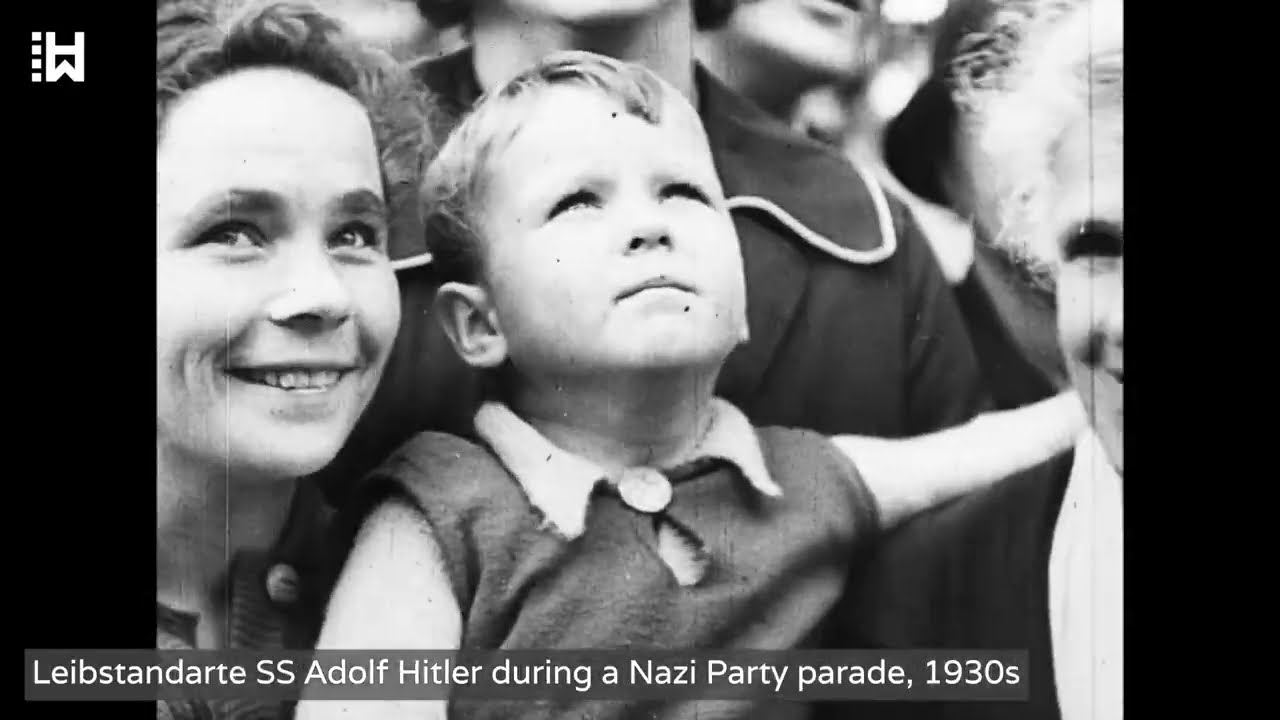
On 17 March 1933, a new guard unit was formed in the capital of the Third Reich. At first it was small, presented as a bodyguard for the newly appointed Chancellor, Adolf Hitler. Loyal only to him, placed close to the center of power, it was dressed in fine uniforms and paraded for propaganda cameras, given the image of a chosen formation.
Behind that image stood something far more dangerous. The roots of the unit reached back to Hitler’s earlier bodyguard groups of the 1920s, small bands of men who protected him at party rallies and street fights. After the Nazi seizure of power in January 1933, Hitler wanted a guard he could trust completely, and soon a new SS formation was created.
In the following months it changed names several times, and in September 1933 it became the Leibstandarte SS Adolf Hitler, numbering approximately 120 men. It was commanded by Sepp Dietrich, a former sergeant and one of Hitler’s earliest followers, and was stationed in Berlin-Lichterfelde.
On 9 November 1933, the men of the Leibstandarte swore a personal oath to Hitler. Their loyalty was directed not to the state or to the law, but to Hitler himself. This was not a formality.
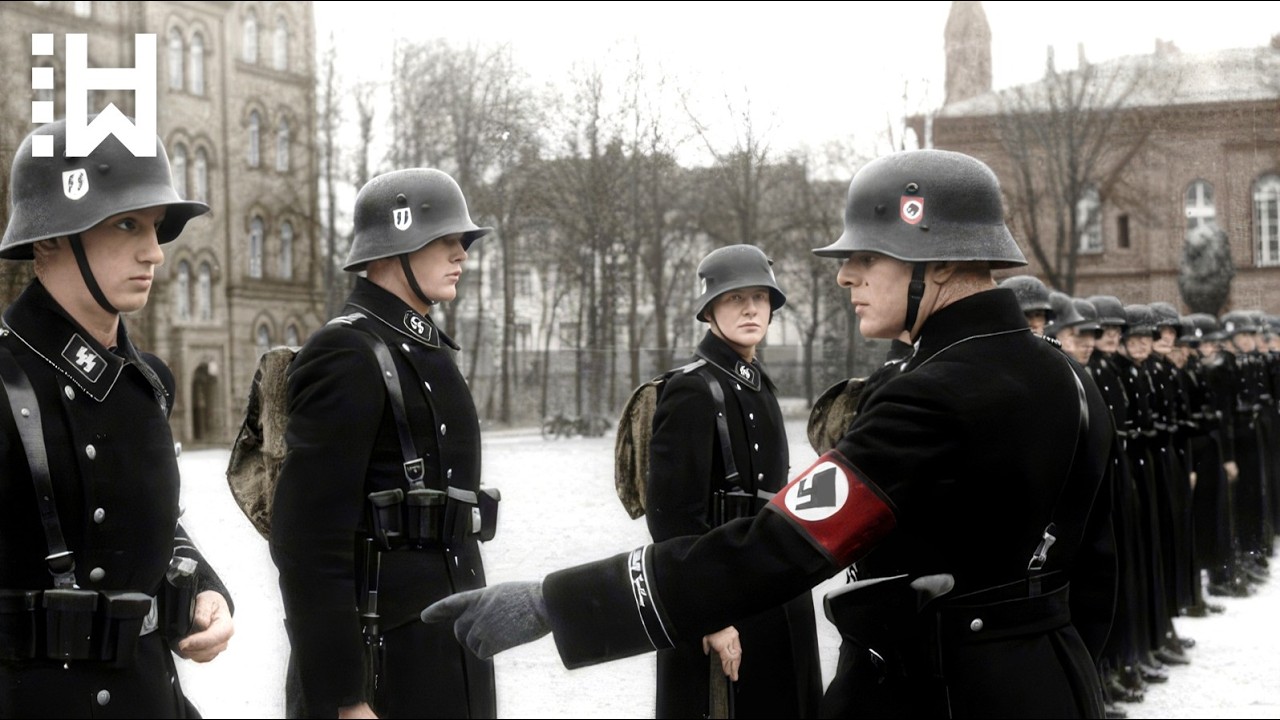
The SS, the organization responsible for enforcing Nazi racial policy and running concentration and extermination camps, used the Leibstandarte as a symbol of discipline and loyalty, a model for the expansion of other armed SS formations. The unit grew quickly, and when the Second World War began on 1 September 1939, the Leibstandarte, by then expanded into a motorized regiment, took part in the German attack on Poland. It fought in several battles against Polish cavalry brigades that tried to hit the flanks of the German advance.
The campaign in Poland was short, but the crimes of the unit began almost immediately. In the night of 18 September 1939, men serving under an officer named Hermann Millert hunted down Jewish civilians and shot fifty of them. The massacre was so brutal that even the Wehrmacht, the regular German army, arrested Millert and wanted to bring him before a military court.
But Sepp Dietrich intervened, and in the end Hitler himself secured Millert’s release. This early case showed a pattern that would continue through the war: members of the Leibstandarte could murder civilians and still expect protection from the highest levels of the Nazi system. These were not the only crimes the unit committed in Poland.
Its men became notorious for burning villages and killing Polish civilians with machine guns.
In 1940, the unit fought in the campaign in Western Europe. There it became linked with one of the best-known crimes against Allied soldiers during the Western Campaign. On 28 May 1940, near the village of Wormhoudt in northern France, British and French soldiers who had been cut off and had run out of ammunition surrendered to German troops.
Instead of being treated as prisoners of war, many were forced into a barn. Some had already been shot or wounded, and many had been beaten before they arrived. Once they were inside, hand grenades were thrown into the crowded building.
Some of those who survived the blasts were taken out of the barn in groups and executed, while others were shot inside. Between eighty and a hundred prisoners of war were murdered. A few survived only by hiding among the dead or escaping despite severe wounds.
Soon after the fall of France, the unit was reorganized and prepared for the next Nazi attack. That came in 1941, when the unit fought in the Balkans and then took part in the invasion of the Soviet Union. On the Eastern Front, the conflict was shaped by ideology, starvation, mass shootings, and the constant destruction of any boundary between combatant and civilian.
Like other units of the Waffen SS, the military branch of the SS, the Leibstandarte was hardened by this experience. After a year on the front lines, the unit was transferred to northern France in July 1942. There it was expanded into a Panzergrenadier division, and from 15 July 1942 it was designated as the SS Panzergrenadier Division Leibstandarte SS Adolf Hitler.
In the spring of 1943, the formation was sent back to the Eastern Front, where it participated in the battles near the Ukrainian city of Kharkov. The city was recaptured by the SS division on 15 March 1943. During the fighting around Kharkov, a smaller unit of the division under the command of Joachim Peiper gained a nickname: the blowtorch battalion.
Ukrainian sources, including a surviving witness named Ivan Kiselyov, who was fourteen at the time, described the killings in the villages of Yefremovka and Semyonovka on 17 February 1943. Soldiers under Peiper’s command killed 872 men, women, and children, and some 240 of these were burned alive in the church of Yefremovka.
The division also took part in Operation Citadel, the German summer offensive on the Eastern Front in 1943, including the legendary Battle of Prokhorovka, where it lost hundreds of men. After the operation ended, the division left the Eastern Front once again. This time it was sent to northern Italy, after the country left the Axis alliance.
There it continued its policy of mass murder and violence against civilians. Between 15 and 23 September 1943, men of the division arrested Jewish civilians in a series of operations around Lago Maggiore, on the Swiss-Italian border. Members of the division arrested over fifty Jews and held them in a number of local hotels.
During the nights of 22 and 23 September, they were taken in small groups to a local forest, where they were shot. The bodies were then placed in sacks filled with stones, rowed out in boats, and sunk in the lake.
Other members of the division seized hundreds of Jewish refugees near the municipality of Borgo San Dalmazzo in the Italian region of Piemonte. Three hundred and forty-nine of them were imprisoned and later deported through France to the Auschwitz-Birkenau camp in German-occupied Poland, where mass murder was being carried out. Only nine of them survived the war.
The division also committed the massacre in Boves, where 25 Italian civilians were killed, including the parish priest Don Bernardi and local industrialist Alessandro Vassallo, who were burned alive, and 350 houses were destroyed by artillery fire of the Waffen-SS under the command of Joachim Peiper. The massacre and destruction were reprisals for one German soldier having been killed and two German officers having been captured and held by Italian partisans in the vicinity of the town. After obtaining their release, Peiper ordered the destruction of the town despite earlier promising not to do so.
By late 1943, the division returned to the Eastern Front and suffered heavy losses in Ukraine during the winter of 1943 to 1944. The division was nearly destroyed and had to be rebuilt in Belgium. After the unit was again operational, it was positioned north of the River Somme to counter any possible landing in the area of Pas-de-Calais.
After the Allies landed in Normandy on 6 June 1944, the division was sent from this region to support the German attempt to halt the Allied advance. This proved unsuccessful, and the division, along with other units, ended up in the so-called Falaise Pocket, from which some of its units managed to escape only by abandoning all their armored equipment. The division sustained 5,000 casualties during the Normandy campaign, and during their retreat through French territory, they faced attacks from the French Resistance.
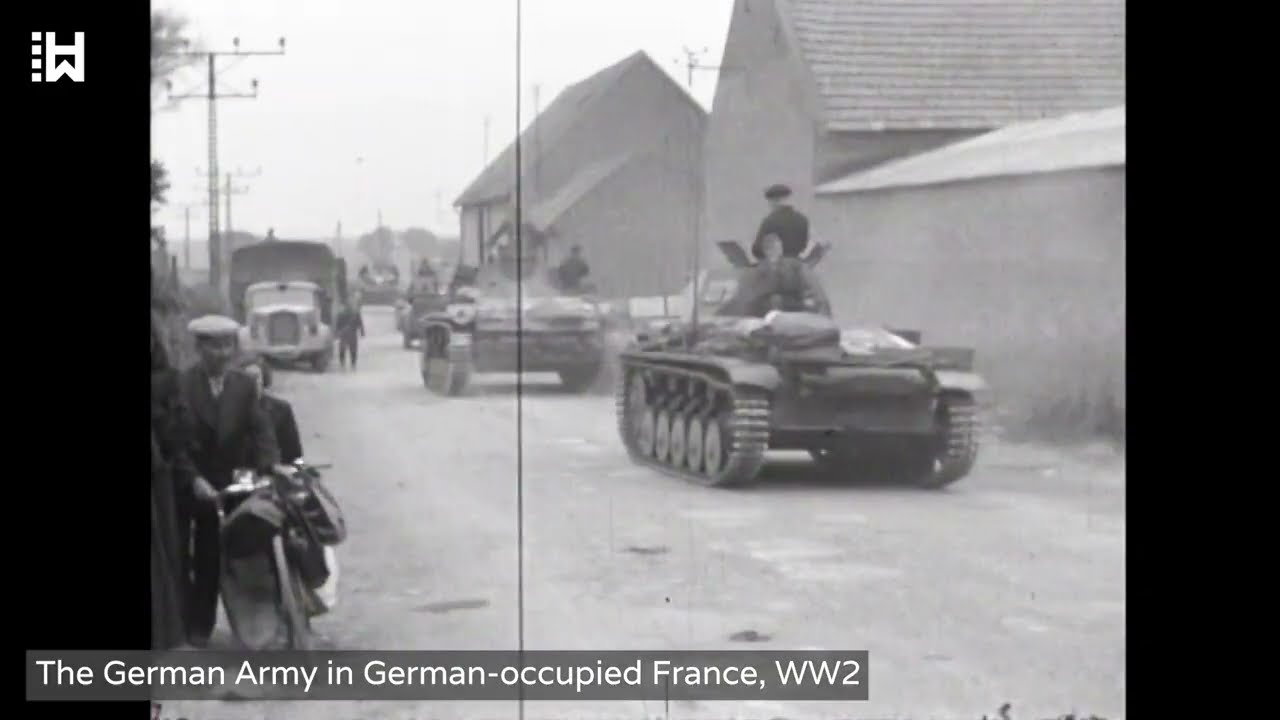
The response of the Waffen SS was often collective punishment.
In the Ain department in northern France, on 31 August 1944, members of the Leibstandarte and the 12th SS Panzer Division Hitlerjugend surrounded the village of Tavey Pont-Saint-Nicolas, killed 20 civilians, including two children aged six and eleven, and burned 86 houses. On the same day, in the nearby commune of Plomion, fourteen men were reportedly beaten to death in the presence of women and children.
Its most infamous crime in the west came during the Ardennes Offensive in December 1944, Germany’s last major attack on the Western Front. Within the division, Kampfgruppe Peiper, a battle group led by Joachim Peiper, formed the spearhead. On 17 December 1944, near Baugnez, close to the city of Malmedy in Belgium, American soldiers were captured and murdered.
The prisoners of war who survived said that a group of approximately 120 American soldiers stood in the farmer’s field when the Waffen SS fired machine guns at them. Panicked by the machine gun fire, some soldiers fled, but German soldiers shot and killed most of them where they stood. After machine gunning the group, the Leibstandarte soldiers walked amongst the corpses searching for wounded survivors to kill them with a gunshot to the head.
Some of the fleeing American soldiers hid in a café at the nearby crossroads. The SS soldiers then set the café on fire and killed every American soldier who escaped the burning building. At least 82 American soldiers who were prisoners of war were shot by members of the Leibstandarte SS Adolf Hitler during this massacre.
After the failure of the Ardennes Offensive, the Leibstandarte was sent to Hungary in early 1945 for the fighting around Lake Balaton. Germany was trying to protect its last important oil supplies and hold together the collapsing front. The division fought there and then retreated into Austria as Soviet forces advanced.
By this stage, what had once been presented as Hitler’s proud elite formation was once again only a battered remnant. In April 1945, the remains of the division surrendered near the city of Steyr in Upper Austria.
During the Second World War, many of the men of the Leibstandarte SS Adolf Hitler who were involved in crimes did not live to see its end. The division fought on almost every major front, and its losses were extremely high, especially from 1943 onward. Officers and soldiers who had taken part in killings in Poland, France, the Soviet Union, and Italy were killed in the thousands.
A smaller number of men connected to the crimes of the Leibstandarte met violent ends after the war. The most well-known case was Joachim Peiper, the commander linked to the Malmedy massacre and other massacres done by the unit through Europe. Although he had escaped execution after the war, as his death sentence was reduced, his past followed him.
In 1976, while living in France, his house was attacked and set on fire by a group calling themselves the Avengers. He died inside the burning building. His death was widely seen as an act of revenge connected to his wartime murders.






