In 1880, Los Angeles was a town of barely eleven thousand people, surrounded by farms measured in tens of thousands of acres. San Diego was even smaller. The entire region from Santa Barbara to San Bernardino held fewer souls than a single Manhattan neighborhood. Yet amid this apparent emptiness, a handful of men understood what others missed: that controlling water rights, railroad lines, and vast stretches of land with perfect weather meant controlling the future of everything that would grow there.
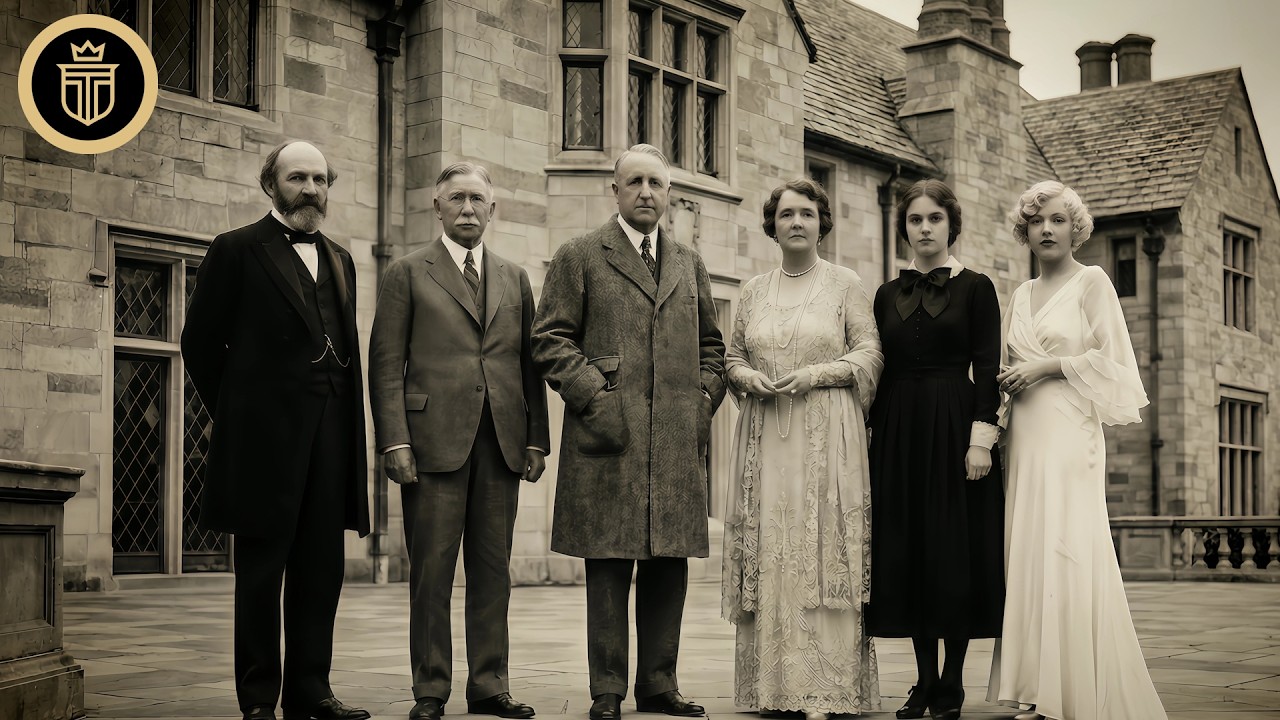
These men laid the tracks, dug the wells, subdivided the farms, and built the infrastructure that turned a region of fewer than two hundred thousand people in 1900 into a metropolis of millions by mid-century. Their names still hang over universities, museums, and neighborhoods, permanent markers of who profited from the transformation. The backbone of Orange County was built by the Irvine family, whose discipline and quiet strategy in land ownership shaped the region long before the television shows. Before Orange County became synonymous with luxury cars and planned communities, it was a patchwork of farms, the largest of which belonged to the Irvines.
The Irvine Ranch stretched over approximately 110,000 acres, running roughly twenty-three miles from the Pacific Ocean to the Santa Ana River. That single property covered nearly a third of the land later divided into cities, suburbs, and highways. From coastal cliffs to inland valleys, it formed one contiguous estate that gave the family extraordinary control over how Southern California grew. The Irvines treated the land not as a short-term asset for quick sale but as a long-term project, where timing, infrastructure, and agriculture had to harmonize.
Wheat, cattle, citrus, and lima beans rotated through carefully planned cycles, each crop chosen for the soil and climate rather than fashion or speculation. In 1959, when the University of California sought a site for a new campus, it chose a coastal ridge on the Irvine Ranch, cementing the region’s future in higher education. That campus grew into UC Irvine, now a leading research institution with more than thirty-six thousand students. The family also donated land that became Irvine Regional Park, public green space long before open space became an urban planning buzzword.
When the city of Irvine was incorporated in 1971, it took its name from the ranch. Today, the Irvine Company controls more than one hundred million square feet of offices, apartments, shopping centers, hotels, and marinas, and its wealth rests on decisions first made by a nineteenth-century immigrant who arrived owning no land at all. James Irvine was born in 1827 in County Down, Ireland. When the Great Famine upended Irish life in the mid-1840s, he left for the United States, arriving in New York around 1846 with very limited resources.
His first job was in a paper mill, which provided wages and a foothold. By the late 1840s, he joined the rush toward California and the Gold Rush, but he chose a sharper role than most: instead of digging for gold, he became a merchant supplying miners with food and tools, earning steady income in a chaotic environment. He invested his profits in San Francisco real estate, and by the 1860s he was among the city’s leading businessmen. One deal connected him to the Flint and Bixby families, powerful cattlemen who controlled vast grazing ranges in Southern California.
Together, they acquired the Las Ciénegas Ranch in 1866. While many nineteenth-century landowners rushed to subdivide and sell, Irvine focused on cohesive holdings and continuous production. The turning point came in September 1876, when he bought out his partners for $150,000 and took full control of roughly 110,000 acres that became known as the Irvine Ranch. He shifted gradually from open-range cattle toward citrus and lima beans, which suited the local climate and growing markets.
James Irvine’s son, James Harvey Irvine II, was born in San Francisco in 1867. His mother died when he was seven, and his father died in 1886 while James was still a teenager. The ranch passed into guardianship, then to him, and he took charge in his mid-twenties. He rode the property on horseback, sometimes covering forty miles a day.
In 1894, he founded the Irvine Company, converting the estate from a family trust into a corporate structure that allowed contracting, borrowing, and expansion with greater flexibility. Under his leadership, the ranch remained focused on profitable agriculture, and he invested in water systems and land improvements without randomly subdividing the property. He died in 1947, leaving not just land but a company structurally prepared for an era of planning and development. That era began taking shape in the late 1950s when the University of California looked to build a new campus in Southern California and turned to the Irvine Ranch as a possible site.
Los Angeles architect William Pereira began drafting concepts combining the campus with a surrounding city, a rare opportunity to envision both at once. Early ideas featured a radial plan centered on artificial lakes, which later evolved into a necklace of distinct villages along two parallel main streets, with UC Irvine as the jewel at their intersection. In 1960, the Irvine Company hired planner Raymond L. Watson to translate the drawings into real neighborhoods, roads, and commercial districts.
Each village had its own housing style, schools, and shopping centers framed by wide arterial roads designed for car travel. The Irvine Spectrum developed to the east, creating work and entertainment zones around the residential core. Over time, parts of the historic ranch were protected as parkland and open space, forming one of the largest networks of protected land adjacent to urban areas in the country. By the 2020s, Irvine’s population surpassed three hundred thousand, and in 2025, real estate research firm Zonda named it the best-planned community in America.
Yet even as planners reshaped the land, a new figure within the family began asserting herself. Joan Irvine Smith, born Anita Irvine on July 1, 1933, was the only child in the direct line from James Harvey Irvine II. Her father died when she was two, and her grandfather’s death in 1947 left her a minority but influential stake in the company. By the early 1960s, she gained a reputation as an informed shareholder unafraid to challenge decisions made by the company’s directors.
In July 1962, she filed a lawsuit accusing the Irvine Company of mismanaging a land deal that swapped a large parcel in Orange County for agricultural land in Imperial County. The suit, announced at San Francisco’s Mark Hopkins Hotel, sought compensation for what she considered losses to herself and other family shareholders. She also became a key supporter of placing UC Irvine on ranch land, working with university leaders to shape the campus’s role and direction. Her concept of directed imagination, which she discussed at conferences and planning sessions, encouraged university and city leaders to blend creative vision with practical execution.
University of California leaders acknowledged that without her advocacy, the campus might not have taken the shape or location it occupies today. The family’s direct control would ultimately give way to an outsider. Donald Bren was born in Los Angeles in 1932. He studied business and economics at the University of Washington, then served in the U.
S. Marine Corps. In 1958, he founded Bren Company and began building homes in Orange County. By 1963, he helped launch Mission Viejo, directing one of California’s first large-scale master-planned communities.
Those experiences prepared him for the defining deal of his career. In 1977, Bren joined an investment group that bought the Irvine Company for approximately $337 million, acquiring about a third of the stock initially. By 1983, he controlled roughly 86 percent of the shares, and through ongoing purchases he eventually bought out the remaining minority shareholders, making the company private under his leadership. The Irvine Company expanded the master-plan approach across offices, apartments, shopping centers, and resort-style residential communities.
Today the portfolio covers more than 120 million square feet, including hundreds of office buildings, over one hundred apartment complexes, dozens of shopping centers, and numerous hotels, marinas, and golf courses. Bren also became one of California’s most influential land conservation patrons, ensuring the protection of approximately 57,500 acres, about 60 percent of the historic Irvine Ranch, as open space and parks. His philanthropy has directed more than $1. 3 billion toward education and environmental causes.
The Irvine family no longer runs the company bearing its name, but the original land empire, reshaped by generations and then by a billionaire from outside the family, still dictates how Orange County lives, works, and builds its wealth.






