The tactical conduct of the enemy’s defense had been first class. Erwin Rommel wrote that sentence in February 1943, in his own account of the fighting at Kasserine Pass in Tunisia. He had just won that battle. The army he was describing had just lost it.
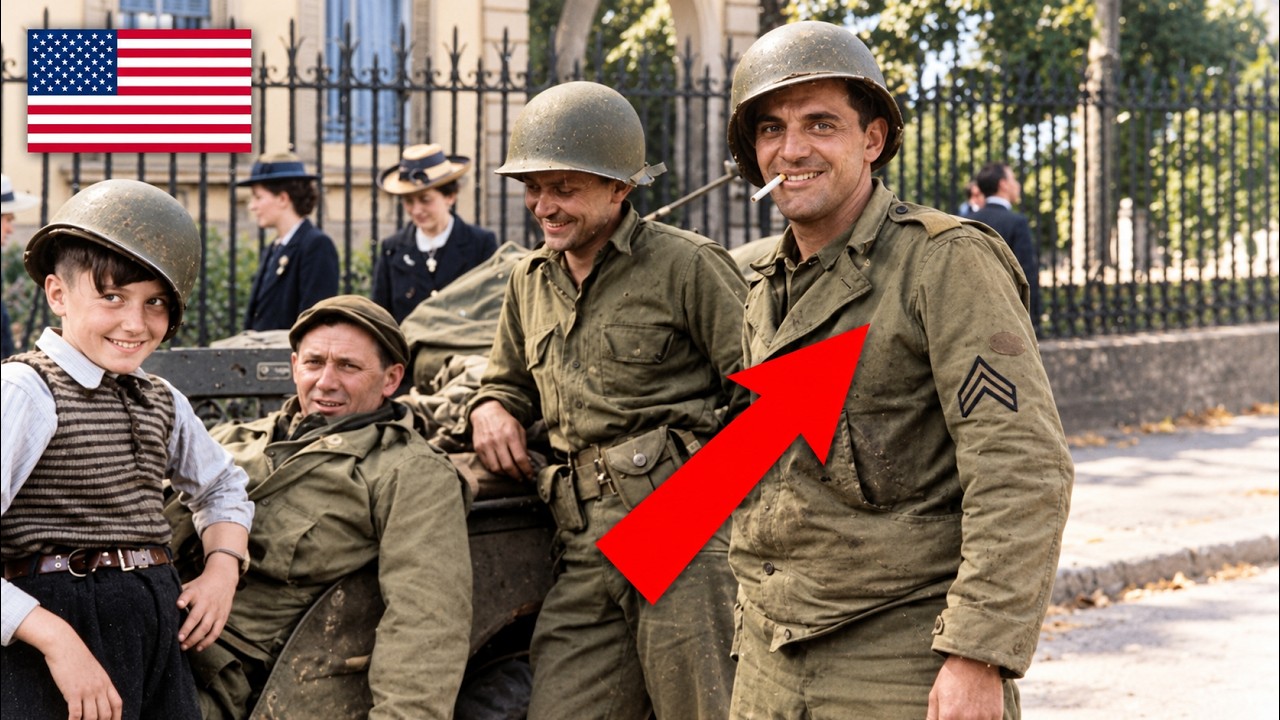
A victorious field marshal owes the beaten side nothing. Rommel was not handing out praise. He was correcting his own picture of the enemy in ink, before the next battle could correct it for him. He was not the only German to do it.
Across two world wars, German soldiers, officers, and interrogators kept writing about the Americans in the same uneasy way. They noted how the Americans looked, how they talked, how they spent their shells, how they guarded their secrets, how they treated the men they captured. The tone shifts from one document to the next. Contempt first, then confusion, then something closer to alarm.
Seven things kept coming back. Behind all seven sits one question. Berlin had told its soldiers that the Americans were rich, soft, and unwilling to fight. How did that army become the one German officers could not stop studying?
The answer is in the files. Few people ever open them. Some are American intelligence reports built from German letters and interrogations. Some are German reports captured and translated.
One is a typed ultimatum that came back across the lines with a single word written in reply. The prejudice was older than Hitler. After the First World War, American troops occupied part of the German Rhineland. Army intelligence officers there did something unusual.
They collected what the Germans were saying about them. Interrogation records, intercepted letters, the words of soldiers, priests, women, village officials, and shopkeepers. They gathered it all into a report with a long dry title: *Candid Comment on the American Soldier of 1917–1918 and Kindred Topics by the Germans. *
A man from Bonn named Carl Finkel explained what Germans had believed before the United States entered that war.
“The prevailing opinion,” he said, “was that America was a money-hunting nation, too engrossed in the hunt of the dollar to produce a strong military force. ”
That belief outlived the defeat of 1918. By the time Germany declared war on the United States in December 1941, it had hardened into propaganda. On February 23, 1942, President Franklin Roosevelt read the enemy’s version back to his own people over the radio.
“The Axis theme has been that Americans are admittedly rich, that they had considerable industrial power, but that Americans are soft and decadent, that they cannot and will not unite and work and fight,” he said. From Berlin, Rome, and Tokyo, he added, Americans had been called a nation of weaklings, playboys, men who would hire British, Russian, or Chinese soldiers to do their fighting for them. Rich, soft, unwilling. That was the portrait the German soldier carried when he finally met the Americans in the field.
The seven observations that follow are what happened to it. The first thing: they did not look like an army. The 1918 report had already caught it. Dr.
Otto Schramm, a former Prussian municipal official, gave the harshest verdict in the file. “The American army seems to me as fine a collection of individual physical specimens as I have ever seen,” he said. “But from the standpoint of military discipline, it is a mob, pure and simple. The men appear slouchy.
The officers do not stand out from the men in appearance. ”
To an eye trained on Prussian parade grounds, the last detail was the most damning. Officers who looked like their men. Another German, M.
Walter of Menniken, saw the same thing from a different angle. “The attitude of the American officer towards enlisted men is very different than in our army,” he said. A letter from Norwood, translated by the Americans, put it more bluntly. “They are like children,” its writer said, “and find their joy only in playing and eating.
”
Big, loose, careless men. Then children in uniform. Yet the same file records something else. The mayor of Kaschenbach admitted that his town had been warned.
“We were informed that your men were inclined to be rough,” he said. “But today, after living 24 hours with them, we have no longer any apprehension. They are wonderfully mild-mannered men and a great contrast to the domineering attitude of our own soldiers. ”
Among all these civilian voices sits a line from a German soldier, a reserve lieutenant named Auster.
It fits in eight words: “Americans are good fighters with nerve and recklessness. ”
A mob, said the official. Children, said the letter. Good fighters, said the lieutenant.
All three were describing the same men. A generation later, when a new German army went to meet a new American one, Berlin’s propaganda had kept the official’s verdict and the letter writer’s. The lieutenant had been left out. The second thing: they got back up.
Tunisia, February 14, 1943. German and Italian forces launch an offensive against the American II Corps. These Americans are new to this war, and Rommel, by several accounts, holds the untested enemy in low regard. The first days are a disaster for them.
By February 16th, more than 1,600 Americans have been lost. The Germans claimed 2,000 prisoners. Across the whole battle, II Corps alone loses 183 tanks. Then on February 18th, Rommel notices something and puts it on paper.
“Over the American sector,” he writes, “an observation plane directed the fire of numerous batteries on all worthwhile targets throughout the zone. ” One small aircraft, many guns, every target worth hitting. From February 19 to 22, the fighting concentrates on Kasserine Pass and the ground around it. The Germans push, the Americans bend, reserves arrive, the passes close.
On February 22nd, after a final assault fails, Rommel orders his forces onto the defensive. German losses, by the figures the National World War II Museum gives, come to 1,210 killed, 1,536 wounded, and 252 missing. Twenty tanks. Kasserine remains an American defeat.
The numbers leave no room to call it anything else. And still Rommel writes the sentence that opens this story. And then he keeps going. “They had recovered very quickly after the first shock and had soon succeeded in damming up our advance by grouping their reserves to defend the passes and other suitable points.
”
Recovered very quickly. That was the second strange thing. An army that the propaganda said would break had broken, and within days it had begun to reorganize under fire. The third thing: they spent steel instead of men.
By 1944, the German soldiers facing Americans in France shared a recurring complaint. It turns up in interrogation after interrogation. According to a study published by the Army Historical Foundation, German prisoners taken in France frequently remarked on the heavy volume of American fire they had experienced. Rommel, now commanding in Normandy, wrote it more coldly.
“Also in evidence is their great superiority in artillery and outstandingly large supply of ammunition. ”
Outstandingly large. The quantity was only half of it. The other half was method.
American artillery ran its guns through fire direction centers. One center could pull together the artillery of two or more neighboring divisions, throw all of it at a single objective, then swing all of it to the next. In the Ardennes that winter, a single assistant division commander would coordinate 30–48 guns and a battalion of 4. 2-inch mortars through one headquarters.
They had a technique called time on target. Each battery calculated the flight time of its own shells. Each fired on its own count. Every round from every gun arrived at the same instant.
Picture it from the German side. You are in a hole at the edge of a Norman field. No shells creep toward you to give a warning. There is silence, and then the ground lifts all at once.
General Hans Eberbach, commanding the Fifth Panzer Army in Normandy, lived the other side of that equation. His own artillery included guns from every major power in Europe. Captured pieces, different calibers, different shells, each one its own supply problem. One army fought with whatever it had taken from others.
The other fought with an industry behind it. There is a document in this story that could have changed the summer of 1944. A German officer held it in his hands. It came out of an American pocket.
What he could do with it, and what he could not, belongs a little further on. First, the sky. The fourth thing: the sky never emptied. Normandy, July 24, 1944.
Around 1,600 aircraft take off to blast a hole in the German line west of Saint-Lô. The weather closes in. The operation is called off. Some of the bombers drop anyway.
The bombs fall short. More than 25 Americans are killed; 130 are wounded by their own aircraft. The Americans do not cancel. They try again the next morning.
July 25th, 22 minutes to 10 in the morning. Roughly 3,000 American aircraft go in: about 600 fighter-bombers first, then 1,800 heavy bombers of the Eighth Air Force, then the medium bombers. Six thousand short tons of explosives on the German positions. Facing them is the Panzer-Lehr Division, one of the most capable armored formations Germany still had in the West.
Before the bombing, it can put about 2,200 combat troops into the line, with 12 Panzer IVs and 16 Panthers ready to fight and 30 more tanks under repair. Its commander is Fritz Bayerlein, who had served under Rommel in North Africa. The bombing alone costs his division around 1,000 men. His armor is wiped out.
His headquarters records are lost. Historians quote his own verdict on what remained of Panzer-Lehr after the operation. It had been, he said, “finally annihilated. ”
The American side paid too.
Bombs fell short again on July 25th. One hundred eleven Americans were killed and 490 wounded. Among the dead was Lieutenant General Leslie McNair, the highest-ranking American soldier killed in the European theater. Two days running, American bombs had killed Americans.
The infantry went forward anyway. For a German commander, that was the fourth strange thing. Three thousand aircraft was a number. Absorbing that mistake and attacking through the smoke of it on the same day was a decision.
The breakout that followed tore open the German line. By the end of July, American columns were driving south toward Avranches, the gateway out of Normandy into Brittany and the open country of France. Which brings back the document. The fifth thing: they carried their secrets in their pockets.
In January 1945, the *American Intelligence Bulletin* printed an article meant to alarm its own readers. It was titled “How to Help the Enemy. ” It drew on the words of a German intelligence officer who had interrogated American and British prisoners. His assessment of American document security fit in two words: “absolutely shocking.
”
He gave an example. On a captured American lieutenant, his people had found a top secret order of battle. It laid out how American forces were regrouping for the breakthrough at Avranches. Confronted about carrying a paper like that into the line, the lieutenant answered, “Well, you can’t keep all these things in your head.
”
That is the document that waited in the middle of this story. It gave the Germans, in the officer’s words, “advanced notice of many locations and moves of the Allied forces. ” He believed it could have been used to stop the attack. He also said what had prevented it: “They did not have the air cover.
”
Set the two strange things side by side. An army careless enough to let a top secret plan ride into battle in a lieutenant’s pocket. An army so strong in the air that the enemy who captured the plan could not act on it. The German officer had found the first.
The fourth thing explains the second. The Americans could afford a careless lieutenant because the sky over Normandy belonged to them. By the bulletin’s account, it was not a single slip. American troops regularly carried classified papers in vehicles and on their persons at the front, and the German officer considered it remarkable.
A sheet of paper in an American pocket could have cost the Americans their breakthrough, in that officer’s judgment. Another sheet of paper was about to cost the Germans something else. The sixth thing: they answered in a language no dictionary could translate. December 16, 1944.
Germany launches its last great offensive in the West through the Ardennes. More than 410,000 men, around 1,400 tanks and armored vehicles, 2,600 artillery pieces, more than 1,000 combat aircraft. The American line there is thin: tired units, inexperienced replacements, a sector used as a place to rest. Within days, the crossroads town of Bastogne is surrounded.
December 22, southeast of the town. A small German party walks forward under a flag of truce. A major, a lieutenant, two enlisted men. They carry a typed demand.
The encircled Americans are invited to an honorable surrender. They have two hours. If they refuse, the Germans promise annihilation by artillery and anti-aircraft fire. The message reaches Brigadier General Anthony McAuliffe, acting commander of the 101st Airborne Division.
He reads it. According to the men around him, he mutters, “Oh, nuts. ”
Lieutenant Colonel Harry Kinnard of his staff remarks that those first words sum up the situation well. So the reply is typed.
“Nuts! ” Signed, “The American Commander. ”
Colonel Joseph Harper, commanding the 327th Glider Infantry, carries the answer back to the German party. The German major reads it.
He does not understand it. He asks Harper what the message means. Harper translates in plain English: “Go to hell. ”
That was the sixth strange thing.
The German army had sent a formal document written with the courtesy of the old rules of war. The Americans sent back a word of street slang, and the German officer standing in the cold needed it explained to him before he knew he had been refused. The threatened bombardment never came as promised. On December 26th, the Fourth Armored Division broke through to Bastogne.
The 101st Airborne was still holding. The whole Ardennes battle cost both sides dearly. American casualties came to about 81,000, including 8,400 killed. German losses are harder to fix.
Estimates run from 63,000 to more than 75,000, and one American estimate reached 103,900. The sources do not close that gap, and this account will not pretend to. The seventh thing: they fed their enemies. The 1918 file had already noticed something about Americans and food.
A German named Paul Heinman called American prisoners “what might be called bad prisoners. ” Another, a former Paris policeman, said the Americans were the chief complainers when the food was bad. A generation later, the roles were reversed, and the Germans held by Americans found very little to complain about at the table. Over the course of the Second World War, about 425,000 German prisoners were held in the United States.
They were spread through some 700 camps in 46 of the 48 states. The 1929 Geneva Convention required that their quarters match American military standards: 40 square feet for an enlisted man, 120 for an officer. They drew the same pay and the same rations as American soldiers. For men who had come from the front, that alone was hard to believe.
The strangeness began on the journey. Reinhold Pabel, a German prisoner, described his first train across America. “Most of us had always been transported in box cars during the military service,” he wrote. “These modern upholstered coaches were a pleasant surprise to everyone.
”
Then a porter came down the aisle with coffee and sandwiches. Pabel wrote that he offered them politely, “as though we were human beings. ” Most of the men, by his account, forgot for a while the anti-American feelings they had carried across the ocean. Through Virginia and Kentucky they pressed their noses against the windows.
“The first impression we had,” Pabel wrote, “was the abundance of automobiles everywhere, cars everywhere. ”
In a country at war, they saw a large country whose prosperity had not been touched by bombs. The portrait of a rich, soft America had got one thing right. It was rich.
The prisoners could see that from their seats. In the camps, the food kept coming. Meat, which American civilians were rationed on. Cigarettes.
Coupons for beer. One prisoner later measured it in his own body. “When I was captured, I weighed 128 lb,” he said. “After 2 years as an American POW, I weighed 185.
” Another said he had gained 57 pounds in two years. American captivity had a harder side too, and the record keeps it. At Fort Hunt, Virginia, under the code name PO Box 1442, American intelligence questioned more than 3,400 prisoners between 1942 and 1946. Microphones were hidden in the rooms.
Interrogators used deception. Some prisoners were threatened with transfer to the Soviets. Some were questioned by Americans dressed in Russian uniforms. The methods stopped short of the fist.
“During the many interrogations, I never laid hands on anyone,” the interrogator George Frenkel said. “We extracted information in a battle of the wits. ”
Alex Funk, a German military chaplain to his fellow prisoners, wrote afterward about his years behind the wire. “The three years in the camp were no lost, useless time for us in the course of our lives, but a lifting experience which has shaped us.
”
The 1918 report had heard something similar a generation earlier, from a chief of staff who served under the German general von Arnim. “I fought in campaigns against the Russian army,” he began, “and then I have found your American army the most honorable of all our enemies. ”
Two wars, the same observation from the losing side. What became of the men who wrote these things down?
Erwin Rommel did not see the end of the war. Implicated in the plot against Hitler, he was forced to take his own life in October 1944, a few months after he had written about the American guns in Normandy. Fritz Bayerlein survived. The division he had watched vanish under the bombers in July was rebuilt and sent into the Ardennes that winter, against the same Americans.
Colonel Joseph Harper’s translation of a single word became part of the history of the 101st Airborne. The lieutenant with the order of battle in his pocket has no name in the bulletin. Neither does the German intelligence officer who took it from him. Their exchange survives in a few lines of a wartime publication printed for soldiers who were meant to learn from it.
Reinhold Pabel’s train ride survives because he wrote it down. The men of Fort Hunt kept their silence for decades. The site was bulldozed in 1946. Its history stayed classified until the early 2000s, when the National Park Service began to piece it together.
In October 2007, the former intelligence workers gathered for the first time since the war. A flagpole and a plaque now mark the place. Why are these German verdicts so little known? Part of the answer is where they ended up.
An American report bound after 1918, a wartime intelligence bulletin, the papers of a dead field marshal. In 2001, the German historian Sönke Neitzel found around 150,000 pages of secretly recorded conversations between German prisoners in British and American captivity, in the National Archives in London and in Washington. They had waited there for more than half a century. Part of the answer is how the war came to be told.
In the version most people learned, America won because it had more: more ships, more planes, more shells. That is true. And the Germans said so themselves. The same Germans also wrote down what they saw beside the material: the speed of the recovery at Kasserine, the infantry moving forward through its own friendly fire, the officer who looked like his men, one word typed in reply to a formal ultimatum, coffee offered on a prison train.
The Germans found the Americans strange because they had been told what to expect. Rich, said the propaganda. That part was right. Soft, said the propaganda.
Kasserine and Bastogne answered that. Unwilling, said the propaganda. The second morning of Operation Cobra answered that. The strangeness German soldiers kept recording was the answer to the question at the start.
A citizen army, loose in its manners, careless with its papers, slangy in its replies, lavish with its shells and its food, did not resemble the army Germany had trained to beat. It learned faster than Germany expected, and it could pay for its mistakes. Go back to Rommel’s sentence one last time: “The tactical conduct of the enemy’s defense had been first class. ”
In February 1943, it read like a professional note from a winner about a loser.
By 1945, it read like a warning nobody in Berlin had wanted to hear. Somewhere in those files, a German major still stands in the cold outside Bastogne, holding a sheet of paper he cannot read. An intelligence officer still holds the plan for Avranches with no aircraft to act on it. A prisoner still presses his face to a train window in Kentucky, counting cars.
None of them set out to praise the Americans. They wrote down what they saw, and what they saw did not match what they had been told. Any army can praise itself.
Only the enemy’s files can prove it.






