In 1932, a Detroit auto worker fed his family of seven on twelve cents a day, and a single potato made it possible. Between 1930 and 1939, American per capita potato consumption rose by nearly thirty percent, not because the country suddenly loved the tuber more, but because it was the only food in the grocery store that delivered real calories for real pennies. The federal government’s Bureau of Home Economics published pamphlets in 1933 teaching housewives how to extend potatoes into multiple meals, recognizing that without this single vegetable, urban food riots would have spread far beyond the few cities where they did break out. A medium potato delivered about 160 calories, four grams of protein, and nearly half the daily requirement of vitamin C.
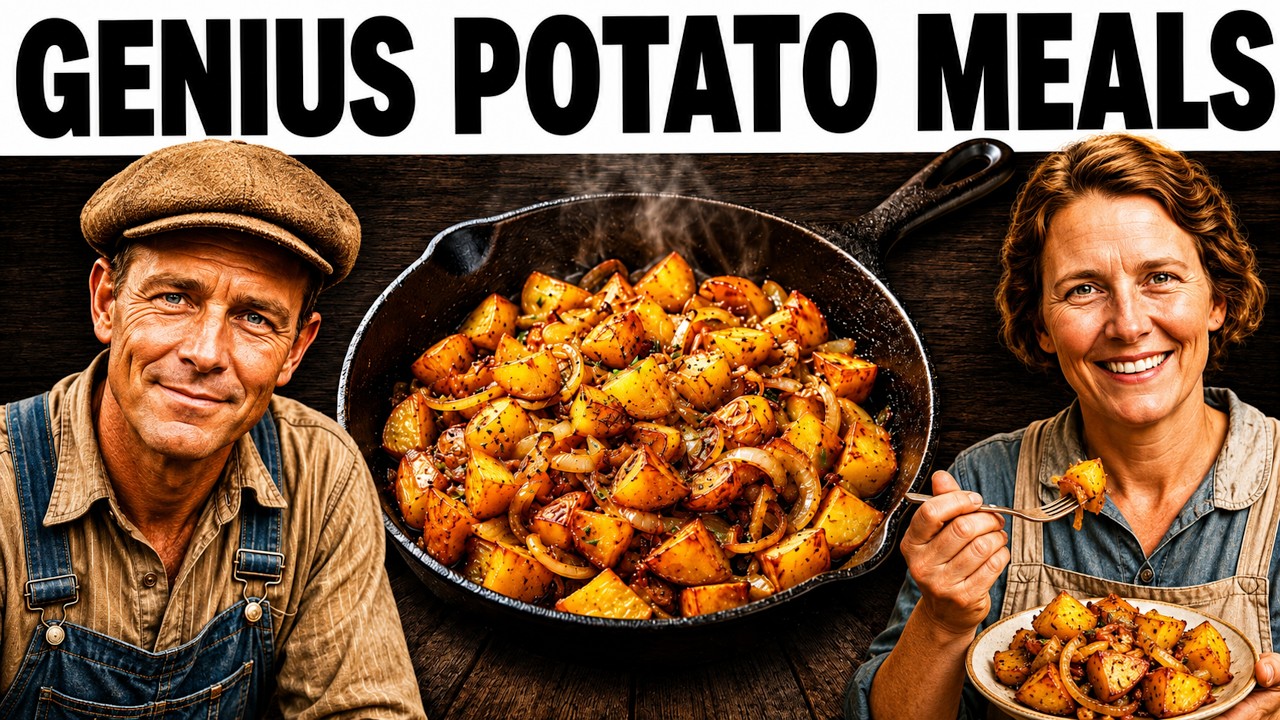
That last fact mattered enormously. Depression-era children did not develop scurvy in massive numbers despite eating almost no fresh fruit because of the potato. The skin alone was loaded with potassium, iron, and starch, and the women who cooked through those years knew it without ever reading a study. One of the most common meals was potato peel broth.
In 1933, a potato cost about two cents, and women who had been hungry long enough to know better considered the peels the most valuable part. They scrubbed the potatoes hard with a stiff brush, peeled them thick, and dropped the peels into a pot of water with an onion skin, a bay leaf if one was available, and whatever scrap of bone was lurking in the icebox. Simmered for an hour, the broth came out golden and surprisingly meaty, strained over a slice of stale bread for supper on Thursday nights when payday was still two days away. The fried potato sandwich fed steel workers in Pittsburgh and coal miners in Pennsylvania.
A single potato sliced thin as a coin, fried in a cast iron skillet with bacon grease until crisp at the edges, piled three high between two slices of white bread, salted heavily, and pressed down until the bread soaked up every bit of the rendered fat. The whole thing cost about four cents in 1934 and carried a grown man through ten hours of physical labor. Hoover stew, named bitterly after the president who watched the country starve, kept families alive in shantytowns between 1930 and 1934. One potato diced small, a handful of dried beans soaked overnight, a can of stewed tomatoes if you could afford it, and whatever vegetable scraps had not yet rotted.
Simmered until the potato broke down and thickened the broth into something close to gravy. The whole stew cost maybe fifteen cents and fed five people for two nights. In the South, boiled potato with milk gravy was what grandmothers made when there was nothing in the smokehouse, nothing in the garden, and nothing in the budget. One large potato peeled and boiled until soft, split open on a plate, topped with a thin white gravy made from a tablespoon of flour, a knob of butter or lard, and a cup of milk, salted heavily and finished with black pepper.
For eleven cents, a mother could put a hot dinner on the table that filled her children’s stomachs. They called it pepper gravy in Tennessee, white gravy in Georgia, and sawmill gravy in Alabama. Polish and German immigrant communities in Chicago and Milwaukee made potato pancakes their everyday supper. One raw potato grated, squeezed dry with a dish towel, mixed with a single egg, a spoonful of flour, salt, and a grated onion, then dropped into hot lard and flattened.
One potato made four good-sized pancakes. The smell of onion and frying starch filled tenement hallways from October through March because everyone got paid Friday. Leftover mashed potatoes became Monday’s lunch in the form of the mashed potato sandwich. Two slices of white bread, a thick layer of cold mashed potato, salt and pepper, maybe a smear of mustard.
The starch-on-starch combination felt wrong on paper and tasted right in practice. In coal country, miners packed these in their lunch pails alongside a hard-boiled egg. The whole thing cost about three cents. Cottage potatoes were thick slabs cut about half an inch thick, layered into a cast-iron skillet with sliced onion, a sprinkle of flour, and just enough milk to come halfway up the side.
Covered and cooked low on the back of the wood stove for forty-five minutes, what came out was something between a gratin and a stew. A single skillet fed a family of six for about ten cents in 1935. Farm wives in Iowa and Nebraska called it cottage potatoes because it was the food of small homes and smaller incomes. Scalloped potatoes, stripped of the cheese and cream modern recipes pile on, were thin-sliced raw potatoes layered with onion, salt, pepper, a sprinkle of flour between each layer, and just enough milk to barely cover everything.
Baked covered for an hour, then uncovered to brown the top. The flour and milk and potato starch combined to create their own creamy sauce. A casserole this size cost about twelve cents in 1936 and fed eight people. Potato bread stretched the wheat flour when it got too expensive.
One cup of mashed potato worked into two cups of flour with yeast, salt, water, and a tablespoon of sugar produced a loaf that rose higher, held its moisture for nearly a week instead of going stale in two days, and tasted slightly sweet with a crackling crust. The potato starch absorbed and held water, keeping the loaf tender long after regular bread would have turned to brick. Mock fish pulled off the most impressive trick on the list. Catholic families needed something fish-like for Friday dinner, and fish was a luxury most could not afford.
Two boiled potatoes mashed smooth, mixed with one egg, a half cup of cracker crumbs, salt, pepper, and a generous spoonful of butter, shaped into patties the size of a fish fillet, dredged in flour, egg, and more cracker crumbs, then fried in hot lard until golden. The outside crackled like perfectly fried fish. When topped with lemon and tartar sauce, it fooled children completely. Jewish immigrant grandmothers in New York, Cleveland, and Pittsburgh made potato kugel for the Sabbath and ate it the rest of the week.
Four grated potatoes and one onion, two eggs, a quarter cup of flour or matzo meal, salt and pepper, baked at high heat for an hour until the top turned dark mahogany. Dense and rich at the bottom, crispy and golden on top, it fed an entire family for about fifteen cents. German potato salad in the Depression era was a hot dish made with vinegar, bacon grease, and onion. Boiled potatoes sliced while still warm, topped with a dressing made from rendered bacon fat, chopped onion, cider vinegar, sugar, salt, and pepper.
The vinegar cut through the starch, the bacon fat coated each slice in salt and smoke. Wisconsin and Pennsylvania farm families ate it hot in winter and cold in summer. Potato candy was the last sweet thing in some children’s lives during the worst years. One small boiled potato mashed completely smooth, mixed with confectioners sugar a cup at a time until it formed a soft white dough, rolled thin, spread with peanut butter, rolled up like a jelly roll, and sliced into pinwheels.
A single potato made forty pieces. Coal mining families in Kentucky and West Virginia made it on Sunday afternoons and rationed it through the week. Mock chicken croquettes depended on poultry seasoning. The blend of sage, thyme, and marjoram tricked the nose into expecting chicken before the mouth figured out it was eating potato.
Two boiled potatoes mashed smooth, mixed with onion, an egg, cracker crumbs, and a teaspoon of the seasoning, shaped into small logs, rolled in cracker crumbs, and deep fried in lard. Served with brown gravy made from a bouillon cube, they tasted shockingly close to real chicken. The whole meal came in under fifteen cents and fed six people. Potato cake was a family secret.
Grandmothers worked one cup of mashed potato into a chocolate cake recipe, which added moisture that kept the cake tender for nearly a week, added a faint sweetness that let bakers use less sugar, and stretched the flour budget by replacing nearly a cup of expensive wheat flour with cheap potato. The cake came out dense, rich, and almost fudgy. Frosted with boiled icing made from sugar and water, it was the centerpiece of birthdays in households where birthdays usually went unmarked. The recipe lived in handwritten notebooks passed from mother to daughter and almost never appeared in printed cookbooks.
Potato gravy on bread involved no meat and no drippings. Two potatoes boiled until soft, mashed into the water they cooked in to create a thick starchy slurry, stirred over heat with a tablespoon of butter and a generous pour of milk until it turned into a creamy white gravy. Ladled over two slices of toasted white bread, it was the Sunday breakfast of farm families in Missouri and Arkansas through the entire Depression. It cost about seven cents and fed four people.
The potato and bean pot fed more American families through the Depression than any other dish. Two potatoes diced rough, a cup of dried beans soaked overnight, one onion, a piece of salt pork, and a quart of water, simmered for four hours until the beans broke down and the potatoes melted at the edges and the whole pot turned thick and creamy. A family of eight ate from this pot for two days. Total cost in 1934, under fifteen cents.
The potato itself cost two cents. It absorbed fat, salt, acid, and flavor without losing its structure. A potato simmered in chicken broth tasted like chicken, and a potato fried in bacon grease tasted like bacon. Depression-era cooks did not need the science.
They knew one piece of bacon dropped into a pot of potatoes meant six people would taste bacon at supper, and one ham bone simmered with potatoes meant the family would taste ham for two days. Between 1934 and 1939, American food advertising shifted dramatically away from staple ingredients and toward branded, packaged convenience foods. There was no profit margin in a sack of potatoes, but enormous profit in a box of instant flakes that cost the manufacturer two cents to produce and sold for twenty-five. The same skills used to stretch one potato into a week of dinners were systematically reframed as drudgery.
By 1955, instant potato flakes were a billion-dollar industry, and the actual knowledge of how to cook a real potato had begun to slip out of American kitchens. We did not lose that knowledge by accident. We were sold a story until we forgot we ever knew it.






