I caught my cheating wife at a hidden party at her boss’s house, when she saw me she was shocked…
I Found My Wife in Her Boss’s Arms at the Party She Said Didn’t Exist
The first thing Emma did when she saw me beside Greg Sanderson’s swimming pool was not remove her hand from his chest.
She looked past me toward the glass dining room, where pages from my company’s confidential bid covered a twelve-foot table.
Then she leaned close enough for only me to hear and whispered, “Jacob, you need to leave before they realize who you are.”
PART ONE — THE MAN WHO WASN’T INVITED
For several seconds, none of us moved.
Music drifted across the terrace behind us, a low rhythm nearly swallowed by laughter, clinking crystal, and the restless hiss of the gas fire pits.
Beyond the edge of Greg Sanderson’s property, the dark water of Long Island Sound reflected the lights of distant boats.
Emma stood beneath a row of warm garden lamps in a gold dress I had never seen before.
Her left hand rested against Greg’s shirt.
His arm remained around her waist.
Greg was the first to recover.
He took his hand away slowly, not with guilt but with calculation.
At forty-nine, he had the disciplined composure of a man who had spent years turning uncomfortable situations into someone else’s problem.
His silver-streaked hair remained perfect.
His expression changed from surprise to mild irritation, as though I were a delivery driver who had entered through the wrong gate.
“Jacob,” he said. “This is unexpected.”
I looked at Emma.
She had gone pale.
The confidence she wore to investor dinners and charity galas had vanished, leaving something frightened and strangely young behind her eyes.
“You told me this was a small work dinner,” I said.
“It is.”
I glanced around the terrace.
Nearly forty people filled the property.
Senior executives from Sanderson Enterprises stood beside city consultants, attorneys, investment bankers, and men I recognized from trade publications.
A string quartet played near the pool house.
Waiters circulated with champagne that probably cost more per bottle than the suit I wore to our wedding.
“No spouses,” I said. “That was the rule, wasn’t it?”
Emma swallowed.
Greg stepped between us by half a pace.
“This is a private corporate function,” he said. “Your wife is part of my leadership team.
I’m sure you can understand that certain conversations require discretion.”
“Is that why your hand was around her?”
A few people nearby stopped pretending not to listen.
Emma’s fingers curled against her palm.
Her wedding ring caught the light.
“Jacob, please,” she said. “Not here.”
Those two words did more damage than denial would have.
Not here meant there was something to discuss.
Not here meant she knew what I had seen.
Not here meant she was more concerned about the location of the confrontation than the reason for it.
I had spent most of the drive to Greenwich telling myself I was behaving irrationally.
I had imagined arriving, seeing Emma laughing with coworkers, feeling embarrassed by my suspicions, and returning home before she ever knew I had come.
Instead, I had found her touching another man with the careless familiarity of someone who had done it many times before.
Then I saw the documents through the open glass doors.
A dining table stood beneath a sculptural chandelier.
Presentation boards, cost projections, zoning diagrams, and construction schedules had been arranged across it.
A bottle of champagne rested on top of a thick blue binder.
The cover displayed the name of the project my company had spent fourteen months pursuing.
HARBOR POINT REDEVELOPMENT — NORTHLINE CONSTRUCTION INTERNAL COST MODEL
My breathing stopped.
Northline Construction had submitted its sealed bid three days earlier.
Only six people inside the company had access to the final cost model.
I was one of them.
Greg followed my gaze.
For the first time that night, his composure slipped.
He moved toward the glass doors, subtly blocking my view.
I took out my phone.
Emma caught my wrist.
“Don’t.”
Her grip was cold and surprisingly strong.
I stared at her fingers wrapped around me.
“Why are my company’s documents in your boss’s house?”
“They aren’t what you think.”
“I can see our logo.”
“Jacob—”
I lifted the phone and photographed the room before Greg could close the doors.
His face hardened.
“Delete that.”
I took another picture.
Two security guards near the house began walking toward us.
Greg lowered his voice. “You are trespassing on private property.”
“My wife told me there was a work gathering.”
“She did not invite you.”
“No,” I said. “She made sure I wouldn’t come.”
Emma released my wrist.
People had begun moving away from us, creating an empty circle around the confrontation.
No one wanted to be involved, but no one wanted to miss it either.
Greg adjusted his cuff.
“You’re emotional,” he said. “Go home.
Talk to Emma tomorrow.
Whatever marital issues you have are not relevant to the business being conducted here.”
I looked at the table again.
One of the presentation boards displayed Northline’s projected steel costs beside a lower figure from Sanderson’s preferred contractor.
Another page showed a schedule I had personally revised the previous Sunday night in our home office.
A coffee stain curved across the bottom corner.
I remembered making it.
Emma had brought me a cup at midnight.
She had kissed the back of my neck and told me not to work too late.
The document inside Greg’s house had the same stain.
My stomach tightened so violently that I almost doubled over.
I turned to Emma.
“What did you give him?”
“Nothing.”
“You expect me to believe this is a coincidence?”
“I can explain.”
“Then do it.”
Her eyes moved toward Greg.
It was quick, almost invisible, but I saw it.
She was waiting for his permission.
That single glance told me more about my marriage than all the late nights, hidden messages, and careful excuses combined.
Greg noticed that I had seen it.
His voice became colder.
“You need to leave now.”
One of the guards reached for my arm.
I stepped back before he could touch me.
Emma moved closer.
“Jacob, go home.
I’ll come with you in a few minutes.”
“You’re staying?”
“I need to handle this.”
I laughed once, but there was no humor in it.
“Handle what?
Your affair or the stolen documents?”
Her face collapsed.
Greg looked toward the guards.
“Escort him out.”
I walked backward across the terrace, keeping my phone raised.
I photographed the table, the presentation boards, the executives turning their faces away, and finally Emma standing beside Greg in her gold dress.
She looked beautiful.
That was the cruelest part.
She looked exactly like the woman I had once believed would never become a stranger.
At the side gate, I turned around one last time.
Emma had followed me halfway across the lawn.
“Jacob,” she called.
I waited.
For one desperate second, I thought she might run toward me.
I thought she might leave the party, climb into my car, and tell me the truth before the night became impossible to repair.
She stopped beneath the lights.
Greg remained behind her.
“What you saw by the pool,” she said, “isn’t the whole story.”
I looked through the windows at my company’s documents.
“You’re right.”
Greg’s expression sharpened.
I slipped my phone into my pocket.
“The affair might be the least important thing you’ve done tonight.”
I turned toward the gate, but Greg’s voice followed me into the darkness.
“You have no idea what your wife risked to get us that contract.”
The guard opened the gate.
I looked back at Emma.
She closed her eyes.
And in that moment, I understood that Greg had not accidentally revealed a secret.
He had fired a warning shot.
PART TWO — THE GOLD DRESS
Six weeks earlier, I still believed my marriage was tired rather than broken.
Emma and I had been together for almost eleven years.
We met when I was twenty-seven and she was twenty-five, at a fundraising event neither of us had wanted to attend.
I was a project engineer wearing a borrowed jacket.
She was a junior marketing coordinator who had removed her heels beneath the table because her feet hurt.
We spent the evening making quiet jokes about the speakers.
Three months later, we rented a narrow apartment with unreliable heat.
Seven years after that, we bought a gray colonial house in Stamford with a maple tree in the front yard and a kitchen Emma redesigned herself.
Our marriage was not dramatic.
I had once considered that a success.
We paid bills on time, remembered birthdays, divided grocery shopping, and argued about normal things.
Emma hated the way I left cabinet doors open.
I hated the way she answered emails during dinner.
We forgave each other quickly because neither of us enjoyed living in anger.
Then she was promoted to senior vice president of marketing at Sanderson Enterprises.
At first, I was proud of her.
Emma had always been ambitious, but her ambition was not loud.
She watched people carefully, learned what they valued, and made herself indispensable before they realized they needed her.
Greg recognized that talent.
He began inviting her to executive dinners, private strategy meetings, and weekend retreats.
He sent messages at midnight and called early on Sundays.
Whenever I complained, Emma reminded me that leadership did not follow a nine-to-five schedule.
“This is what I worked for,” she said one evening. “You knew I wanted more.”
“I know.”
“Then why do you make me feel guilty every time I get it?”
I stopped asking.
The work dinners increased from twice a month to twice a week.
Emma started keeping her phone facedown.
She changed the password she had used for years and began carrying the device from room to room.
Her explanation was reasonable.
Sanderson Enterprises was preparing several confidential acquisitions.
Company policy required stricter security.
Suspicion rarely enters a marriage like an intruder.
It arrives like dust.
A late meeting here.
A hidden screen there.
A new perfume purchased without comment.
A story repeated with one detail altered.
Each particle seems too small to justify a confrontation.
Then one morning, the sunlight changes, and you see it coating everything.
The first photograph appeared on a Thursday.
A junior employee posted pictures from a development conference in Manhattan.
In the background of one image, Emma stood beside Greg near the hotel bar.
They were not kissing.
They were not touching.
But Greg’s body angled toward her as though the crowded room contained only one person.
Emma looked up at him with a softness I had not seen directed at me in months.
When I asked about the conference, she shrugged.
“Greg talks too close to everyone.”
“Do you like him?”
The question came out more directly than I intended.
Emma’s expression tightened.
“He’s my boss.”
“That wasn’t my question.”
She placed her phone beside her plate.
“You’re being insecure.”
I wanted to defend myself, but the word found its mark.
My father had been a suspicious man.
He checked my mother’s mileage, questioned grocery receipts, and treated every unfamiliar phone number like evidence of betrayal.
I had promised myself I would never become him.
So I apologized.
Emma kissed my forehead and said she understood.
The next morning, she changed the subject by suggesting we take a vacation in the spring.
That was how she handled uncomfortable moments.
She did not erase them.
She placed something brighter in front of them.
The invitation to Greg’s house arrived the following Wednesday.
Emma mentioned it while standing in our bedroom doorway.
“Greg’s hosting a small strategy dinner on Saturday.”
I folded a shirt and placed it in the dresser.
“At his house?”
“Yes.”
“Can I come?”
The pause lasted less than two seconds.
It was enough.
“I don’t think so,” she said. “It’s senior staff only.”
“Do the other executives have spouses?”
“It isn’t that kind of evening.”
“What kind is it?”
“Work.”
Her tone sharpened around the word.
I watched her remove an earring in front of the mirror.
“You’ve been to plenty of work events where spouses were invited.”
“This is different.”
“How?”
“Greg wants us to speak freely about the Harbor Point proposal.
Having outsiders there would complicate things.”
I almost smiled.
“Outsiders?”
“You know what I mean.”
I did.
For years, I had reviewed seating plans for her galas, repaired broken display stands before presentations, and stood beside her at events where she needed the appearance of a stable marriage.
Now I had become an outsider.
On Saturday afternoon, Emma spent almost two hours getting ready.
She curled her hair, applied makeup twice, and rejected three dresses before choosing a gold one from the back of the closet.
It fit closely across her waist and left her shoulders bare.
I had never seen it before.
“When did you buy that?”
“Last month.”
“For work?”
She met my eyes through the mirror.
“For myself.”
The answer should not have hurt, but it did.
She sprayed perfume against her throat.
I recognized the scent because I had given it to her on our eighth anniversary.
She had not worn it in nearly a year.
“You look beautiful,” I said.
Her hand paused.
For a moment, guilt passed across her face.
Then she smiled, crossed the room, and kissed my cheek.
“Don’t wait up.”
At seven fifteen, she left.
At seven twenty-two, I noticed her tablet glowing on the kitchen counter.
A message had synchronized from her phone.
GREG: Use the side gate.
Main entrance is for staff.
No spouses.
Tonight stays inside the circle.
Below the message was an address in Greenwich.
I stared at it until the screen went dark.
Then another notification appeared.
GREG: Wear the gold one.
I did not make a decision immediately.
I washed the coffee cup beside the sink.
I dried the counter.
I walked upstairs and stood in the bedroom, staring at the space where Emma had applied her perfume.
My hands remained steady until I saw the empty hanger in the closet.
Then I sat on the edge of the bed because my knees would no longer hold me.
At eight o’clock, I told myself I would stay home.
At eight fifteen, I picked up my keys.
At eight twenty, I opened the garage door.
And at eight twenty-one, an unknown number sent a photograph to my phone.
Emma was entering Greg Sanderson’s house through the side gate.
His hand was resting at the base of her spine.
Beneath the photograph were five words.
You deserve to see everything.
PART THREE — THE HOUSE THAT KNEW HER
The drive from Stamford to Greenwich took less than thirty minutes.
It felt longer than my entire marriage.
I called the unknown number twice.
No one answered.
I sent a message asking who they were, but it remained unread.
At a red light, I enlarged the photograph.
Emma’s face was turned away from the camera.
Greg was smiling down at her.
His hand was too low to be professional and too comfortable to be accidental.
I nearly turned around.
Knowing the truth from a photograph would have hurt, but photographs allow space for imagination.
A person can invent context.
A misleading angle.
A moment taken out of sequence.
I wanted that space.
I also knew I would never sleep again if I did not see the truth with my own eyes.
Greg’s mansion stood behind limestone walls in the Belle Haven neighborhood.
Cars lined the circular driveway, though most had been positioned behind hedges to remain hidden from the street.
I parked three blocks away.
The side gate was unlocked.
Inside, the property opened toward the water.
Glass walls reflected the pool, chandeliers, and clusters of people in formal clothes.
No one checked my name because the staff assumed a man entering confidently belonged there.
I did not search for Emma immediately.
I searched for a reason to be wrong.
I saw senior employees from Sanderson Enterprises, political consultants, two representatives from the mayor’s redevelopment committee, and executives from Westbridge Contracting, Northline’s primary competitor for the Harbor Point project.
The official award had not been announced.
Yet waiters carried champagne beneath a banner that read:
TO BUILDING THE FUTURE
On the far side of the terrace, I recognized Nora Patel, Sanderson’s director of compliance.
Unlike everyone else, she was not drinking.
Our eyes met.
Her expression did not show surprise.
She glanced toward the pool.
That was where I found Emma.
Greg had one arm around her waist.
She was laughing at something he whispered.
Her hand rested on his chest, fingers spread over the fabric as though she knew the shape beneath it.
The scene contained no ambiguity.
I had spent weeks collecting small signs and arranging them into innocent explanations.
One glance destroyed every explanation at once.
When Emma saw me, the laughter vanished from her face.
What followed happened quickly: my question, Greg’s threat, the documents through the glass doors, the security guards approaching.
But one detail stayed with me afterward.
When Greg said, “You have no idea what your wife risked to get us that contract,” Emma did not look confused.
She looked terrified.
I left through the side gate and walked toward my car.
Emma caught up with me halfway down the street.
Her heels struck the pavement unevenly.
She held the side of her dress to keep from tripping.
“Jacob, wait.”
I continued walking.
“Please.”
I stopped beside a black SUV parked beneath an oak tree.
Emma stood several feet away, breathing hard.
The woman I loved had followed me out of another man’s house wearing a dress he had chosen.
That sentence formed in my mind with such clarity that I knew I would remember it for the rest of my life.
“How long?” I asked.
She rubbed her bare arms against the cold.
“This isn’t the place.”
“You seem very concerned about places tonight.”
“People are watching.”
“I don’t care.”
“I do.”
The honesty of that answer cut deeper than another lie.
I took out my phone and opened the voice recorder before slipping it back into my pocket.
“How long have you been sleeping with him?”
Her eyes closed briefly.
“Jacob—”
“How long?”
“It’s complicated.”
“Then simplify it.”
She looked toward the mansion.
“Four months.”
The number entered my body like a physical object.
Four months meant our anniversary dinner had happened during the affair.
Four months meant the weekend she visited her mother had been a lie.
Four months meant the night she cried in my arms because she felt “lost” had occurred after she had already found someone else.
“Do you love him?”
“I don’t know.”
“That means yes.”
“No.
It means I don’t know what any of this is.”
“You knew enough to keep doing it.”
Her mouth trembled.
“I never planned for this.”
“You bought a dress for him.”
“That isn’t fair.”
I stared at her.
She heard the absurdity of her own words and looked away.
From the direction of the house, a car door closed.
Greg stood beside the gate, watching us from a distance.
Even outside his property, Emma checked his reaction before answering me.
I stepped closer.
“What were my company’s documents doing inside?”
“I don’t know.”
“You looked at the table before I did.”
“Because I saw where you were looking.”
“That document had a coffee stain from my house.”
She went still.
The change was small, but unmistakable.
I remembered the Sunday night when I had worked on the final cost schedule.
Emma had entered the office with coffee and asked how much Northline could reduce its bid without losing money.
At the time, I thought she was showing interest in my work.
Now I heard the question differently.
“What did you take from my office?”
“Nothing.”
“Emma.”
“I didn’t take anything.”
“Did you photograph it?”
“No.”
The denial came too quickly.
I stepped back.
Greg began walking toward us.
Emma lowered her voice.
“Go home.
Lock your computer.
Don’t call anyone until we talk.”
My skin turned cold.
“Why?”
“I’m trying to protect you.”
“From what?”
Greg reached the sidewalk.
“That’s enough, Emma.”
She turned toward him.
I saw the fear in her face.
It was not the fear of a woman caught between two men who loved her.
It was the fear of an employee who had violated instructions.
Greg stopped beside us.
“Your wife has had too much to drink,” he said. “I’ll arrange a car.”
“She’s coming home with me.”
Emma looked at neither of us.
Greg’s voice softened.
“Emma, go inside.”
She hesitated.
I waited for her to choose.
After eleven years, I believed some instinct would pull her toward me.
History, shame, loyalty—anything.
Instead, she whispered, “Give me five minutes.”
Not to me.
To him.
Something inside me became quiet.
I opened my car door.
Emma took a step forward. “Jacob, don’t do anything reckless.”
I looked at Greg, then at her.
“You stole from my company, lied to me for months, and brought confidential material to your lover’s house.”
“We can fix this.”
“There is no ‘we’ in this anymore.”
I got into the car and drove away.
Emma did not come home that night.
At one thirty in the morning, I entered my home office and unplugged my laptop from the network.
I photographed every folder on the desk and placed the final Harbor Point binder inside a locked tool chest in the garage.
Then I checked the printer history.
Twenty-seven pages had been scanned nine days earlier.
The scans were sent to an external email address I did not recognize.
The name attached to the account was E.
Ross.
Ross was Emma’s maiden name.
I printed the log and carried it into the kitchen.
At the bottom of the page, beneath the email address, the printer had recorded the time of the scan.
A.M.
I remembered that night.
Emma had lain beside me until she believed I was asleep.
PART FOUR — THE MORNING OF SILENCE
Emma returned at six forty the next morning.
I heard her key turn while I was sitting at the kitchen table.
The gold dress was hidden beneath Greg’s charcoal overcoat.
Her makeup had faded, and her hair was pinned back hastily.
She carried her heels in one hand.
When she saw me, she stopped inside the doorway.
Neither of us spoke.
She removed Greg’s coat and folded it over her arm with strange care.
The gesture made my jaw tighten.
“Did you sleep with him last night?”
“No.”
“Where were you?”
“At a hotel.”
“Alone?”
“Yes.”
I slid the printer log across the table.
Emma looked at it.
Her face did not change immediately.
She read the page once, then again, as though repetition might produce different words.
“What is this?”
“You tell me.”
“I don’t know.”
“Twenty-seven pages were scanned from my office at two thirteen in the morning.
They were sent to an account using your maiden name.”
She placed the paper down carefully.
“Jacob, you need to let me explain the larger situation.”
“You had all night.”
“I was trying to understand what Greg had done.”
“What Greg had done?”
“He used information I gave him in ways I didn’t authorize.”
The confession came disguised as an accusation against someone else.
I leaned back.
“What information?”
“Preliminary numbers.”
“From a sealed bid?”
“They weren’t final when I saw them.”
“You scanned twenty-seven pages.”
“He told me Sanderson needed industry comparisons.
I thought it was for internal planning.”
“You work in real estate development.
You know exactly what confidential construction pricing looks like.”
Her eyes flashed.
“Don’t talk to me like I’m stupid.”
“I’m talking to you like you’re guilty.”
She flinched.
The silence afterward felt different from every silence we had shared before.
There was no longer affection beneath it, waiting for one of us to soften.
Emma pulled out a chair.
“Greg said Northline had an unfair advantage because of your relationships with the city engineers.”
“So you helped him steal one.”
“I didn’t think he would reproduce the documents.”
“What did you think he would do with them?”
“Look at the general ranges.”
“You sent the schedules, labor assumptions, steel costs, and margin projections.”
“I didn’t understand every page.”
“You understood enough to scan them while I was asleep.”
She pressed both hands against her temples.
“I made a terrible mistake.”
“The affair or the theft?”
“Both.”
“Which one are you sorry I discovered?”
Her eyes filled with tears, but she looked down before they fell.
Months earlier, I would have crossed the table and held her.
Comforting Emma had become instinctive over the years.
That morning, I remained in my chair.
“I need your phone,” I said.
Her head lifted.
“No.”
“If you want me to believe anything you say, unlock it.”
“There are confidential company communications.”
“So were the documents you took from me.”
“I can’t.”
“You won’t.”
She stood abruptly.
“You’re not going to interrogate me in my own house.”
The phrase settled between us.
My own house.
We had signed the mortgage together.
I had supervised the renovation and spent two winters replacing windows room by room.
Yet in her anger, the truth escaped.
She had begun imagining a life that did not include me.
I gathered the printer log and my laptop.
“Where are you going?”
“To Northline.”
Panic entered her face.
“Don’t.”
“My credentials were used to access those files.”
“We should speak to Greg first.”
“I’m not discussing a crime with the person who benefited from it.”
“He has attorneys.
He can contain this.”
“Contain it for whom?”
She blocked the doorway.
“Jacob, listen to me.
If you report this without understanding everything, you could lose your job.”
“I might lose it because of you.”
“I’m trying to stop that.”
“By protecting him?”
“By protecting us.”
I looked at the coat over her arm.
“You already chose who ‘us’ means.”
She stepped aside.
At Northline, I asked for an immediate meeting with Marcus Hale, our chief operations officer.
Marcus had hired me twelve years earlier, when I was still young enough to believe every problem could be solved by working harder.
He listened without interrupting.
Our general counsel joined by video.
An information security specialist took my laptop and asked me to write down every person who had entered my home office during the past month.
When I wrote Emma’s name, my hand shook for the first time.
Marcus noticed.
“You did the right thing by coming in,” he said.
“Am I being suspended?”
“Placed on administrative leave until we know the extent of the exposure.”
The words were professional, almost gentle.
They still felt like a door closing.
My access badge was deactivated before I left the building.
By noon, Laura Bennett, a divorce attorney recommended by a colleague, was sitting across from me in a quiet office near the Stamford courthouse.
Laura was in her early fifties and spoke with the controlled precision of someone who had watched panic destroy otherwise intelligent people.
“Do not leave the marital home,” she said. “Do not remove money from joint accounts.
Preserve every message, photograph, and financial record.”
“My wife may have committed corporate theft.”
“Then you need separate employment counsel.
I’ll coordinate with one.”
“I don’t care about the house.”
“You will when she claims you abandoned it.”
“She wouldn’t.”
Laura gave me a level look.
“Yesterday, would you have said she would steal your company’s documents?”
I looked away.
When I returned home that evening, Emma was sitting on the living room sofa.
Greg’s coat was gone.
A suitcase stood beside the stairs.
“I’m staying with Melissa for a few days,” she said.
Melissa was Emma’s college friend.
I nodded.
Emma watched me place my keys on the console table.
“Did you report it?”
“Yes.”
Her shoulders dropped.
“You should have waited.”
“For what?”
“For me to fix it.”
“You had four months.”
She approached slowly.
“The affair began after the development summit in June.
Greg and I had been drinking.
He told me things about his marriage, and I told him things about ours.”
“What things?”
“That I felt invisible.”
The word struck me because it was exactly what Greg had likely intended.
I had attended Emma’s galas, cooked dinner when she worked late, repaired her presentations, remembered the names of clients she disliked, and listened to every rehearsal of every major speech.
Somehow, in the story she told another man, I had made her invisible.
“Did you tell him I trusted you?” I asked.
She wrapped her arms around herself.
“It wasn’t about you.”
“It happened in our marriage, in our house, using my work.
Stop telling me it wasn’t about me.”
“I mean it wasn’t because you failed.”
“Then why did you need to blame me to justify it?”
She had no answer.
Her phone vibrated in her hand.
Greg’s name appeared on the screen.
Emma declined the call.
A second later, a message arrived.
She read it and went pale.
“What did he say?”
“Nothing.”
“Show me.”
She locked the screen.
I stepped aside and pointed toward the suitcase.
“Leave.”
She lifted the handle.
At the door, she paused.
“Greg says the documents were sent from your account.”
“They were scanned to yours.”
“He says they have emails proving you knew.”
I stared at her.
“What emails?”
“I don’t know.”
“You just said he has them.”
“He told me not to worry.”
The room seemed to narrow.
“Why would he tell you that?”
Emma’s face tightened with fear.
Before she could answer, my phone rang.
It was Marcus.
I put the call on speaker.
“Jacob,” he said, “our system shows the final pricing archive was opened under your credentials at two thirteen that morning.”
“I was asleep.”
“There’s more.
The export was made through your home network.”
Emma closed her eyes.
Marcus continued.
“And an email was sent from your personal account to a Sanderson-controlled address.”
I looked at my wife.
She gripped the suitcase handle so tightly that her knuckles turned white.
“Emma,” I said quietly, “what did you send from my account?”
She opened the door.
Then she whispered the sentence that ended any remaining belief that this had been a single mistake.
“I sent what Greg told me would keep both of us safe.”
PART FIVE — TWENTY-SEVEN PHOTOGRAPHS
Emma left before I could stop her.
For the next three days, she ignored my calls and answered only through short messages.
I need time.
Greg’s lawyers are reviewing everything.
Please don’t make this worse.
The final message was the one I saved in three separate places.
If everyone stays calm, they can make it look like an accidental disclosure.
Not correct it.
Not admit it.
Make it look accidental.
Laura connected me with an employment attorney named David Lin, who specialized in corporate investigations.
Together, they instructed me not to contact Greg, Sanderson Enterprises, or anyone associated with the Harbor Point bid.
“Assume every conversation is being recorded,” David said.
“I recorded the conversation outside Greg’s house.”
His eyes sharpened.
“Legally?”
“Connecticut allows one-party consent.”
“Send me a copy.
Do not edit it.”
The recording captured Emma admitting the affair.
More importantly, it captured Greg telling her, “That’s enough,” immediately after I asked about the stolen documents.
It also captured Emma warning me to lock my computer.
That warning established knowledge.
It did not yet establish exactly what she had done.
Northline’s forensic team found the next layer.
My personal email account had been accessed from Emma’s tablet.
A message containing the final bid archive had been sent to a consulting address controlled by a Sanderson subsidiary.
The sent email had been deleted.
The trash folder had been emptied.
Emma had also created an automatic forwarding rule for messages containing the phrases “Harbor Point,” “cost model,” and “final submission.”
David placed the forensic report on the conference table.
“This was not one impulsive decision,” he said.
I stared at the dates.
The forwarding rule had been created five weeks earlier.
Emma’s affair had begun four months earlier.
She had been providing information long before the final scan.
“Could she have done this without understanding?” I asked.
David did not soften his answer.
“No.”
Northline extended my administrative leave.
My coworkers were told only that a security review was underway.
By the end of the week, three people had stopped returning my messages.
Marcus called every evening, but his tone changed.
He was no longer speaking to a trusted employee in a crisis.
He was speaking to a potential liability.
The humiliation followed me everywhere.
At the grocery store, I imagined people knew.
At home, every object seemed to hold evidence of the life Emma and I had performed.
Her mug beside mine.
The framed photograph from our trip to Maine.
The dent in the kitchen floor from the night we tried to move the refrigerator without help.
I began sleeping in the guest room because our bedroom smelled like her perfume.
On Friday, Emma returned for clothes.
She arrived in a gray sweater and jeans, looking exhausted.
The polish she maintained in public was gone.
Dark shadows marked the skin beneath her eyes.
I stood in the hallway while she packed.
“Greg fired me,” she said.
The news should have satisfied me.
It did not.
“When?”
“This morning.
Technically, I’m on indefinite leave pending investigation.”
“Why?”
“He says I violated information-security policies.”
“You did.”
“He told me to get the files.”
“Can you prove that?”
Her silence answered.
I leaned against the doorframe.
“You deleted the messages.”
“He said it was safer.”
“For him.”
“I know that now.”
I studied her face.
Emma was not unintelligent.
She had built a career by recognizing motives before other people did.
The fact that Greg had deceived her did not mean she had been innocent.
It meant she had believed she would remain valuable to him.
“How much did he promise you?” I asked.
Her hands stopped moving.
“What?”
“This wasn’t only about feeling visible.”
She folded a blouse too carefully.
“He said I would become chief marketing officer after the Harbor Point announcement.”
“There it is.”
“That wasn’t why the relationship started.”
“But it was why you stole from me.”
“I thought Northline would lose the bid, not collapse.”
“You decided that was acceptable?”
“I told myself your company had other projects.”
I laughed quietly.
Emma placed the blouse into the suitcase.
“Greg said Northline’s margins were excessive.
He said Sanderson could save the city millions if we understood where the padding was.”
“So you were protecting taxpayers?”
“I’m telling you what I believed.”
“No.
You’re telling me what made it easier.”
She looked at me then.
Anger rose through her shame.
“You think your hands are clean because you build things.
You sit in meetings and negotiate numbers just like everyone else.”
“I don’t steal those numbers from someone sleeping beside me.”
Her face crumpled.
I expected tears, but none came.
“I hated how small I felt here,” she said. “Every night was the same.
Dinner, television, questions about whether the gutters needed cleaning.
Greg walked into a room and made everything feel important.”
“Because he needed something from you.”
“I know.”
“You know now.”
The distinction silenced her.
I walked to the home office and returned with a folder.
Inside were images recovered from the tablet’s cloud backup.
Twenty-seven photographs.
Emma had taken each page from my binder, placed it beneath the desk lamp, and photographed it with careful alignment.
Several images included her fingertips holding the corners flat.
One photograph showed my electronic signature.
Another displayed the security watermark identifying me as the authorized user.
Emma sat on the edge of the bed.
“I didn’t know the pictures were still there.”
“That is what you’re sorry about?”
“No.”
“It’s the first honest thing you’ve said.”
She covered her face.
I placed the photographs on the bed one by one.
“Did Greg tell you to use my email?”
“Yes.”
“Did he tell you to create the forwarding rule?”
“Yes.”
“Did he tell you to delete the messages?”
“Yes.”
“Did he tell you to sleep with him?”
Her hands dropped.
“No.”
The word was almost inaudible.
I nodded.
For the first time, she had separated what Greg manipulated from what she chose.
It did not make the truth easier.
It made it cleaner.
Emma reached for my arm.
I stepped away.
“Jacob, I will tell Northline everything.”
“Through your attorney.”
“I don’t have one.”
“You need one.”
“I can’t afford the kind of attorney Greg has.”
I looked around the room we had built together.
“We had forty-eight thousand dollars in emergency savings.”
Her expression changed.
I felt the warning before she spoke.
“There’s something else.”
I went downstairs and opened our banking app.
The joint savings account contained twelve thousand dollars.
Thirty-six thousand had been transferred over three months into an account labeled Ross Strategic Consulting.
Emma followed me into the kitchen.
“Greg said I needed a separate entity for the executive compensation.”
“You moved our money.”
“It was temporary.”
“What did you buy?”
“Nothing.
The account was used to receive consulting payments.”
“How much?”
She remained silent.
I opened the statements.
Sanderson-related entities had deposited seventy-five thousand dollars into the account.
The transfers were labeled MARKET RESEARCH SERVICES.
Emma had never performed market research as an independent consultant.
They were payments for the documents.
She stood behind me, crying without sound.
I turned the screen toward her.
“You didn’t just betray me.”
“I know.”
“You sold me.”
“No.”
“You used my name, my computer, my work, and our money.
What would you call it?”
She gripped the back of a chair.
“I thought we were building a future.”
“We already had one.”
“It didn’t feel like enough.”
The sentence remained in the kitchen long after she left.
That evening, I received an email from an unfamiliar address.
The sender identified herself as Nora Patel, Sanderson’s director of compliance.
She asked to meet in a public place and told me not to inform Emma.
Attached to the message was a draft memorandum from Greg to Sanderson’s board.
The document described Emma as a “disloyal employee who independently obtained proprietary information through her husband.”
It described me as a willing participant seeking future employment with Sanderson.
The final paragraph recommended reporting both of us to state investigators.
Greg had already written the story that would save him.
And in his version, my wife and I were not victims or witnesses.
We were the criminals.
PART SIX — THE WOMAN WHO SENT THE PHOTOGRAPH
Nora chose a diner near the New York border.
She arrived ten minutes late wearing a navy coat and no makeup.
Before sitting down, she scanned the windows and placed her phone inside a signal-blocking pouch.
“You sent the photograph,” I said.
“Yes.”
“Why?”
“Because formal reporting channels failed.”
Her voice was calm, but exhaustion showed around her eyes.
Nora had worked for Sanderson Enterprises for seven years.
She had built the compliance department after the company paid a substantial settlement over undisclosed political donations.
Greg praised the department in public.
In private, he treated it like an obstacle.
“Six months ago, I noticed unusual payments to consulting entities connected to employees,” she said. “Your wife’s company was one of them.”
“Did you know about the affair?”
“I suspected.”
“How?”
“Greg follows patterns.
He identifies what a person wants, then makes access to that desire feel personal.”
“That sounds rehearsed.”
“I’ve said it to investigators three times.”
The waitress brought coffee.
Nora waited until she left.
“Greg did not force your wife to provide those files,” she continued. “You need to understand that.”
“I do.”
“He created incentives and protected the behavior while it benefited him.
That matters legally.
It does not erase Emma’s responsibility.”
“What failed through formal channels?”
“I reported the payments to our audit committee.
Greg learned about the report before the committee met.
Two members were replaced.
My staff was reduced, and my access to executive accounts was restricted.”
“Why didn’t you leave?”
“Because leaving would have destroyed the evidence.”
She opened a slim folder.
Inside were calendars, expense reports, internal messages, and photographs from the party.
The gathering had not been a normal corporate event.
It was an unofficial celebration arranged after Greg received private confirmation that Westbridge Contracting would win the Harbor Point contract.
The official bids were still under review.
Sanderson’s preferred contractor knew Northline’s pricing before negotiations ended.
Emma’s documents made that possible.
“Greg invited everyone involved in the arrangement,” Nora said. “Consultants, intermediaries, executives.
No spouses, no company photographer, no official calendar entry.”
“Why was the table covered with evidence?”
“Arrogance.
They believed the risk was over.”
I thought of Greg standing beneath the garden lights, ordering Emma back into the house.
“He knew I would report it.”
“He knew you might.
That is why his memorandum already existed.”
“Was Emma aware of the memorandum?”
“No.”
“Then why did she warn me not to call anyone?”
“Because Greg convinced her that disclosure would destroy both of you.
Fear makes people protect the person threatening them.”
I looked at Nora.
“You sound sympathetic.”
“I’m precise.”
She slid another document toward me.
It was a consulting agreement between Ross Strategic Consulting and a Sanderson subsidiary.
Emma’s signature appeared on the final page.
The agreement promised quarterly compensation and an executive role after the Harbor Point award.
In return, Ross Strategic Consulting would provide “competitive intelligence, industry benchmarking, and strategic access.”
Strategic access.
The phrase turned our marriage into a corporate asset.
“She signed this two months ago,” Nora said.
“I never knew the company existed.”
“The registered address is your home.”
I stared at the document.
“Greg’s lawyers will argue that you benefited from the payments.”
“I didn’t know about them.”
“Then your financial records and behavior must demonstrate that.”
Nora handed me a drive.
“I copied records showing Greg approved the payments personally.
I also have internal messages where he refers to your wife as ‘our route into Northline.’”
“Why give them to me?”
“Because I’m meeting with state investigators tomorrow.”
The diner seemed to become quieter.
“Are you asking me to cooperate?”
“I’m telling you the situation is larger than your marriage.”
“It already destroyed my job.”
“It may destroy more.”
Nora explained that Harbor Point was one of four major projects showing similar irregularities.
Greg had used private relationships, political connections, and hidden consulting agreements to obtain competitor information.
Some employees believed they were participating in aggressive market research.
Others understood exactly what they were doing.
Emma existed somewhere between those categories.
“She knew the material was confidential,” Nora said. “She may not have understood the full structure.”
“That sounds like a distinction for lawyers.”
“It is.”
I placed the drive in my pocket.
“Did Greg care about her?”
Nora’s expression softened for the first time.
“I don’t know Greg’s private emotions.”
“You know his patterns.”
“Yes.”
“Then answer.”
She looked through the window at the highway.
“He cares about people while they are useful.
He may even believe that is love.”
My phone vibrated.
Emma’s name appeared on the screen.
I declined the call.
A message arrived immediately.
Greg’s attorney sent me a statement.
He says we both need to sign it tonight.
Another message followed.
He says it is the only way to keep you out of prison.
I showed Nora.
“Do not sign anything,” she said.
A third message appeared.
It contained a PDF.
The statement claimed I had voluntarily shared Northline’s pricing model with Emma because I wanted a position on the Harbor Point project after Sanderson won the bid.
At the bottom of the final page was a digital signature.
Not mine.
Emma’s.
She had signed the statement forty minutes earlier.
PART SEVEN — THE PRICE OF BEING CHOSEN
Emma was waiting in my driveway when I returned home.
She stood beside her car with her arms folded against the cold.
Her face was swollen from crying, and for the first time in years, she seemed uncertain whether she had the right to enter the house.
I opened the garage but did not invite her inside.
“You signed it,” I said.
“Greg said it was preliminary.”
“You accused me of corporate theft.”
“I didn’t read the final language.”
“You signed your name beneath it.”
“He said the statement would stay confidential.”
“So did your affair.”
She flinched.
I walked into the kitchen.
Emma followed, closing the door behind her.
“I panicked,” she said.
“You keep using fear as if it removes choice.”
“I thought they were going to arrest you.”
“Why would signing a false statement help me?”
“Greg said the company would characterize the disclosure as voluntary cooperation between spouses.
He said Northline might fire you, but there would be no criminal referral.”
“And what would happen to you?”
“I would resign.”
“With the seventy-five thousand dollars?”
Her mouth tightened.
I placed Nora’s documents on the table.
Emma recognized the consulting agreement immediately.
“Where did you get that?”
“Nora Patel.”
The color left her face.
“She contacted you?”
“She contacted investigators too.”
Emma sat down.
For several seconds, she stared at the table as though the polished wood had opened beneath her.
“Greg said Nora was unstable.”
“Greg says many useful things.”
“He told me she was trying to destroy the company because she was passed over for promotion.”
“Did you ever ask Nora?”
“No.”
“Of course not.”
Emma pressed her palms against her eyes.
I wanted to hate her cleanly.
It would have been easier if every part of her were false.
But I remembered the woman who had slept in a hospital chair when my father had heart surgery.
I remembered how she mailed birthday cards to my mother because I always forgot.
I remembered her dancing barefoot in our first apartment while rain came through the kitchen window.
Those memories did not disappear when the truth arrived.
They became painful evidence that a person could be loving in one season and destructive in another.
“Tell me everything,” I said. “Not the version that makes you look confused.
Not the version where Greg is responsible for every decision.
Everything.”
Emma lowered her hands.
The affair began at a development summit in Manhattan.
After dinner, Greg invited her to his suite to review a presentation.
They drank.
He told her his marriage had become a business arrangement.
Emma told him she felt trapped in a life that had stopped changing.
They slept together.
The next morning, Greg said it could never happen again.
Two days later, he sent flowers to her office.
“The secrecy made it feel separate from real life,” Emma said. “Like it existed in a room where consequences couldn’t enter.”
“But consequences entered our house.”
“I know.”
The first request for information came three weeks later.
Greg asked what Northline considered its greatest cost risk at Harbor Point.
Emma told him steel pricing.
Then he asked for a range.
Then a schedule.
Then photographs.
Each request was only slightly worse than the one before it.
By the time Greg asked her to scan the final binder, refusing would have required her to admit what she had already done.
“He said we were already committed,” Emma whispered.
“To the project?”
“To each other.”
She laughed bitterly.
“I wanted to believe him.”
“Did you plan to leave me?”
Her eyes moved toward the window.
“That isn’t an answer.”
“I looked at apartments.”
The room became very still.
“When?”
“Three weeks ago.”
“Where?”
“Manhattan.”
“With him?”
“He said he would help me find one.”
“Did you sign a lease?”
“No.”
“Did you tell him you were leaving?”
“I told him I was considering it.”
I nodded slowly.
Emma reached across the table.
“Jacob, I didn’t know what I wanted.”
“You knew what you were willing to destroy.”
She pulled her hand back.
My phone rang.
It was David Lin.
He told me Northline had received the signed statement from Greg’s attorney.
The company was now preparing to terminate me for cause unless I could provide evidence contradicting Emma’s accusation.
“I’ll tell them it was false,” Emma said when I ended the call.
“Through your attorney.”
“I don’t have time to find one.”
“You found time to establish a shell company.”
Her face twisted.
“I deserve that.”
“This isn’t about what you deserve.
Every time you panic, you make another decision that damages me.
You do not get to improvise anymore.”
I wrote Laura’s office number on a piece of paper.
“Call her.
She will refer you to independent counsel.”
“Will you come with me?”
“No.”
Emma looked down at the number.
“What happens to us?”
I stared at the woman across from me.
The honest answer had been forming since the party, but saying it aloud still felt like tearing something out of my chest.
“I’m filing for divorce.”
She stopped breathing for a moment.
Then her shoulders folded inward.
“Please don’t decide that while you’re angry.”
“I’m not angry right now.”
That frightened her more.
She covered her mouth.
“We can survive an affair.”
“This wasn’t only an affair.”
“I’ll spend the rest of my life repairing it.”
“You used our marriage as access to my work.
You signed a statement that could send investigators to my door.”
“I was trying to protect you.”
“No.
You were trying to avoid standing alone.”
Tears slipped between her fingers.
“I am alone.”
“You chose the person who made that happen.”
A car stopped across the street.
A man in a dark suit stepped out and walked toward the house carrying an envelope.
He identified himself as a courier and handed it to Emma.
Inside was a termination letter from Sanderson Enterprises, a demand for repayment of all consulting fees, and a notice that the company intended to hold her solely responsible for any unauthorized use of confidential information.
Greg had removed her from the building, frozen the account he created for her, and reported her conduct to the board.
At the bottom was a handwritten note on Greg’s personal stationery.
You signed the statement.
Stick to it, and this remains manageable.
Emma read it twice.
Then she lifted her eyes toward me.
“He was never going to leave his wife.”
It was not a question.
I said nothing.
Emma looked at the note again, and something changed in her expression.
For the first time since the party, fear gave way to anger.
Not anger at being caught.
Anger at finally understanding that she had never been chosen.
She had only been used.
PART EIGHT — THE STORY GREG COULDN’T CONTROL
Emma retained a criminal defense attorney the next morning.
Her attorney contacted David and requested a formal cooperation meeting.
Emma agreed to withdraw the false statement, surrender her devices, return the consulting payments, and provide every remaining communication with Greg.
In exchange, she wanted Northline to acknowledge that I had not participated.
David refused to make promises.
“Truth is not a bargaining chip,” he said.
Emma cooperated anyway.
Her devices contained more than she remembered.
Deleted messages were recovered from cloud backups.
Calendar invitations revealed private meetings at hotels.
Voice notes recorded Greg coaching her on how to answer questions about the consulting payments.
One message changed the investigation.
Three days before the party, Emma had expressed concern that Northline could trace the email forwarding rule.
Greg replied:
If anything surfaces, Jacob becomes the source.
Spouses share information all the time.
You say he wanted a place on our project team.
I’ll handle the rest.
Emma had answered:
He would never do that.
Greg’s response was immediate.
Then make sure he never has to deny it.
The message did not erase Emma’s actions.
It proved the conspiracy to frame me.
Northline reinstated me on restricted duty while the investigation continued.
I returned to the office through a side entrance to avoid reporters who had begun gathering outside after news of the Harbor Point review became public.
My desk remained exactly as I had left it.
A coffee mug.
Rolled drawings.
A photograph of Emma and me taken on our tenth anniversary.
I placed the photograph inside a drawer.
Marcus entered without knocking.
“I owe you an apology,” he said.
“You followed procedure.”
“I doubted you.”
“So did I.”
He sat across from me.
The city had suspended the Harbor Point award.
State investigators seized records from Sanderson Enterprises and Westbridge Contracting.
Several officials resigned from advisory committees.
Greg remained chief executive.
His attorneys described the scandal as the work of a rogue employee who had exploited personal access to confidential material.
Emma’s name appeared in every article.
Mine appeared in some.
Public vindication did not feel clean.
The truth may eventually correct a record, but it cannot stop people from remembering the accusation.
Two weeks later, Emma testified before Sanderson’s independent board committee.
I was present with David because the committee’s findings would determine whether Northline pursued civil action.
Greg sat at the opposite end of the conference room.
It was the first time I had seen him since the party.
Without the mansion, tailored guests, and security guards, he looked smaller.
He still wore an expensive suit, but his control had become rigid.
Every movement appeared rehearsed.
Emma entered wearing navy blue.
She did not look at me.
Her attorney guided her to the witness chair.
After preliminary questions, the committee counsel asked about the consulting agreement, the affair, and the transfer of documents.
Emma answered quietly.
“Yes, I knew the information belonged to Northline.”
“Yes, I knew Jacob had not authorized me to share it.”
“Yes, Mr.
Sanderson requested the information.”
“Yes, I accepted money and the promise of a promotion.”
Each answer removed another layer of protection.
Greg’s attorney leaned toward him, whispering.
The committee counsel displayed the message about making me the source.
“Did your husband knowingly provide these files?”
Emma finally looked at me.
The room disappeared around us.
For eleven years, I had known every version of her face: amused, exhausted, ambitious, impatient, affectionate.
The woman in the witness chair carried all of them and none of them.
“No,” she said.
“Did Mr.
Roberts know you had accessed his email?”
“No.”
“Did he benefit from the consulting payments?”
“No.”
“Why did you sign a statement claiming otherwise?”
Emma’s voice broke.
“Because I was afraid.”
“Of your husband?”
“No.”
“Of criminal consequences?”
“Yes, but not only that.”
“Then of what?”
She looked toward Greg.
“Of becoming worthless to the man I had destroyed my life to please.”
Greg’s expression did not change.
The committee counsel allowed the silence to settle.
“Did Mr.
Sanderson promise to leave his wife?”
“Yes.”
Greg’s attorney objected that the question was irrelevant.
The committee chair overruled him.
“Did you believe him?” counsel asked.
“Yes.”
“Why?”
Emma’s hands tightened in her lap.
“Because believing him meant I had not betrayed my husband for nothing.”
Greg looked down for the first time.
The next evidence came from Nora.
She produced internal payment approvals, audit warnings, and messages showing Greg’s direct involvement in the consulting structure.
Other employees testified about similar requests for competitor information.
Then the committee played a recording from the party.
My recording.
Greg’s voice filled the room.
You have no idea what your wife risked to get us that contract.
His attorney argued that the comment referred to legitimate marketing efforts.
Nora presented a photograph taken six minutes later.
Greg stood beside the dining table, holding Northline’s confidential binder while executives raised champagne glasses around him.
The committee took a recess.
Emma remained in the witness chair after everyone else stood.
I walked past without speaking.
“Jacob,” she said.
I stopped.
“I told the truth.”
I looked at her.
“The truth stopped being a gift when it became your last option.”
She lowered her eyes.
Greg passed behind us with his attorneys.
He did not look at Emma.
She watched him leave, and I saw the final illusion die quietly.
An hour later, the board placed Greg Sanderson on immediate leave and referred its findings to state and federal authorities.
His security badge was deactivated before he reached the elevator.
The same procedure used on me.
But Greg still had one move left.
As he was escorted from the building, reporters received copies of private messages between Emma and him.
The messages were intimate, humiliating, and carefully selected to make Emma appear obsessed.
Greg was no longer trying to prove his innocence.
He was trying to make sure she burned beside him.
PART NINE — EVERYTHING THE FIRE REVEALED
The messages spread before sunset.
News sites described Emma as an ambitious executive who seduced her employer and stole from her husband to secure a promotion.
Greg’s replies were edited or missing from several leaked chains.
The story was simpler that way.
People prefer betrayal when it has one villain.
Emma became that villain.
She lost professional memberships, speaking invitations, and the consulting network she had spent years building.
Former colleagues removed photographs with her from social media.
Melissa, the friend who had supposedly offered her a place to stay, stopped answering calls after reporters appeared outside her apartment.
Emma moved into an extended-stay hotel near the highway.
I learned this through our attorneys.
Laura filed the divorce petition citing irretrievable breakdown and financial misconduct.
We froze the remaining joint assets and placed the house on the market.
Emma did not contest the divorce.
She agreed to repay the missing savings from any funds returned after the consulting account was seized.
She waived any claim to my retirement contributions made after the date of separation.
The negotiations were efficient.
Efficiency felt brutal after eleven years.
Our final mediation took place in a windowless room at Laura’s office.
Emma wore a plain black sweater.
Her wedding ring was gone.
Mine had been removed the morning after the party, though a pale line remained around my finger.
The attorneys stepped out to review revised language.
For the first time in weeks, Emma and I were alone.
“The house received an offer,” she said.
“I know.”
“Do you remember when we first saw it?”
“Yes.”
“You hated the wallpaper.”
“It had birds wearing crowns.”
A faint smile touched her face.
“You said it looked like a monarchy designed by chickens.”
I almost smiled too.
Then I remembered the forwarding rule created from the office upstairs.
The moment passed.
Emma folded her hands.
“I’m entering a cooperation agreement with the state.”
“What does that mean?”
“I’ll testify against Greg and the others.
I may avoid prison, but I’ll pay restitution and serve probation if the judge accepts the agreement.”
I nodded.
“I’m not asking you to forgive me.”
“Good.”
“I need you to know I didn’t leak those private messages.”
“I never thought you did.”
“Greg kept everything.”
“He always planned to.”
She looked toward the closed door.
“I keep thinking about the night at his house.
When I saw you by the pool, I wasn’t only shocked that you had caught us.”
“I know.”
“I was afraid you would see the documents.”
“I know that too.”
Her eyes filled.
“That’s the part I can’t live with.
For one second, I cared more about protecting what I had done than what I had done to you.”
I let the words settle.
“You made that choice for more than one second.”
She nodded.
“I did.”
Outside the room, a printer started.
Emma looked older than she had two months earlier.
Not physically older, exactly.
The careful certainty that once defined her had disappeared.
“Did you ever love him?” I asked.
She thought before answering.
“I loved how I felt when he chose me.”
“That isn’t the same.”
“No.”
“Did you stop loving me?”
Her lips parted, but no answer came immediately.
“I turned you into the reason I was unhappy,” she said. “That made it easier to do what I wanted.”
“That wasn’t my question.”
“I know.”
She stared at her hands.
“I loved you.
I also resented that you were content.”
The honesty hurt, but it was finally clean.
“You thought peace meant failure.”
“I thought if my life wasn’t expanding, it was shrinking.”
“So you destroyed it to make it feel larger.”
“Yes.”
The door opened.
Laura and Emma’s attorney returned with the final agreement.
We signed page after page.
Property division.
Financial disclosures.
Sale instructions.
Mutual waivers.
At the end, Emma paused above the signature line.
“Once I sign this, there’s nothing left.”
“There hasn’t been for a while.”
Her hand trembled.
Then she signed.
Three months later, Greg Sanderson was indicted on charges related to conspiracy, wire fraud, obstruction, and bribery.
Two city consultants and a Westbridge executive were charged with him.
Greg resigned before the board could terminate him.
His wife filed for divorce the same week.
Sanderson Enterprises withdrew from Harbor Point and agreed to cooperate with the city’s rebidding process.
Westbridge was disqualified.
Northline did not automatically receive the project.
The city started again under independent supervision.
Marcus assigned me to the new bid team but removed me from direct pricing access to prevent any appearance of impropriety.
At first, the decision felt like another punishment.
Then I understood that trust repaired slowly, even when a person was innocent.
I worked without complaint.
One evening, several months after the party, I returned to the old house to remove the last boxes before closing.
The rooms were empty.
Without furniture, every sound echoed.
In the bedroom closet, I found the hanger that had held Emma’s gold dress.
I stood there longer than I expected.
That dress had once seemed like proof that another man had taken something belonging to me.
Now I understood that Emma had never belonged to me.
Loyalty was not ownership.
Trust was something offered freely and renewed through choice.
She had made her choices.
I carried the hanger downstairs and placed it in the trash.
As I closed the lid, a car stopped at the curb.
Emma stepped out.
She held an envelope in one hand.
“I didn’t know you would be here,” she said.
“The closing is tomorrow.”
“I wanted to see it once.”
I stepped aside.
She walked through the empty rooms in silence.
In the kitchen, she touched the place where our dining table had stood.
Then she handed me the envelope.
Inside was a cashier’s check for the remaining money she had taken from our savings.
Beneath it was a handwritten letter.
“I don’t expect you to read it,” she said.
“What does it say?”
“Everything I should have understood before I asked you to leave that party.”
I looked at the letter.
“Greg asked me once what your weakness was,” she continued. “I told him it was that you trusted people longer than they deserved.”
The words struck with unexpected force.
“What did he say?”
“He said that wasn’t a weakness.
It was an opportunity.”
I folded the envelope.
Emma walked toward the door.
Before leaving, she looked back at the empty house.
“I’m sorry I made your best quality dangerous.”
Then she stepped outside.
I watched her car disappear beneath the maple trees.
Only after she was gone did I open the letter.
The first line read:
You did not lose me at Greg’s house.
I lost you every night I came home and chose another lie.
PART TEN — WHAT SURVIVES THE COLLAPSE
The divorce became final ten months after the party.
There was no dramatic courtroom confrontation.
Laura called me on a Tuesday morning and said the judge had signed the decree.
I thanked her, ended the call, and sat at my desk while people moved through the Northline office around me.
The world did not pause.
That surprised me.
For almost a year, the end of my marriage had occupied every room in my mind.
When it became legally complete, nothing changed outside me.
Phones rang.
Printers hummed.
Someone laughed near the elevators.
I opened my calendar and attended a scheduling meeting at ten.
Healing rarely announces itself.
It appears in smaller absences.
The first night you do not check whether your former spouse has called.
The first restaurant you enter without remembering a shared anniversary.
The first Sunday morning when silence feels peaceful instead of abandoned.
I rented a modest apartment overlooking the Norwalk River.
The kitchen was too small, and the bedroom windows faced east, allowing sunlight to wake me earlier than I preferred.
I learned to live there.
I bought one chair instead of a dining set because one chair was what I needed.
I stopped arranging my life to conceal loneliness and began arranging it to support honesty.
Northline eventually cleared me completely.
The forensic report, Emma’s testimony, and Greg’s messages proved I had not participated in the theft.
Marcus restored my project access and offered me a promotion overseeing risk controls for major bids.
“I’m a construction manager,” I said.
“You’re someone who understands how systems fail,” he replied.
I accepted.
The Harbor Point project was rebid under independent monitoring.
Northline won—not because we knew anyone else’s numbers, but because we reduced costs through a redesigned foundation and a different steel supplier.
When Marcus told the team, everyone applauded.
I did not think of Greg.
I thought of the Sunday night when Emma had brought me coffee while I worked on the original schedule.
For months, that memory had felt contaminated.
Now it felt like evidence of something more complicated.
Not every moment in a broken marriage had been false.
The coffee had been real.
So had the kiss against my neck.
So was the betrayal that followed.
Human beings could carry contradictions without one erasing the other.
Accepting that freed me from the need to rewrite eleven years as either perfect or meaningless.
Emma testified at Greg’s trial the following spring.
I did not attend.
According to the news, she described the affair, the consulting payments, the stolen documents, and the pressure to blame me.
The defense portrayed her as a willing participant seeking revenge after being rejected.
Both descriptions contained pieces of truth.
Greg was convicted on several counts.
His sentencing was scheduled for later that year.
Civil cases would continue for years.
Emma received probation, community service, and financial penalties under her cooperation agreement.
She was barred from serving as an officer of a public company for a period of time.
She sent me one message after sentencing.
I understand why you cannot forgive me.
I hope someday remembering me no longer hurts.
I did not answer.
Forgiveness, I learned, did not require reopening a door.
Sometimes it meant refusing to let the person remain inside your mind as either a monster or a lost possibility.
Emma was a woman I had loved.
She was also a woman who had betrayed me, endangered my career, and tried to protect herself at my expense.
Both things were true.
Neither required my return.
Two years after the party, Northline held a groundbreaking ceremony at Harbor Point.
The morning was clear and cold.
City officials stood beside construction workers beneath a white canopy.
Cameras faced the river, where abandoned warehouses would eventually become apartments, parks, shops, and public spaces.
Marcus asked me to speak briefly about the project.
I had never enjoyed public speaking.
Emma had always been the one who belonged behind podiums.
As I approached the microphone, I remembered watching her rehearse presentations in our living room.
I remembered adjusting the lamp so the light would fall more evenly across her face.
For a moment, grief returned.
It no longer overwhelmed me.
It simply passed through.
“Every structure begins with an assumption about what the ground can hold,” I said. “When that assumption is wrong, building higher only increases the danger.
The answer isn’t to hide the weakness.
It’s to expose it, remove what cannot carry weight, and begin again on something honest.”
The workers behind me remained quiet.
I looked toward the cleared site.
For years, I had believed strength meant preserving what I had built.
Emma’s betrayal taught me that sometimes strength meant allowing a false structure to collapse before it buried me beneath it.
After the ceremony, I walked alone toward the river.
Steel pilings rose from the ground in orderly rows.
Machines moved across the site.
Survey flags trembled in the wind.
My phone vibrated.
The message came from an unknown number.
For one second, my body remembered the photograph sent on the night of Greg’s party.
The side gate.
The gold dress.
The warning that had changed everything.
Then I opened it.
It was Nora.
Saw the groundbreaking coverage.
Congratulations.
It looks like something worth building.
I smiled and replied with two words.
It is.
Across the site, workers guided the first concrete truck toward the foundation.
Nothing about the future was guaranteed.
Concrete could crack.
Steel could corrode.
People could change.
Promises could fail beneath pressures no one anticipated.
But uncertainty was not the same as fear.
I placed the phone in my pocket and watched the concrete pour.
The life I once trusted had collapsed in a stranger’s backyard, beneath warm lights and the sound of champagne glasses.
What came after was quieter.
It had no mansion, no gold dress, no powerful man making promises.
It had an honest job, an apartment filled with morning light, and a heart that no longer confused peace with blindness.
Emma had once told Greg that my weakness was trusting people longer than they deserved.
She had been wrong.
My weakness was believing that trust required me to ignore what I could see.
I would never make that mistake again.
But I would trust again.
Not because everyone deserved it.
Because betrayal had taken enough from me already, and I would not allow it to take the person I still wanted to become.
The machines continued working as the sun rose over the river.
This time, before anything was built above the ground, we made certain the foundation could carry the truth.
Recommended Stories
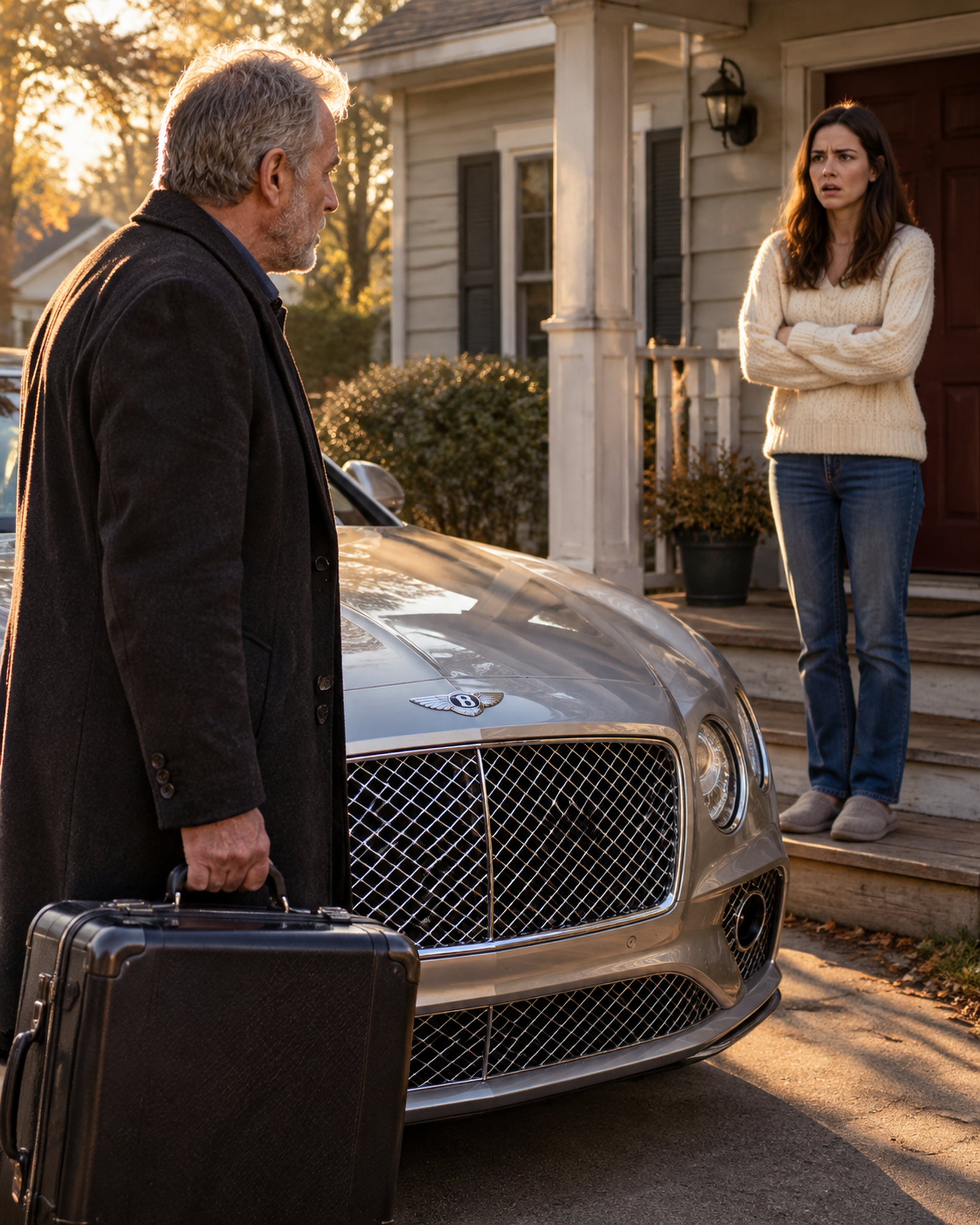
My daughter-in-law told me to leave my own home just minutes after my wife’s funeral, convinced i had nothing to my name—but when a silver…
The Home She Never Knew I Had My daughter-in-law told me to leave my own home just minutes after my...

My Wife Had No Idea I Witnessed the Whole Scene at That Party — The Truth Surfaced Weeks Later…
My Wife Had No Idea I Witnessed the Whole Scene at That Party — The Truth Surfaced Weeks Later My...