My Wife Had No Idea I Witnessed the Whole Scene at That Party — The Truth Surfaced Weeks Later…
My Wife Had No Idea I Witnessed the Whole Scene at That Party — The Truth Surfaced Weeks Later
My wife thought I arrived late to Nadia’s party.
She never saw me standing behind the dark glass while Raymond’s hand settled around her waist.
And she had no idea I heard what she said about the first time I forgave her.
Part One — The Room Behind the Glass
I had always been early to things.
Not anxiously early, not the kind of early that made other people feel rushed.
I simply liked arriving before a room was ready for me.
At school, I wrote the day’s lesson on the board before the first student entered.
At soccer practice, I dragged the cones across the field myself.
I believed preparation was a quiet form of respect.
That Saturday night, being early changed my life.
Nadia’s house stood on a wooded road outside Hartford, all warm stone and tall windows, the kind of place designed to make winter look beautiful from indoors.
She was hosting a promotion party for her husband, with catered food, hired bartenders, and more candles than any reasonable person needed.
Priya had gone ahead because she was helping Nadia arrange the flowers.
I had planned to meet her at eight.
At seven twenty, the soccer tournament ended early after the opposing coach forfeited the final match because three players were sick.
I showered at school, changed into the navy jacket Priya liked, and stopped for a bottle of the red wine Nadia had mentioned once at dinner.
When I arrived, the front drive was already crowded.
Music pulsed through the house, softened by walls and distance.
I parked near the road and walked around the side because the front path was blocked by a delivery van.
That was how I saw them.
The sunroom ran along the back of the house, separated from the garden by glass doors.
The lights inside were low.
Most guests were gathered toward the kitchen, but Priya stood near the far end of the room with Raymond Cole, her company’s regional brand director.
I knew Raymond in the casual way spouses know colleagues.
He was forty-two, recently divorced, careful with his clothes, and always slightly amused by people.
He had once spent ten minutes at our dinner table explaining why good bourbon should never be mixed with ice.
Priya had rolled her eyes afterward and called him exhausting.
Now she was smiling at him as if exhaustion had become charming.
His hand rested against the small of her back.
Not briefly.
Not by accident.
His thumb moved once over the fabric of her dress, slow and familiar.
Priya looked toward the kitchen, then back at him.
I stopped in the narrow strip of darkness beside the house.
The glass door was open an inch.
Their voices reached me between the music and the wind moving through the trees.
“You need to stop looking at me like that,” Priya said.
Raymond smiled. “Like what?”
“Like you’re waiting for permission.”
“I thought I already had it.”
She should have stepped away.
Instead, she lifted her wineglass and took a sip while he watched her mouth.
There was no shock in her expression, no discomfort.
Only the nervous brightness of someone enjoying a danger she believed she controlled.
Then Raymond kissed her.
It was not long.
It did not need to be.
His fingers tightened against her waist, and Priya’s free hand closed around the front of his jacket.
She kissed him back with the certainty of practice.
I felt nothing at first.
That frightened me more than pain would have.
My body became unnaturally still, as if movement might make the scene real.
The bottle in my hand pressed cold against my palm.
Somewhere behind me, a car door slammed and people laughed as they walked toward the front entrance.
Priya pulled away first.
“Not here,” she whispered.
Raymond glanced toward the kitchen. “He isn’t coming until eight.”
“He’s always early.”
“Then why are you so calm?”
She gave a small laugh.
I knew that laugh.
It came from the back of her throat when something genuinely amused her.
“Because Daniel doesn’t make scenes,” she said. “He forgave the first one.
He’ll forgive anything if you give him enough time to explain it to himself.”
Raymond’s smile changed.
It became less playful, more satisfied.
“You’re sure?”
Priya looked down at her wedding ring, turning it once with her thumb.
“He loves being the good man,” she said. “Good men stay.”
The wind moved through the bare branches above me.
For a moment, the music disappeared beneath the sound.
I had believed betrayal would hurt most in the body: a tightening chest, a sick stomach, a rush of heat.
But the worst part was quieter.
It was hearing the person you loved explain your devotion as a weakness.
It was discovering that your mercy had not been understood as mercy at all.
It had been studied as a pattern.
Nadia entered the sunroom carrying a tray of empty glasses.
Priya stepped away from Raymond so smoothly that the movement itself told me how often she had rehearsed it.
I backed into the shadows before Nadia could look through the glass.
Then I walked to my car, placed the wine on the passenger seat, and sat behind the wheel.
I did not drive home.
I drove three blocks, stopped beneath a streetlamp, and waited until eight twelve.
Then I returned through the front door with the bottle in my hand and an apology about soccer running late.
Priya crossed the room toward me.
Her face opened into warmth.
She kissed my cheek and adjusted the collar of my jacket.
“There you are,” she said. “I was starting to think you’d abandoned me.”
Across the room, Raymond lifted his glass in greeting.
I smiled at my wife because thirty people were watching and because I had not yet decided what kind of man I would become after that night.
Near midnight, as we walked to the car, Priya slipped her hand into mine.
“You missed the only interesting part of the party,” she said.
I looked at her profile under the porch lights and understood that she truly believed I had.
Part Two — The First Time I Stayed
The first betrayal had happened fourteen months earlier in a restaurant downtown.
I had taken a Thursday afternoon off to surprise Priya at what she called a client dinner.
I brought white ranunculus wrapped in brown paper because roses, according to her, were performative, and ranunculus had been in her wedding bouquet.
I remember thinking that remembering such details was one of the ways marriage survived ordinary life.
I saw her through the restaurant window before she saw me.
She was seated across from a man named Marcus Bell, an outside consultant who had worked with her company for one quarter.
Their hands were touching on the table.
When he said something, she laughed with the same unguarded sound I would later hear in Nadia’s sunroom.
I did not go inside.
I sat in my car until the flowers bent against the passenger seat.
Then I drove home, fed Biscuit, and waited at the kitchen table with a glass of water I never drank.
Priya arrived at eleven fifteen.
She stopped in the doorway when she saw me.
Something moved across her face so quickly another man might have missed it: calculation, fear, then surrender.
She confessed before I asked.
It had been going on for two months.
It was not serious.
She did not love him.
She had been feeling invisible, restless, disconnected from herself.
Each explanation arrived with tears, and each tear seemed real.
That was what made it difficult.
Priya was not a cartoon villain.
She was a woman capable of sincere remorse and sincere selfishness at the same time.
When she finished, I said, “End it tonight.
Completely.
Not tomorrow.”
She reached for my hand.
I let her take it.
We went to counseling twice.
The first session was painful but useful.
The therapist asked Priya why being desired by a stranger had felt more urgent than being known by her husband.
Priya cried in the car afterward and said she finally understood the damage she had done.
Before the third appointment, she developed a work conflict.
The next week, another one appeared.
Soon the therapist’s name disappeared from our calendar without either of us formally deciding to stop.
I did not check Priya’s phone.
I did not contact Marcus.
I did not tell my brother Nathan, my mother, or Bernard, the English teacher who had been my closest friend for eleven years.
I believed privacy was dignity, and I believed forgiveness should not become surveillance.
Priya tried, at least in the beginning.
She brought wine home on Fridays.
She sent me photographs of funny street signs and old buildings she thought I could use in class.
She planned a weekend in Vermont and held my hand during the drive.
At night, she rested her head against my shoulder with a concentration that sometimes felt more like performance than comfort.
Still, I let myself soften.
A marriage cannot be rebuilt if one person remains permanently braced for impact.
I chose to believe that a terrible decision did not have to become a permanent definition.
I believed people could change because I had spent my adult life teaching teenagers, and teaching was impossible without that belief.
The year after Marcus was not exactly happy.
It was careful.
Then, at a dinner party in Nadia’s house the following spring, someone mentioned a couple in their office who were separating after an affair.
Priya leaned close to me and whispered, almost affectionately, “We’re stronger than that.
Nothing could really break us now, could it?”
She said it as if our survival had proven something permanent.
I looked at her. “No,” I said. “I suppose not.”
Something cold and precise moved through me, though I did not yet understand why.
She had formed a theory about my love.
The evidence of the previous year had confirmed it.
I was not a man who left.
I was patient.
I was decent.
I would absorb pain rather than create public wreckage.
What I had offered as grace, she had recorded as permission.
Lying beside her after Nadia’s party, listening to her breathing slow into sleep, I finally understood that the first affair had not ended when Marcus disappeared from her phone.
It had continued inside the lesson Priya believed she had learned from it.
Part Three — The Lie She Told at Breakfast
The next morning, Priya made pancakes.
She did this perhaps four times a year, usually on birthdays or after an argument she wanted to close without reopening.
I found her in the kitchen wearing my old college sweatshirt, her hair tied loosely at the back of her neck.
Biscuit sat beside her with the solemn patience of a dog who understood that breakfast sometimes fell from heaven.
“You slept badly,” she said.
“I was awake for a while.”
“Too much wine?”
“Maybe.”
She poured batter into the pan.
Her movements were light, almost cheerful.
Watching her, I wondered whether guilt had become easier with practice or whether she had simply stopped naming what she felt as guilt.
“Raymond seemed drunk,” I said.
Her hand paused for less than a second.
“Raymond is always half-drunk at parties.”
“He left early?”
“I think so.” She flipped the pancake. “Why?”
“No reason.
I barely saw him.”
The tension left her shoulders.
That small release hurt more than the lie.
It meant she had been afraid for exactly as long as she believed discovery was possible.
Once I removed that possibility, she returned to comfort.
We ate at the kitchen table.
She talked about Nadia’s caterer, the playlist, a vice president who had embarrassed himself while dancing.
She described the party in detail, including the twenty minutes she claimed to have spent in the pantry looking for extra glasses.
I pictured her hand gripping Raymond’s jacket.
At ten, she left for a yoga class.
I washed the dishes, took Biscuit into the yard, and stood beside the broken garage door.
The bottom panel had been bent for nearly two years.
Every few months, Priya or I would say we needed to call someone.
Then a bill arrived, a weekend filled up, or the problem became ordinary again.
That morning, the door looked different to me.
It was not evidence of neglect.
It was evidence of adaptation.
We had learned to lift it carefully from one side.
We had built a routine around damage instead of repairing it.
I went inside and opened the small green notebook I used for lesson planning.
On a clean page, I wrote the date of Nadia’s party.
Beneath it, I wrote only what I had seen and heard.
I did not describe my feelings.
I did not call Priya cruel.
I wrote facts: Raymond’s hand at her waist.
Kiss.
Priya’s statement about first affair.
Raymond’s question.
Her answer: Good men stay.
Teachers learn early that memory changes under pressure.
Notes do not.
Over the following week, I noticed what had probably been present for months.
Raymond’s name appeared on her phone late at night, though the messages vanished before morning.
Priya took calls in the garage despite the cold.
On Wednesday, she said she would be in Boston for a conference with Nadia.
Two days later, I ran into Nadia at a hardware store while buying chalk line for the soccer field.
“Aren’t you supposed to be in Boston?” I asked.
She looked confused. “Next month, maybe.
Why?”
“Priya said you were both attending a conference.”
Understanding flickered across her face.
She covered it quickly.
“Oh.
That conference.
I had to cancel.”
Nadia was a poor liar.
She became too careful with nouns.
That night, I did not ask Priya about Boston.
I watched her pack a small suitcase while Biscuit lay in the hallway.
She held up two dresses and asked which one looked more professional.
“The blue one,” I said.
She chose the black.
After she left the next morning, I took the shared tablet from the kitchen counter to check the weather before soccer practice.
A notification appeared from the travel application connected to our family email.
LAKEFRONT SUITE CONFIRMED.
Two guests.
Two nights.
One king bed.
The reservation was under Raymond Cole’s name, but the emergency contact number belonged to my wife.
Part Four — Evidence Does Not Need Anger
I stared at the screen until it dimmed.
Then I tapped it awake and took three photographs with my phone.
I forwarded the confirmation to a private email address I had used years earlier for graduate school applications.
After that, I placed the tablet exactly where I had found it.
My hands were steady.
That steadiness unsettled me.
I had imagined that proof would produce fury, but the feeling was closer to recognition.
The party had already ended the argument inside me.
The reservation simply removed the last place doubt could hide.
At school, I taught a lesson on institutional collapse.
My juniors expected wars, assassinations, and dramatic speeches.
Instead, I explained that most systems fail through repeated small concessions.
A rule is ignored because enforcing it feels inconvenient.
A lie is tolerated because the truth would require action.
Eventually, the structure remains visible while its purpose has disappeared.
One student raised his hand. “So when does it actually collapse?”
“When enough people stop protecting what holds it up,” I said.
The room went quiet for a reason they could not have understood.
During lunch, Bernard sat across from me in the faculty lounge with a paper cup of coffee that smelled burned enough to remove paint.
“You look different,” he said.
“Tired?”
“No.
Less tired.”
I smiled.
Bernard had a gift for finding the correct word by rejecting the obvious one.
He did not press me.
That was one of the reasons we had remained friends.
That afternoon, I called Gloria Mendoza, a divorce attorney Nathan had mentioned after helping one of his employees through a difficult separation.
Her receptionist offered an appointment the following Tuesday.
The word divorce did not appear in the conversation, yet when I ended the call, the room seemed to rearrange itself around it.
Gloria’s office was above a pharmacy in West Hartford.
She wore silver-framed glasses and asked direct questions in a voice that made direct answers feel possible.
I told her about Marcus, the forgiveness, the party, and the hotel reservation.
“Do you intend to reconcile?” she asked.
“No.”
It was the first time I said it aloud.
There was grief in the word, but no uncertainty.
Gloria explained the practical landscape.
We had no children, but we had a house, retirement accounts, a shared emergency fund, and six years of financial entanglement.
She advised me not to leave the home permanently, not to drain accounts, and not to confront Priya until I understood our finances.
“Do not turn pain into evidence against yourself,” she said. “Be calm because calm protects you, not because she deserves comfort.”
I wrote that sentence in my green notebook.
When Priya returned from Boston, she brought me a book about the Civil War from an airport store.
A receipt remained inside the cover.
The time printed at the top was Sunday afternoon, but her flight had supposedly landed Saturday night.
“How was the conference?” I asked.
“Exhausting.
Nadia got sick, so I was on my own most of the time.”
She kissed my cheek and handed Biscuit a toy shaped like a lobster.
I watched her crouch on the floor, laughing as he pulled at it.
Love did not disappear simply because truth arrived.
That was one of the ugliest surprises.
I could see the woman who remembered my interests, adored our dog, and called my mother every month.
I could also see the woman who had lied to my face before removing her coat.
Both were real.
That night, she suggested we finally repair the garage door.
“We keep putting it off,” she said. “It’s becoming embarrassing.”
“I’ll get estimates.”
She smiled with visible relief, as if my agreement proved our life was continuing exactly as expected.
At two in the morning, the shared tablet lit up on the dresser.
A message preview appeared before the screen locked.
RAYMOND: Did he notice anything?
Priya’s reply followed seconds later.
No.
He never notices.
Part Five — The Life I Had Left Unattended
I did not wake Priya.
I photographed the screen, turned the tablet facedown, and lay beside her until morning.
She slept on her side with one hand beneath her cheek, looking younger than she did in daylight.
Once, years earlier, that sight had filled me with a protective tenderness so immediate it felt physical.
Now the tenderness remained, but it had nowhere safe to go.
The next day, I ran three miles before school.
I had not run regularly since our second year of marriage.
My lungs burned, my left knee complained, and the November air cut through my shirt.
None of it felt pleasant.
It felt honest.
I began meeting Nathan for lunch on Wednesdays.
I called my mother on a Thursday for no reason.
I stayed after practice to take penalty kicks with two boys who were struggling, then accepted Bernard’s invitation to eat at a diner instead of rushing home.
From the outside, I was doing ordinary things.
Inside, I was returning to a life I had gradually abandoned without noticing.
Marriage had not demanded that abandonment.
Priya had not ordered it.
I had simply centered our peace so completely that my own interior life had become a room I entered only when something went wrong.
Priya noticed the change.
One evening, she found me reading at the kitchen table instead of waiting for her in the living room.
She placed her bag on the counter and studied me.
“You’ve been distant.”
“Have I?”
“Yes.” She removed her earrings one at a time. “You’re here, but you’re somewhere else.”
I closed the book. “I’ve been thinking about patterns.”
“What kind of patterns?”
“The ones people build without admitting they’re building them.”
Her face became careful.
“Is this about us?”
I let the silence remain long enough for her to hear her own fear inside it.
“No,” I said. “It’s something for class.”
She exhaled and changed the subject.
The ease of her relief confirmed something I did not want confirmed.
Priya did not need to believe she was innocent.
She only needed to believe I was unaware.
Three nights later, Nadia called me.
Priya was attending what she described as a late strategy session.
I was in the garage measuring the damaged panel when my phone rang.
Nadia’s name appeared on the screen.
“I’m sorry to bother you,” she said.
Her voice was low. “Is Priya home?”
“No.”
“Did she tell you where she was?”
“At the office.”
A pause followed.
“I’m at the office,” Nadia said.
Neither of us spoke for several seconds.
Then she asked, “Can you meet me tomorrow morning?”
“For what?”
“I should have talked to you sooner.”
I leaned against the cold metal track of the garage door.
“Nadia, I already know about Raymond.”
Her breath caught.
“How much do you know?”
“I saw them at your party.”
“Oh, God.”
The shame in her voice surprised me.
It belonged to someone who had carried another person’s secret until it began to feel like participation.
“I didn’t know you were outside,” she said. “I thought you arrived later.”
“So did they.”
“Daniel…” She stopped, then began again. “The party wasn’t the beginning.”
I looked through the garage window toward the house.
The kitchen light glowed above the table where I had once forgiven my wife.
“How long?”
“I don’t know exactly.”
“That isn’t why you called.”
“No.” Nadia’s voice tightened. “There’s an internal audit at the company.
Raymond’s expense reports were flagged, and Priya approved some of them.
She may have done more than lie to you.”
A car turned into our street, its headlights moving across the garage wall.
Nadia lowered her voice further.
“And Daniel, there’s a video from the party.”
Part Six — The Toast No One Was Supposed to Hear
We met at a coffee shop six miles from both our homes.
Nadia arrived before me and chose a table in the back.
She looked exhausted, her dark hair pulled into a knot, her hands wrapped around a cup she did not drink from.
When I sat down, she placed her phone between us but kept one hand over it.
“I need you to understand why I stayed quiet,” she said.
“You don’t owe me an explanation.”
“I think I do.”
Nadia had known about Marcus.
Priya told her after I discovered the affair, framing the confession as a crisis we had survived together.
Nadia believed it was over.
Months later, she noticed Raymond and Priya leaving events separately and arriving at the office within minutes of each other.
“I confronted her in August,” Nadia said. “She said you two had an understanding.”
“What kind of understanding?”
“She called the marriage emotionally open.”
I almost laughed, but the sound would not come.
“She said you preferred not to know details,” Nadia continued. “I wanted to believe her because the alternative was that my closest friend was doing this again and using your decency as cover.”
The affair with Raymond had begun nine months after Marcus ended.
It started during a product launch in Chicago.
Priya and Raymond returned a day later than the rest of the team, claiming a weather delay.
There had been no delay.
After that came hotel weekends disguised as conferences, dinners entered as client development, and ride-service charges to a furnished apartment near Lake Compounce.
Nadia suspected the apartment belonged to one of Raymond’s friends.
The audit began when a junior financial analyst noticed duplicate meal receipts attached to two separate campaigns.
Raymond had submitted them.
Priya had approved them.
Once accounting looked deeper, they found hotel rooms without corresponding meetings and consulting payments to a small design company Raymond owned through his brother.
“Did Priya know?” I asked.
“I don’t know what she knew at first,” Nadia said. “By the end, she knew enough.”
She removed her hand from the phone.
The video had been recorded by Nadia’s cousin, who was filming decorations for a social media reel.
The camera had been left running on a side table in the sunroom.
Most of the footage showed empty glasses and people crossing the frame.
Then Raymond and Priya appeared.
I did not need to see the kiss again.
I remembered every movement.
What I had not seen from outside was what happened after Nadia interrupted them.
The camera continued recording when several guests entered the room.
Someone proposed a toast to Nadia’s husband.
Glasses lifted.
Priya stood beside Raymond, close enough that their arms touched.
A man off camera joked that marriage was the most dangerous long-term investment anyone could make.
Raymond looked at Priya. “Some investments are guaranteed.”
She smiled into her wine.
“Daniel forgave worse,” she said softly. “He doesn’t leave.
That’s his whole identity.”
Raymond leaned closer. “Then let’s give him something worth staying through.”
Priya laughed.
It was only two seconds.
A private exchange hidden beneath a roomful of noise.
But the microphone caught it clearly.
Nadia stopped the video.
“I’m sorry,” she whispered.
I looked through the window at people walking past with coffee, phones, coats, ordinary morning concerns.
My chest felt hollow, but my thoughts were clean.
“Send it to me,” I said.
“Are you sure?”
“Yes.”
The file arrived before I left the table.
Nadia reached for my wrist as I stood. “There’s more.”
I sat again.
“The consulting company Raymond used,” she said. “One of the payments didn’t come from our firm.”
“Where did it come from?”
She looked at me with an expression I would remember long after I forgot the coffee shop.
“It came from Priya personally.”
Part Seven — What the Garage Door Had Paid For
Gloria helped me request complete statements from every account tied to my name.
The process took four days.
During those four days, I taught, coached, cooked dinner, and listened while Priya complained about an unnamed problem at work.
She said accounting had become aggressive.
She said junior employees no longer understood loyalty.
She said Raymond was being unfairly targeted because people resented successful men.
She did not mention that she was under review.
On Friday afternoon, I sat in Gloria’s conference room with twelve months of bank and credit-card statements spread across the table.
The pattern was simple once we stopped trusting the labels.
Priya had moved money from our emergency savings in small amounts: nine hundred dollars, twelve hundred, seven hundred fifty, another thousand.
Each transfer was marked HOUSE or REPAIR.
I had assumed she was paying contractors or setting money aside for the garage.
There were no contractors.
The money went to her private credit card, then from that card to Cole Creative Consulting, the company Raymond’s brother had registered two years earlier.
The total was eight thousand four hundred dollars.
“What was she buying?” I asked.
Gloria slid a lease document toward me.
Her investigator had located it through a payment reference connected to the consulting company.
The furnished apartment near Lake Compounce required a three-month deposit and prepaid rent.
The amount matched our missing savings within forty dollars.
I read the address twice.
That money had come from the account we called the house fund.
We had built it slowly from tax refunds, summer coaching pay, and the annual bonus Priya received each December.
It was supposed to replace the garage door, repaint the exterior, and cover anything that failed unexpectedly.
She had used it to create a second life thirty minutes from our home.
For the first time since the party, anger arrived.
It did not make me loud.
It made the edges of the room sharper.
I saw the cheap grain of the conference table, the silver clip on Gloria’s pen, the half-moon of dust beneath the radiator.
“She let me measure that door,” I said.
Gloria waited.
“She watched me stand in the garage and talk about repair estimates.
She knew where the money went.”
“That matters emotionally,” Gloria said. “Legally, the money can be addressed in division.
Do not confront her yet.”
I nodded, but my jaw had begun to ache from holding it tight.
That night, Priya came home carrying takeout from my favorite Thai restaurant.
She lit candles on the kitchen table and opened a bottle of wine.
“I know I’ve been distracted,” she said. “Work is a mess.
I thought we needed a good night.”
The food smelled of basil and lime.
Biscuit rested his head on my knee.
Priya talked about a possible vacation in Maine, about painting the bedroom, about buying a new couch after Christmas.
I listened to her plan a future with money she had already spent on another man.
Halfway through dinner, she reached across the table and placed her fingers over mine.
“You know we’re okay, right?”
I looked at our hands.
“What does okay mean to you?”
Her smile faltered. “It means us.
It means we get through things.”
“Anything?”
“That’s what marriage is.”
“No,” I said quietly. “That’s what repair is.
Marriage is supposed to include not breaking the same thing on purpose.”
She withdrew her hand.
For one second, I saw fear break through her expression.
Then her phone rang.
Raymond’s name appeared on the screen.
She silenced it too quickly.
Three minutes later, an email notification lit the display.
Priya read it, and the color left her face.
“What happened?” I asked.
She locked the phone.
“Nothing.”
But later that night, while she believed I was asleep, I heard her whisper in the hallway.
“If they ask, I was in Boston with my husband.”
Part Eight — The Lie She Asked Me to Tell
Priya waited until Sunday afternoon.
I was repairing a loose hinge on the back gate when she came outside without a coat.
The air was cold enough to redden her arms.
She hugged herself and stood several feet away, as if approaching too closely might make the conversation harder.
“I need to ask you something,” she said.
I set the screwdriver on the step.
“There’s an issue at work.
It’s mostly accounting confusion, but they’re reviewing travel from the last year.”
“Why?”
“Raymond made mistakes on some submissions.”
“Only Raymond?”
Her eyes moved toward the yard. “I approved a few things without checking carefully.”
She explained that an October weekend in Boston had been coded under the wrong campaign.
If human resources contacted me, she needed me to confirm that the trip had been personal, that she and I had stayed together at the lakefront hotel and accidentally used her corporate profile.
I let her finish.
On that weekend, I had coached a two-day soccer tournament in New Haven.
Forty students, six parents, Bernard, and two other coaches could place me there from sunrise until evening.
“Are you asking me to lie?”
“I’m asking you not to let a paperwork problem destroy my career.”
“That isn’t what I asked.”
Her mouth tightened. “Sometimes protecting a marriage means protecting each other from things that look worse than they are.”
“What are they?”
“What?”
“The things that look worse than they are.”
She stared at me.
I could see her calculating again, the same quick movement I had seen in our doorway after Marcus.
The difference was that this time honesty did not win.
“Expense codes,” she said. “A hotel.
A dinner.
Raymond’s careless, and I signed too quickly.”
“Was Nadia there?”
“No.”
“Was I?”
Her face hardened. “Daniel, why are you doing this?”
“Trying to understand what you want me to say.”
“I want you to say we were together.”
“But we weren’t.”
“Who does that hurt?”
The question settled between us.
She believed morality could be measured only by visible injury.
A lie that saved her job and protected our house seemed harmless because the cost would be carried by truth, and truth was not a person she needed to look in the eye.
“I won’t say it,” I said.
She stepped back as if I had struck the gate beside her.
“You don’t understand what’s at stake.”
“I understand exactly what you’re asking me to risk.”
“It’s one sentence.”
“It would be my sentence.”
For the first time, anger moved openly across her face.
“After everything we’ve been through, you can’t do one thing for me?”
I stood slowly.
“Everything we’ve been through,” I repeated.
The anger vanished.
Fear replaced it.
She looked at me for a long time, then turned toward the house.
At the door, she stopped.
“Were you at Nadia’s party before I saw you?”
The cold wind lifted a strand of hair across her cheek.
I picked up the screwdriver.
“I told you when I arrived.”
“That isn’t what I asked.”
“No,” I said. “It isn’t.”
She went inside and locked the door behind her, though I was still in the yard.
That night, I received a message from Gloria.
The divorce petition was ready for my signature.
Part Nine — The Week She Tried to Become My Wife Again
I signed the petition on Monday morning.
The pen moved easily.
That surprised me.
Six years of marriage, fourteen months of attempted repair, and three weeks of evidence ended with a line of blue ink beneath my name.
Gloria placed the documents in a manila envelope.
“You can have her formally served,” she said. “Or you can tell her first.”
“I’ll tell her.”
“Do not let the conversation become a negotiation if your decision is made.”
“It is.”
She studied me for a moment. “Then remember that grief can sound like a new promise.
It is still grief.”
At home, Priya had become attentive in ways so precise they felt strategic.
She made coffee before I woke.
She sent affectionate messages at noon.
She suggested counseling, though she framed it as something all strong couples should do rather than a response to any particular problem.
She did not mention Raymond.
On Tuesday, she brought home white ranunculus.
I stood in the kitchen holding the flowers I had once carried to the restaurant where I discovered Marcus.
Priya smiled uncertainly.
“I passed the florist and remembered our wedding.”
“So did I.”
Something in my voice made her look away.
The internal audit widened.
Nadia told me that Raymond had hired an attorney and claimed Priya authorized every questionable expense.
He described their relationship as consensual but insisted the financial decisions were hers.
He had spent months telling her she was extraordinary.
The moment consequences appeared, he reduced her to a signature on a form.
Priya learned this on Wednesday.
She came home before six, walked past me without removing her coat, and locked herself in the bathroom.
I heard the shower begin, then the sound of her crying beneath the water.
Part of me wanted to knock.
That instinct had been trained by years of loving her.
I had held her after her father’s surgery, after a failed campaign cost her a promotion, after she woke from nightmares she refused to describe.
My body remembered care even when my mind understood that care had become dangerous.
I sat on the edge of the bed until the crying stopped.
When she emerged, her face was swollen.
She looked at me as though waiting to see which version of me would respond.
“What happened?” I asked.
“Raymond is blaming me.”
“For what?”
“For everything.” She pressed a towel to her hair. “He says I approved the apartment payments.
He says I created the arrangement.”
“Did you?”
Her eyes filled again. “Not the way he says.”
“What way was it?”
She sat beside me. “He needed help.
The apartment was for meetings at first.
Then it became… something else.”
It was the closest she had come to confession.
She reached for my hand.
I moved it onto my knee before she could touch me.
Priya stared at the empty space between us.
“Daniel, I think I made a terrible mistake.”
“A mistake?”
“Many mistakes.”
“Are you telling me because you want to tell me, or because Raymond stopped protecting the lie?”
Her face collapsed.
“I don’t know,” she whispered.
That answer was more honest than anything she had said in weeks.
I almost told her then.
The envelope was in my desk.
The petition had been filed.
But I wanted one night in which the truth belonged fully to me before it became another crisis I was expected to manage for her.
So I stood and said, “Get some sleep.”
She caught my sleeve.
“Do you still love me?”
I looked down at her hand.
“Yes,” I said. “But that is no longer the question that decides what happens next.”
On Friday evening, I placed the manila envelope on the kitchen table.
Priya walked into the room, saw it, and stopped breathing.
Part Ten — The Table Where Forgiveness Ended
“What is that?” she asked.
Her voice had already changed.
It dropped into the softer register she used when fear became real.
I sat across from the empty chair.
Biscuit lay in the doorway between the kitchen and living room, his head resting on his paws.
“I filed for divorce on Monday,” I said. “I wanted you to hear it from me before you were formally served.”
Priya did not move.
Outside, rain tapped against the windows.
The refrigerator hummed.
Biscuit lifted his head when she finally pulled out the chair and sat down.
“No,” she said.
It was not an argument.
It was a refusal of reality.
“Priya—”
“No.
We are not getting divorced.” She pushed the envelope away without touching it. “You’re angry.
You have every right to be angry, but we don’t end six years because I panicked about work.”
“This isn’t about an expense report.”
Her eyes closed.
When she opened them, the performance was gone.
“You saw us.”
“Yes.”
“At Nadia’s party?”
“I arrived at seven thirty-five.
I was outside the sunroom.”
Her hand rose to her mouth.
I continued before she could ask how much.
“I saw Raymond touch you.
I saw you kiss him.
I heard you tell him I forgave the first affair and would forgive anything.
I heard you say good men stay.”
She bent forward as though the words had weight.
“I didn’t mean it like that.”
“How did you mean it?”
“I was showing off.
I was trying to sound…” She searched for a version of herself she could defend. “Untouchable.”
“You succeeded.”
Tears gathered in her eyes. “Why didn’t you say something that night?”
“Because I had already confronted you once.
I knew what your remorse looked like when discovery forced it.
This time, I needed to know what the truth looked like when you believed you were safe.”
Her face tightened. “So you watched me for weeks?”
“I watched the truth stop needing my help.”
“That’s cruel.”
“No.
Cruel would have been humiliating you at the party.
Cruel would have been sending the video to your coworkers or calling your mother before you got home.
I did none of that.”
“What video?”
The question escaped before she could stop it.
I took out my phone and placed it on the table.
I did not play the recording.
I only showed her the file name Nadia’s cousin had given it.
Priya stared at the screen.
“There’s audio?”
“Yes.”
Her shoulders folded inward.
For several seconds, she seemed unable to lift her head.
“I was drinking.”
“You knew exactly what you were saying.”
“I hated myself afterward.”
“You came home and told me I had missed the interesting part.”
She began to cry.
Not the controlled tears from the night of Marcus.
These had no rhythm, no shape.
She pressed both palms against her face and struggled to breathe evenly.
“I’ll leave the company,” she said. “I’ll never speak to Raymond again.
I’ll repay the money.
We’ll go to therapy every week.
You can have every password.
I will do anything.”
“Change should not require losing me.”
She lowered her hands.
“What?”
“You had forgiveness.
You had time.
You had a husband who did not punish you for the first affair or turn your worst act into your permanent identity.
You had every condition people ask for when they say they want a second chance.”
“I know.”
“And you used that second chance to prove I would survive a third.”
“There was no third.”
“The apartment.
The money.
Asking me to lie to your company.
Which number would make you feel better?”
She flinched.
“I was afraid.”
“So was I.
Fear did not make me betray you.”
Priya stood so suddenly the chair scraped across the floor.
“You’re punishing me because you want me to feel what you felt.”
“I don’t want you to feel what I felt.” I kept my voice low. “I would not choose that for anyone.
I’m leaving because I finally understand that loving you does not require me to remain available for the next version of this.”
She walked to the counter, then back to the table, unable to settle inside her own body.
“You’re not supposed to give up on people,” she said.
“I didn’t give up on you.”
“You’re leaving.”
“I gave you everything I had after Marcus.
I stayed when staying cost me sleep, pride, and trust.
I rebuilt with you while you quietly decided my willingness to rebuild meant the house could never fall.”
Her lips trembled.
“That is not giving up,” I said. “That is finishing.”
She looked toward Biscuit. “Are you taking him?”
“On Sunday.
I’ll stay with Nathan until we settle the house.”
“And you planned all of this while eating dinner with me?”
“I planned it while you were planning weekends with Raymond.”
The words landed harder than I intended.
I felt no satisfaction.
Priya crossed her arms over her stomach. “Do you still love me?”
“Yes.”
She looked almost hopeful.
I stood.
“But love is not evidence that a marriage is safe.
Sometimes it is only evidence that leaving will hurt.”
I picked up my keys.
She said my name once, quietly.
At the doorway, I turned and let myself look at her fully: the woman from our wedding photographs, the woman on the kitchen floor laughing with Biscuit, the woman behind Nadia’s glass door.
I did not reduce her to one image.
That would have made leaving easier, but it would also have been false.
“Take care of yourself, Priya,” I said. “I mean that.”
As I stepped onto the porch, her phone buzzed on the table.
The subject line glowed across the screen.
MANDATORY INVESTIGATIVE LEAVE — EFFECTIVE IMMEDIATELY.
Part Eleven — When the Truth No Longer Needed Me
The truth surfaced over the next three weeks without any assistance from me.
Accounting confirmed that Raymond had submitted false expenses and routed company funds through Cole Creative Consulting.
Priya had not designed the scheme, but she had approved transactions she knew were improper and used the same company to pay for the apartment from our personal savings.
Raymond’s strategy was simple.
He admitted the affair, denied emotional promises, and described Priya as the executive who controlled approvals.
He produced messages in which she instructed him how to label charges.
He kept the messages where she sounded confident and deleted the ones where he persuaded her.
It was not justice.
It was self-preservation.
The company allowed Priya to resign rather than be terminated.
Raymond was dismissed and referred to outside counsel over the expense fraud.
Nadia remained employed after cooperating with the audit, though her friendship with Priya ended during one short conversation in a parking lot.
“You gave him the video,” Priya said.
“I gave Daniel the truth,” Nadia replied. “You had already given him the rest.”
I learned about that exchange because Nadia apologized to me later for becoming part of our marriage.
I told her she had not destroyed anything.
A witness does not create the scene.
Priya called me often during the first week of separation.
Sometimes she cried.
Sometimes she sounded angry.
Once, she accused me of choosing the worst moment to leave, as though there had been a better season scheduled for betrayal.
I answered questions about the mortgage, insurance, and the house.
I refused to discuss reconciliation.
One evening, she came to Nathan’s apartment without warning.
Biscuit heard her in the hallway and ran to the door.
When I opened it, Priya crouched and held him around the neck.
He licked her face, delighted and confused.
“I miss him,” she whispered.
“I know.”
She stood.
Her coat hung loosely from her shoulders.
In three weeks, she seemed to have become smaller, though grief often changes posture before it changes weight.
“I need help,” she said.
“With what?”
“The house.
The job search.
Everything.”
“Gloria sent the temporary financial agreement.
I’ll cover my share of the mortgage until the sale.”
“That isn’t what I mean.”
I waited.
“I don’t know how to do this without you.”
There it was: perhaps the most honest sentence she had ever spoken to me.
For years, I had solved the quiet problems.
I remembered renewal dates, called contractors, drove her father to appointments, proofread presentations at midnight, and made dinner when her work consumed the week.
None of those acts had felt like sacrifice because love had made them ordinary.
Now she stood without the system she had mistaken for permanence.
“I thought you loved me,” she said.
“I did.”
“Did?”
“I still do in ways that will take time to change.
That’s why I stayed the first time.
But loving you is not the same as volunteering to rescue you from what happened the second time.”
Her eyes moved to Biscuit, who had returned to my side.
“You make it sound so simple.”
“It isn’t simple.
It’s clear.”
She wiped her cheek. “Raymond says I ruined his life.”
“Raymond is responsible for Raymond’s life.”
“And me?”
“You are responsible for yours.”
The answer hurt her.
I could see it.
But pain caused by a boundary is not the same as cruelty.
Priya knelt once more and kissed Biscuit’s head.
Then she walked toward the stairwell.
At the landing, she turned.
“Was there any moment when I could have stopped this?”
“Yes.”
“When?”
“The first time you realized my forgiveness made you feel safe enough to lie again.”
She closed her eyes.
Then she left, and Biscuit stood beside me listening to her footsteps disappear below.
Part Twelve — The Man Who Finally Stayed
The divorce was finalized the following August.
We sold the house in June.
The buyers repaired the garage door before moving in, replacing the bent panel and rusted track in a single afternoon.
Nathan drove past the property the next week and sent me a photograph.
For a long time, I looked at the clean white door.
It seemed almost offensively simple.
We had spent years lifting the broken thing from one side, adjusting our grip, warning visitors not to touch it.
The repair had always been possible.
What we lacked was not money until Priya spent it.
What we lacked was the decision to stop adapting to damage.
Biscuit adjusted to my apartment faster than I did.
He claimed the patch of sunlight near the balcony and learned the exact sound of my key in the hall.
On Saturdays, he came to soccer practice and slept beside Bernard on the bleachers while my players complained that Bernard’s coffee could legally qualify as a chemical weapon.
We had our first winning season in four years.
In September, Priya mailed me a letter.
There was no request inside.
No plea for another chance, no argument about the past.
She wrote that she had started therapy with a woman named Dr.
Aisha Boland, who asked questions that seemed easy until Priya tried to answer them.
One question stayed with her: What did you believe he owed you?
Priya wrote that she had spent weeks insisting the answer was nothing.
She had never consciously believed I owed her unconditional loyalty regardless of her behavior.
She was not that kind of person, she told herself.
Then Dr.
Boland asked her to stop describing her beliefs and examine her risks.
What had she risked because she assumed it would still be there afterward?
My trust.
My privacy.
Our savings.
Our home.
The ordinary life we had built.
She had risked all of it not because she wanted to lose it, but because she believed it was renewable.
She wrote, “I mistook your quietness for inexhaustibility.
I thought because you did not punish me, there would never be a cost.
I confused being loved with being protected from the consequences of how I treated that love.”
I read the letter twice.
Then I folded it and placed it in the green notebook beside my notes from Nadia’s party.
I did not keep it as a trophy.
I kept it because truth, even when late, deserved an honest place to exist.
I did not reply immediately.
Three days later, I wrote one sentence on a blank card.
I hope you build a life you do not need to escape from.
I mailed it without a return address.
That fall, I ran five miles every Sunday.
I ate lunch with Nathan.
I called my mother before she could call me.
Bernard convinced me to join a trivia team where I discovered that knowing the dates of nineteenth-century treaties was less useful than knowing pop songs from 1998.
I was not dating anyone.
I was not lonely.
There is a difference between solitude and abandonment.
For years, I had feared that leaving Priya would mean abandoning our marriage, our promises, and the man I believed myself to be.
I did not understand that every time I accepted a wound to preserve the appearance of peace, I abandoned someone else.
Myself.
One cold afternoon, after practice, I stood alone on the soccer field gathering cones.
The sun had dropped behind the school, turning the windows gold.
Biscuit waited near the gate, his tail moving each time I looked toward him.
A car stopped at the red light along the edge of the field.
I recognized Priya behind the wheel.
For a moment, neither of us moved.
The distance between us was too great for expression, yet I knew she had seen me.
I lifted one hand.
She lifted hers.
Then the light changed.
The car behind her waited without honking.
Priya looked at me one final second and drove away.
I carried the cones toward the equipment shed.
My chest tightened, but the feeling passed through me instead of taking possession.
Grief had not vanished.
It had simply stopped being the room where I lived.
My wife had once believed I was the kind of man who would never leave.
She had been right about part of it.
I had stayed through humiliation, doubt, and the brutal labor of forgiveness.
I had stayed because devotion was not something I performed when it was easy.
But Priya had misunderstood the final boundary of a good man.
A good man may stay longer than pride recommends.
He may forgive what others would condemn.
He may carry pain quietly because he does not want love to become a public weapon.
What he cannot do forever is remain inside a life that requires him to disappear.
That evening, I drove home with Biscuit in the back seat and the windows cracked to let in the cold air.
The city moved around us, bright and ordinary.
Nothing dramatic announced that I had survived.
There was only the road, the dog’s breathing, and the calm certainty that when I unlocked my own door, I would enter a life in which I no longer had to confuse endurance with love.
Priya had believed good men stayed.
She never imagined that one day, I would finally stay with myself.
Recommended Stories

My son seated me beside the kitchen door at his wedding—even though I had paid the $80,000 deposit for the entire celebration…
The Seat Beside the Kitchen Door—And the $80,000 Wedding Decision My Son Never Expected My son seated me beside the...
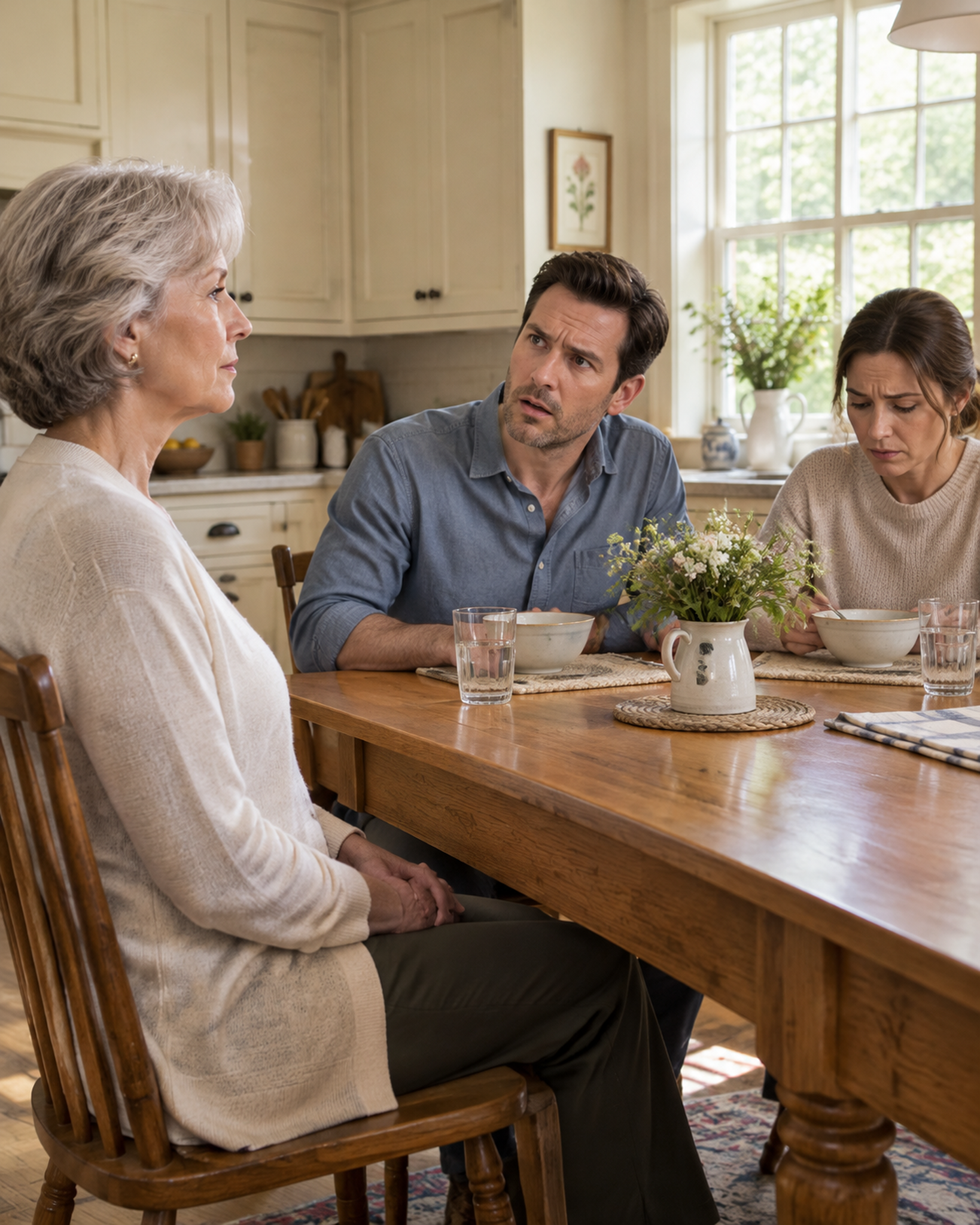
My son questioned my place at my own table, expecting me to let it go—24 hours later, he was loading his belongings into a rental…
A Place at My Own Table My son questioned my place at my own table, expecting me to let it...

The Billionaire Left the Same $10 Tip Every Morning… Until She Finally Asked Why…
THE BILLIONAIRE LEFT THE SAME $10 TIP EVERY MORNING… UNTIL SHE FINALLY ASKED WHY The first time I returned Ethan...