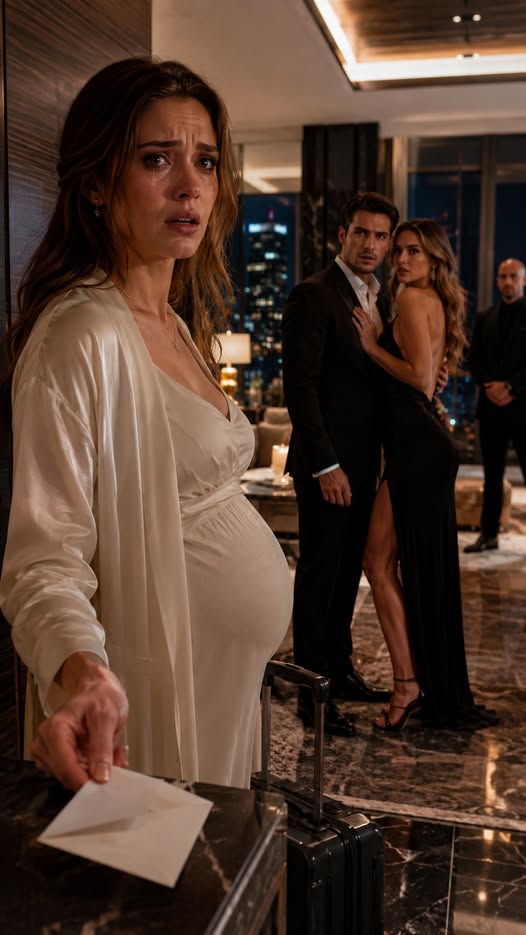
I Joked About My Body Count… He Just Got Up, Paid, and Left Me…
I told my husband my body count over candlelight, laughed, and waited for him to laugh with me.
Instead, he put down his fork, paid for our anniversary dinner, and walked out without touching me.
By the next morning, I would discover that the number wasn’t the only thing I’d been hiding from the man who loved me.
PART 1 — THE FIVE-SECOND JOKE THAT DESTROYED SEVEN YEARS OF LOVE
The last time I saw my husband smile at me without hesitation, we were sitting across from each other at a little restaurant on the north side of Chicago.
It was a Thursday evening in October, and rain had been falling since four o’clock.
Water slipped down the windows, blurring the headlights outside into long streaks of gold and white.
Ethan was wearing the navy sweater I’d bought him for Christmas.
He’d rolled his sleeves up because the restaurant was warm, and he was telling me a ridiculous story about a contractor who had accidentally ordered forty identical bathroom sinks for a historic house renovation.
I was laughing so hard I had to put down my wineglass.
For the first time in weeks, we felt like ourselves.
That was what made everything that happened afterward so difficult to understand.
My name is Mara Ellis.
I was thirty-five years old, married to a man I had loved for seven years, and completely certain that our relationship could survive an uncomfortable conversation.
I was wrong about the conversation.
And I was even more wrong about what my husband had been keeping to himself.
We had been married for four years.
Before that, we’d spent three years learning each other’s habits, arguing about whether the bedroom needed a television, and figuring out how to love someone whose instincts were almost the opposite of our own.
Ethan was thirty-eight, an architectural preservation specialist who could spend twenty minutes explaining why an old wooden staircase deserved to be repaired instead of replaced.
He was careful with things.
Furniture.
Money.
Promises.
People.
Especially people.
I worked as a senior event coordinator for a marketing agency, which meant I spent most of my days solving problems nobody else had anticipated and smiling at people who were furious about things I couldn’t control.
I was good at making difficult situations feel manageable.
Usually, I did it with humor.
Ethan once told me I could turn a fire alarm into a dinner-party anecdote before the firefighters arrived.
He meant it affectionately.
At least, I thought he did.
That Thursday was our fourth wedding anniversary.
We had nearly canceled dinner because his restoration project was running behind schedule and I’d spent the afternoon dealing with a client threatening to withdraw from a conference.
But Ethan had called at five.
“Put on something nice,” he said. “I’m taking my wife out.”
“Your wife sounds expensive.”
“She is.”
“Good thing you married her for love.”
There had been a pause.
Then he’d said, quietly, “Best decision I ever made.”
I remembered those words later.
I remembered them so clearly that, for weeks, I could almost hear his voice whenever the house became too quiet.
At the restaurant, we’d ordered roasted chicken, mushroom risotto, and a bottle of wine neither of us would ordinarily spend that much money on.
We talked about work, then his younger brother Graham, who had recently moved into a new apartment after ending a long relationship.
Eventually, the conversation drifted toward the beginning of our own.
“Do you remember our third date?” Ethan asked.
“The museum?”
“The museum where you spent forty minutes pretending you knew the difference between impressionism and expressionism.”
“I knew the difference.”
“You called a painting from 1920 ‘very Renaissance.’”
I laughed.
“I was trying to impress you.”
“You didn’t need to.”
He reached across the table and touched my hand.
Something in my chest softened.
For months, we’d been moving around each other instead of toward each other.
Work had filled the spaces where conversations used to happen.
We still kissed goodbye, still shared coffee, still knew which groceries the other needed.
But lately, we had become very efficient roommates.
That evening felt like a small return.
I didn’t know that Ethan had spent several weeks wondering whether something between us had already changed.
He asked about college.
I told him a story about my roommate stealing traffic cones and decorating our apartment with them.
He countered with a story about spending his twenty-first birthday in the library.
“Of course you did,” I said.
“What’s that supposed to mean?”
“You were always so serious.”
“I had fun.”
“Ethan, your idea of rebellion was returning a library book late.”
He smiled.
“I wasn’t exactly a monk.”
“Oh, sweetheart.
Compared with me?”
He raised an eyebrow.
“Is that right?”
I leaned back, feeling pleasantly warm from the wine.
“You married a woman with a much more interesting history than you realize.”
“Should I be worried?”
It was an ordinary question.
A teasing question.
One he had no reason to believe would change the evening.
I should have smiled and told him that my life became more interesting after I met him.
Instead, I heard myself say, “Well, my body count is thirty-eight.
Maybe thirty-nine, depending on how we’re counting.”
I laughed.
Ethan didn’t.
I thought he was pretending to be shocked.
“Oh, come on,” I said. “Don’t look at me like that.
I had a life before you.”
He stared at his plate.
His fork rested beside a piece of chicken he hadn’t finished chewing.
Then he looked up.
“Thirty-eight?”
“Approximately.”
“You’re serious?”
I shrugged.
“Why would I lie about something like that?”
The answer would haunt me.
Because I had lied.
Not about the number.
About something connected to it.
And the worst part was that, when I made the joke, I still didn’t understand how close I was to exposing myself.
Ethan’s expression changed.
It wasn’t disgust.
It wasn’t even anger.
It was something quieter.
Recognition.
As if he’d spent a long time trying to understand a particular sound in another room, and someone had finally opened the door.
“Does that include people I know?” he asked.
I should have recognized the seriousness in his voice.
Instead, I doubled down on the joke.
“Well, technically, two of them are in our wedding pictures.”
I grinned.
“One of them is you, obviously.”
For a second, he didn’t move.
Then he asked, “And the other one?”
I reached for my wineglass.
“Ethan, I’m teasing you.”
“About the other person?”
“About how dramatic you’re making this.”
He looked at me for several seconds.
Then he placed his napkin beside his plate.
“I need to go.”
I blinked.
“What?”
“I need to leave.”
He stood.
At first, I thought he was going to the restroom.
Then he picked up his coat, reached into his back pocket, and took out his wallet.
“Ethan, what are you doing?”
He didn’t answer immediately.
He walked toward the server’s station, where a young waiter was arranging clean glasses.
I watched him speak quietly to the waiter.
Then he handed over his credit card.
I sat there with my hand still wrapped around my wineglass, trying to decide whether I was embarrassed or furious.
People at the next table were talking about a vacation.
Somewhere behind me, a woman laughed.
The ordinary sounds of the restaurant continued as though my husband hadn’t just walked away from our anniversary dinner.
When Ethan returned, I forced a smile.
“Okay.
You made your point.”
He slipped the receipt into his wallet.
“I’m leaving, Mara.”
“Because of a joke?”
He looked at me.
“I asked you a question.”
“And I answered.”
“No,” he said. “You turned it into another joke.”
I felt heat climb into my face.
“Are you seriously going to shame me for having a past?”
His jaw tightened.
“I didn’t say anything about being ashamed.”
“Then what is this?”
He glanced toward the restaurant door.
For one brief moment, I thought he might sit down again.
Instead, he said, “I can’t have this conversation with you tonight.”
“We’re married.”
“I know.”
“People who are married don’t just walk away because they’re uncomfortable.”
He looked directly at me.
“People who are married should also be able to ask a question without being laughed at.”
That silenced me.
I could hear rain striking the windows.
I wanted to say something that would make him stay.
Instead, I said, “You’re overreacting.”
His face changed once more.
Not dramatically.
Just enough.
“I hope that’s true,” he said.
Then he walked out.
The little brass bell above the restaurant door rang as he disappeared into the rain.
I waited for him to come back.
I watched the door for nearly ten minutes.
The waiter approached once and asked whether I wanted dessert.
I told him no.
He offered to package my unfinished dinner.
I told him no again.
When I finally stood, my legs felt strangely unsteady.
My husband had left me alone on our anniversary.
Over a number.
That was the explanation I repeated to myself all the way home.
It was also the explanation I would eventually discover was the least important part of the truth.
We had driven separately because we’d both come directly from work.
Ethan’s truck was gone from the restaurant parking lot.
I sat in my car, listening to the windshield wipers move across the glass, and called him.
Straight to voicemail.
I tried again.
Nothing.
Then I sent a text.
I can’t believe you embarrassed me like that.
Three minutes passed.
No answer.
We could have discussed this like adults.
Still nothing.
Finally:
I’m not apologizing for who I was before I met you.
I stared at the message after sending it.
It sounded strong.
Independent.
Reasonable.
And yet, something about it made me feel worse.
Because I knew he hadn’t asked me to apologize for my past.
He had asked who the other person in our wedding pictures was.
And I had refused to answer.
The drive home took twenty-six minutes.
I remember because I kept looking at the dashboard clock, calculating how long it would take Ethan to reach the house if he’d gone directly there.
His truck wasn’t in the driveway when I arrived.
The porch light was on.
Inside, everything looked exactly as we’d left it.
Two coffee mugs in the sink.
His work boots beside the back door.
A folded blanket across the couch.
On the kitchen counter sat a small white envelope.
My name was written across it in his careful handwriting.
For one terrifying second, I thought it was a goodbye letter.
Then I opened it.
It was an anniversary card.
On the front was a drawing of two elderly people sitting together on a porch.
Inside, Ethan had written:
Four years married.
Seven years together.
Still my favorite person to come home to.
I know we’ve been tired lately.
I know we haven’t always made enough room for each other.
But I still believe in us.
Love, Ethan.
I read the words twice.
Then I put the card facedown.
I couldn’t bear looking at it.
At eleven thirty, I called his younger brother.
Graham answered after several rings.
“Hey, Mara.”
“Is Ethan there?”
A pause.
“He’s here.”
Relief hit me so hard I had to grip the kitchen counter.
“Can you put him on?”
“I don’t think that’s a good idea tonight.”
“Graham, please.”
I heard movement in the background.
Then a door closing.
Graham spoke again, his voice lower.
“What happened?”
“We had an argument at dinner.”
“About what?”
I hesitated.
“Something stupid.”
“Okay.”
“I made a joke.
He didn’t think it was funny.”
Graham was quiet.
Then he said, “Mara, Ethan doesn’t leave places when people tell jokes.”
My throat tightened.
“I know.”
“Then maybe you need to figure out why he left.”
I didn’t appreciate the advice.
I told Graham to let Ethan know I’d called.
Then I hung up.
I spent the next hour walking through the house.
I went upstairs and opened our bedroom closet.
His shirts were still hanging neatly beside mine.
His winter coat was still on the hook.
His toothbrush stood in the blue ceramic holder we’d bought on our honeymoon.
Nothing had been taken.
That should have comforted me.
Instead, it made the absence feel worse.
He hadn’t packed.
He hadn’t planned a dramatic exit.
He had simply reached a point where leaving the restaurant felt easier than remaining in front of me.
At one in the morning, I texted again.
Please come home.
We can talk.
No response.
I lay awake staring at the ceiling.
Every time I closed my eyes, I saw Ethan standing beside our table with his wallet in his hand.
He hadn’t looked like a man punishing his wife.
He’d looked like a man trying very hard not to say something he couldn’t take back.
The next morning, I woke with the kind of headache that follows too little sleep and too much crying.
There was no message from Ethan.
I made coffee out of habit, poured two cups, and stood staring at them.
Then I called my oldest friend, Tessa.
Tessa and I had met when we were twenty-one.
She knew nearly everything about the person I’d been before Ethan, including the things I’d convinced myself no longer mattered.
I explained the dinner.
At first, she listened without interrupting.
Then she asked, “What exactly did you say?”
I told her.
Including the wedding photographs.
There was a long silence.
“Mara.”
Something in her voice made me straighten.
“What?”
“Why would you say that?”
“Because it was a joke.”
“Was it?”
“Obviously.”
“Was the number a joke?”
“No.”
“And was the wedding part a joke?”
I opened my mouth.
Nothing came out.
Tessa sighed.
“Does Ethan know about Aaron?”
The name landed so sharply that I looked toward the kitchen doorway, as if someone might have overheard.
“Why are you bringing him up?”
“Because you said two people in the wedding pictures.”
“I included Ethan.”
“And the other one was Aaron.”
I rubbed my forehead.
“It happened years before I met my husband.”
“I know when it happened.”
“So what is the problem?”
Tessa’s voice hardened.
“The problem is that Ethan asked you about Aaron before the wedding.”
My stomach tightened.
“That was different.”
“How?”
“Because nothing was happening between us.”
“That wasn’t what Ethan asked.”
I stopped walking.
Tessa continued.
“He wanted to know whether you two had ever been involved.
You told him no.”
“I didn’t want to create a problem out of something that was over.”
“And now you made a joke about it over your anniversary dinner.”
I pressed my fingertips against my eyes.
“I didn’t say Aaron’s name.”
“You didn’t have to.”
The kitchen felt suddenly too small.
I sat down at the table.
For a moment, neither of us spoke.
Then Tessa said something I didn’t want to hear.
“You keep saying Ethan left because of your body count.
But you know there’s another reason he might be hurt.”
I ended the call a few minutes later.
Not because Tessa was wrong.
Because she was getting too close to something I’d spent years pretending didn’t exist.
At a.m., my phone vibrated.
Ethan.
I nearly dropped it trying to unlock the screen.
There were two messages.
The first read:
I’m safe.
I’m staying with Graham for now.
I need some space.
Please don’t come over.
I exhaled shakily.
Then I opened the second.
Before you tell me again that it was just a joke, I need you to answer one question.
A moment later, another message appeared.
When I asked you four years ago whether you and Aaron had ever been together, you looked me in the eye and said no.
Last night, you told me someone else in our wedding pictures was part of your past.
Was it him?
I stared at the screen.
My hands had begun to tremble.
I typed three different replies.
Deleted all of them.
Then the phone vibrated again.
Please don’t make me find out the truth from someone else.
And suddenly, the thing I’d spent the entire night calling a harmless joke didn’t feel harmless anymore.
Because I knew exactly who Aaron was.
I knew why Ethan had asked about him before our wedding.
And I knew that, on the day I promised my husband a lifetime of honesty, one of the men watching us exchange vows was carrying a secret I’d never trusted Ethan enough to hear.
END OF PART 1
PART 2 — THE MAN WHO STOOD AT OUR WEDDING AND THE LIE I NEVER CORRECTED
The truth was sitting in my phone, waiting for me to become brave enough to send it.
I had known Aaron Pierce for almost ten years.
We met when I was twenty-six, working my first demanding job at a small event-management company in Chicago.
He was charming, ambitious, and impossible to pin down.
He owned a restaurant consulting business and seemed to know everyone who mattered in the city’s hospitality industry.
For five months, we had something between us.
Not quite a relationship.
Not quite casual enough to pretend it meant nothing.
We went out together.
We spent weekends together.
Occasionally, we disappeared from each other’s lives for two weeks, only to start again as though nothing had happened.
Eventually, I wanted more consistency than Aaron could give.
He wasn’t a terrible person.
He was simply honest about not wanting what I wanted.
When I ended things, neither of us made a scene.
We stayed friendly.
By the time I met Ethan, Aaron and I hadn’t been romantically involved for more than a year.
There had been no cheating.
No secret meetings during my marriage.
No hidden affair.
That was the part I kept repeating to myself.
As though being faithful after my wedding somehow canceled out the lie I’d told before it.
Ethan first met Aaron at an industry fundraiser two years before our wedding.
I’d introduced them near the bar.
“This is Aaron,” I said. “We’ve worked together on a few events.”
Aaron shook Ethan’s hand warmly.
“So you’re the famous Ethan.”
Ethan smiled.
“Hopefully famous for good reasons.”
“Oh, Mara talks about you all the time.”
Aaron had put a friendly hand on my shoulder.
I remember the gesture because Ethan noticed it.
Not with jealousy.
With curiosity.
Later that evening, as we walked toward our car, Ethan asked, “Did you two ever date?”
The question caught me off guard.
I could have said yes.
I could have told him it was brief, that it ended long before we met, and that there was nothing unresolved between Aaron and me.
Instead, I said, “No.
We’re just old friends.”
Ethan accepted the answer.
That was the thing about him.
He didn’t interrogate people.
He believed them.
Months later, during wedding planning, Aaron’s name appeared on our guest list.
Ethan pointed at it.
“You’re sure that’s comfortable?”
I knew what he meant.
I pretended not to.
“Why wouldn’t it be?”
“Because you two seem close.”
“We’ve known each other forever.”
Ethan studied me for a moment.
Then he said something I should have remembered.
“I don’t need a report on everyone you dated before me, Mara.
But if somebody from that part of your life is going to be part of ours, I’d rather know.”
I kissed his cheek.
“You worry too much.”
And he let it go.
Aaron attended our wedding in a charcoal-gray suit.
He brought a gift, congratulated us, and stood in the reception line with everyone else.
I watched him shake Ethan’s hand.
I remember feeling a small, uncomfortable twist in my stomach.
Then my sister called me over for photographs, and the moment passed.
For four years, I allowed myself to believe that because nothing had happened, nothing was wrong.
But those were two different things.
At that morning, I finally answered Ethan.
Yes.
It was Aaron.
Then:
We were involved years before you and I met.
It ended long before our relationship started.
Nothing has happened since.
I stared at the screen.
My thumb hovered over the keyboard.
Finally, I added:
I lied when you asked me about him.
I’m sorry.
I sent the messages before I could make them sound better.
Ethan read them almost immediately.
He didn’t reply.
I set the phone on the kitchen counter and walked away.
Five minutes later, I checked again.
Nothing.
At eleven, I called my office and told them I was sick.
Then I drove to a coffee shop near Tessa’s apartment.
She was already waiting.
She didn’t hug me immediately, which told me more than a hug would have.
I sat across from her and pushed my sunglasses onto my head.
“You were right.”
Tessa looked tired.
“About Aaron?”
“About the wedding.”
She stirred her coffee.
“Did you tell Ethan?”
“Yes.”
“What did he say?”
“Nothing.”
She nodded slowly.
I hated that she didn’t immediately tell me everything would be fine.
“Do you think he’ll divorce me?” I asked.
Tessa looked up.
“I don’t know.”
The answer nearly made me cry.
“I didn’t cheat on him.”
“I know.”
“I never even considered it.”
“I believe you.”
“Then why does this feel like I’ve done something unforgivable?”
Tessa set down her spoon.
“Because you keep defending yourself against an accusation nobody has made.”
I looked away.
Across the café, a young couple was sharing a muffin and laughing at something on a phone.
I wondered whether they had any idea how quickly a happy afternoon could become a memory someone wanted to forget.
Tessa leaned closer.
“Can I ask you something uncomfortable?”
“Apparently that’s today’s theme.”
She didn’t smile.
“When Ethan asked you about Aaron before the wedding, why did you lie?”
“Because I didn’t want him to think differently of me.”
“Why would he?”
I shrugged.
“Ethan always seemed so… certain.”
“Certain about what?”
“About relationships.
About what things meant.
About what he wanted.”
“And you weren’t?”
“I’d had a lot more experiences than he had.”
Tessa looked at me carefully.
“Did Ethan ever tell you that made you less worthy of being loved?”
“No.”
“Did he ever ask you to pretend you’d never dated anyone?”
“No.”
“Then whose judgment were you afraid of?”
I didn’t answer.
Because the question brought back memories I hadn’t thought about in years.
My mother telling me that women should never reveal too much too soon.
Friends comparing the men they’d dated as though relationships were competitive sports.
People laughing at the idea that someone with my history could end up with a man as steady as Ethan.
And me, laughing along because admitting I cared about those judgments would have made me feel exposed.
Tessa reached across the table.
“You were never obligated to give Ethan a number.”
I looked at her.
“But,” she continued, “when he asked whether Aaron was someone from your past, you gave him a false answer.
That’s a different issue.”
My eyes filled.
“I know.”
“Do you?”
I nodded.
But knowing something intellectually and understanding what it has done to another person are not always the same.
Ethan agreed to meet me on Saturday afternoon.
Not at our house.
At a small café near Graham’s apartment.
His message was brief.
I can talk for an hour.
I don’t want another argument.
I arrived fifteen minutes early.
I had rehearsed what I would say while driving.
I was going to explain that Aaron meant nothing to me now.
That I hadn’t betrayed our marriage physically.
That my past didn’t define me.
All true statements.
Not one addressed the question Ethan had actually asked.
When he walked in, my rehearsed speech disappeared.
He looked exhausted.
There were dark shadows beneath his eyes, and his beard was a little rougher than usual.
He wore the same navy sweater from our anniversary dinner.
For some reason, that almost broke me.
“Hi,” I said.
“Hi.”
He sat across from me.
I wanted to reach for his hand.
I kept mine in my lap.
For several seconds, neither of us spoke.
Then Ethan said, “I thought about not coming.”
My chest tightened.
“Why?”
“Because I didn’t want to spend an hour arguing about whether I’m allowed to feel hurt.”
I lowered my eyes.
“I’m not going to do that.”
He nodded.
“Okay.”
I took a breath.
“Aaron and I were involved before I met you.
We dated for about five months.
It was never serious in the way you and I were serious.”
Ethan’s expression remained still.
“Why didn’t you tell me?”
“I was afraid you’d judge me.”
“For dating someone?”
“For the number of people I’d been with.
For the kind of person I was when I was younger.”
He leaned back.
“Mara, I never asked for that number.”
“I know.”
“I asked about Aaron because I could tell there was history there.”
I nodded.
“And because I didn’t want to be the only person in a room who didn’t understand what everyone else already knew.”
The words struck something inside me.
Ethan continued.
“I wasn’t asking you to apologize for having relationships.
I wanted to know whether I was building friendships with people who knew something important about my wife that I didn’t.”
My throat tightened.
“I didn’t want to make you uncomfortable.”
“You made the decision for me.”
I looked up.
He wasn’t shouting.
That made the conversation harder.
“I know,” I whispered.
“Do you remember when Aaron asked for help with the old restaurant building on Milwaukee Avenue?”
I nodded.
Two years earlier, Aaron had purchased a vacant storefront.
The building had historic features that complicated his renovation plans.
I’d mentioned it to Ethan.
Ethan had spent several weekends looking at drawings and helping Aaron understand what work could be done without damaging the original structure.
He hadn’t charged him.
I’d been proud of him for that.
“Would you have helped him if you’d known?” I asked.
Ethan rubbed his forehead.
“I don’t know.”
The answer startled me.
He looked at me.
“Maybe.
Probably, actually.
I like Aaron well enough.
But I deserved the chance to make that decision knowing the truth.”
I remembered Ethan sitting at our dining table, drawing measurements onto tracing paper while Aaron explained his renovation plans.
I remembered bringing them coffee.
I remembered thinking how fortunate I was that the past and present could exist so peacefully in the same room.
But peace built on someone else’s ignorance wasn’t necessarily peace.
“Did Aaron know you hadn’t told me?” Ethan asked.
“No.”
“You’re sure?”
“Yes.
I never asked him to hide anything.
We just didn’t talk about it.”
Ethan nodded.
“Who else knew?”
I looked at my hands.
“Tessa.
My sister.
A few friends from that time.”
He stared out the window.
“So at our wedding, there were people who knew.”
“Yes.”
“And I didn’t.”
“No.”
His eyes closed briefly.
That expression hurt worse than anger.
“I feel like an idiot,” he said.
“Please don’t.”
“That’s how I feel.”
“You weren’t an idiot.”
“Then why did you treat me like I couldn’t handle the truth?”
I had no answer that didn’t sound like another excuse.
He waited.
Finally, I said, “Because I was afraid telling you might change the way you saw me.”
Ethan looked at me for a long moment.
“Well,” he said quietly, “hiding it did.”
I began crying.
Not loudly.
My eyes simply filled, and I couldn’t stop the tears from falling.
Ethan pushed a napkin toward me.
It was such a familiar gesture that I nearly reached for him.
But he withdrew his hand.
“I love you,” I whispered.
His expression softened.
“I love you too.”
For one hopeful second, I thought those words were enough.
Then he continued.
“That’s what’s making this so hard.”
We talked for almost an hour.
I answered his questions about Aaron.
I told him when the relationship started, when it ended, and why we’d remained friendly afterward.
Ethan didn’t ask for intimate details.
He didn’t want names or stories about the other people in my past.
He wanted to understand why I had decided he couldn’t be trusted with an uncomfortable truth.
At one point, he said, “Do you know what I thought when you said thirty-eight?”
I shook my head.
“I thought you were about to tell me something you hadn’t trusted me with before.”
My eyes burned.
“Then you laughed and said someone at our wedding was part of that history.
And when I asked who, you laughed again.”
He looked down at his coffee.
“I knew I couldn’t sit there and keep asking without getting angry.
So I left.”
“You could have told me.”
“I’d been trying to ask you for years.”
I opened my mouth.
Then closed it.
He was right about Aaron.
But I wasn’t ready for what he said next.
“There was another reason I left.”
My heart started beating faster.
“What?”
Ethan leaned forward.
“Do you remember Tessa’s birthday dinner last spring?”
I frowned.
“At her apartment?”
He nodded.
“Your friends were sitting in the kitchen.
I came back inside because I’d forgotten my jacket.”
I remembered the evening.
There had been wine.
Music.
A lot of laughing.
I remembered Ethan appearing in the doorway.
I remembered the conversation stopping.
But I hadn’t thought about it afterward.
“What about it?” I asked.
He looked at me.
“I heard somebody say I was probably the least experienced man you’d ever been with.”
My stomach dropped.
“And I heard you laugh.”
I pressed a hand against my mouth.
“Ethan…”
“I asked you about it that night.
You said everyone was just being stupid.”
I remembered.
He had been quiet during the ride home.
I’d asked whether he was upset.
He’d said he didn’t like being discussed when he wasn’t in the room.
I’d kissed his cheek and told him not to take everything so seriously.
Then we’d gone to bed.
Now, sitting across from him, I saw the memory differently.
“I wasn’t trying to embarrass you,” I said.
“I believe that.”
His voice trembled slightly.
“But you still did.”
I lowered my head.
Ethan waited.
Then he asked a question that made the restaurant disappear around me.
“Mara, when I told you about my own past, I asked you to keep it between us.”
I looked up slowly.
“Yes.”
His eyes were wet.
“Did you?”
I couldn’t speak.
He watched my face, and I saw the moment he understood.
“Oh, God,” he whispered.
“Ethan, please…”
He pushed back his chair.
“Tell me the truth.”
I stared at him.
“Did you tell your friends things about me that I trusted you not to share?”
For the second time in three days, my husband was sitting across from me waiting for an answer.
And for the second time, the honest answer was the one that could cost me everything.
END OF PART 2
PART 3 — THE THINGS I LAUGHED ABOUT WHEN HE WASN’T IN THE ROOM
“Yes.”
The word came out barely above a whisper.
Ethan didn’t move.
For a moment, I wondered whether he’d heard me.
Then he asked, “What did you tell them?”
I could have minimized it.
I could have said that women talk about relationships, that people share things with their closest friends, that he’d never explicitly forbidden me from discussing every personal detail.
Those explanations were waiting for me.
Familiar.
Convenient.
But I had watched my husband walk out of one restaurant because I wouldn’t answer a question.
I couldn’t bear to make him ask twice in another.
“When we first started dating,” I said, “I told Tessa that you’d only been with two people before me.”
Ethan looked at the table.
“Why?”
“I don’t know.”
He raised his eyes.
“Mara.”
“I was insecure,” I admitted. “You seemed so sure about what you wanted.
I didn’t understand how you could be so comfortable with yourself when I was still trying to figure out who I was.”
“So you told your friends?”
“I was trying to understand why I felt so different from you.”
His expression tightened.
“That wasn’t your story to tell.”
“I know.”
He looked toward the window.
Outside, a cyclist waited at a traffic light, rain dripping from the brim of his helmet.
The world was continuing without us.
I wanted it to stop.
I wanted five minutes to go back and become someone who understood the consequences of her own words before saying them.
Ethan spoke again.
“I told you that in private.”
I nodded.
“I remember.”
“I remember too.”
The conversation he was referring to had happened three months after we met.
We were lying in bed in his old apartment, listening to a summer thunderstorm.
I’d asked about his previous relationships.
He told me about two women.
The first, Julia, had been his college girlfriend.
They’d stayed together for almost eight years before realizing they wanted different lives.
The second relationship had lasted less than a year.
After that, Ethan had spent several years single.
He hadn’t been lonely every day.
He had friends, family, work, and a life he enjoyed.
He simply didn’t enjoy casual dating.
“I never understood being with somebody when you already know you don’t want to stay,” he’d said.
I remembered smiling.
“Some people don’t know what they want until they try.”
“That’s fair.”
He’d brushed a strand of hair from my face.
“I guess I’ve always moved slowly.”
I’d asked whether he regretted it.
He thought for a moment.
“Sometimes I wonder whether I missed experiences other people had.”
Then he looked at me.
“But I don’t want to pretend to be someone I’m not.”
I remember how much I loved him in that moment.
How safe I felt.
How unexpectedly relieved I was to be beside a person who wasn’t interested in comparing himself with anybody else.
Before we fell asleep, he asked me not to discuss the conversation with other people.
“Not because I’m embarrassed,” he explained. “I just don’t like my private life becoming entertainment.”
I promised.
Then, less than a week later, I told Tessa.
I told myself it was harmless because she was my oldest friend.
Later, when the subject came up during a girls’ night, I made another joke.
And eventually, something Ethan had entrusted to me became a small piece of trivia our friends felt free to laugh about.
He never gave permission for that.
I simply decided it didn’t matter.
Back in the café, Ethan rubbed his eyes.
“Did you ever tell them I didn’t know your number?”
I swallowed.
“Yes.”
He nodded slowly.
“Of course.”
The disappointment in his voice made my chest ache.
“Not like that.”
“Then how?”
“I told them we’d never talked about it.”
“And?”
I hesitated.
He waited.
“Sometimes I joked that you probably wouldn’t want to know.”
His face went still.
“Did you think I couldn’t handle it?”
“I thought you might see me differently.”
“So instead you let other people laugh at me for not knowing.”
I shook my head.
“I never wanted them to laugh at you.”
“But you laughed with them.”
The truth was unbearable because it required no interpretation.
I had.
Not every time.
Not with deliberate cruelty.
But often enough that Ethan had noticed.
And when he’d tried to talk about it, I had made him feel unreasonable for caring.
“I’m sorry,” I whispered.
He looked at me for a long moment.
“Do you remember what you told me after Tessa’s birthday?”
I nodded.
“That everyone was just joking.”
“You said I needed to learn how to laugh at myself.”
My eyes filled.
“Ethan…”
“I’ve spent a lot of my life laughing at myself, Mara.
I know how to do it.”
His voice broke slightly.
“But I’d like to decide which parts of me are funny.”
I began crying again.
This time, he didn’t push a napkin toward me.
He looked tired.
Not indifferent.
Not cold.
Just tired in a way I couldn’t fix by being charming.
He reached into his jacket pocket and placed our house key on the table.
I stared at it.
“What are you doing?”
“I’m keeping the other copy for now.
I need to pick up some things when you’re at work.”
“Ethan, no.”
“Mara.”
“Please don’t do this.”
He took a slow breath.
“I don’t know how to be with you right now.”
“We can go to counseling.”
“Maybe.”
“We can talk.
We can fix this.”
He shook his head.
“You’re talking about fixing it because you’re frightened I’ll leave.”
“Of course I’m frightened.”
“I know.
But I need to know whether you understand what happened even when the fear settles down.”
I stared at him.
Then he said the sentence that stayed with me long after he left.
“I thought I was the person you could be completely yourself with.
Now I wonder whether you were always performing for somebody.”
He stood.
I didn’t reach for him.
I knew touching him wouldn’t make him stay.
Before walking away, he looked back at me.
“I don’t regret marrying you.”
My breath caught.
“But I don’t know whether I can keep being married to a version of you that changes depending on who’s listening.”
Then he left.
This time, I didn’t call after him.
I sat with the key between my fingers.
It was the same little silver key he’d handed me when we first moved into our house.
Seven years earlier, he’d said, “You don’t have to knock anymore.”
Now I held it while wondering whether there was any door left that he would willingly open.
That evening, I searched through old messages.
At first, I told myself I was doing it to understand what Ethan had overheard.
In truth, I was looking for evidence that I hadn’t been as careless as he believed.
I opened the group chat I’d shared with Tessa, my sister Claire, and two friends from college.
The conversations went back years.
There were photographs, birthday plans, arguments about restaurants, complaints about work, and hundreds of messages I’d forgotten sending.
I searched Ethan’s name.
At first, the results were ordinary.
Ethan made dinner because I worked late.
He’s helping Graham move this weekend.
Anniversary plans are officially happening.
Then I scrolled farther back.
A message from shortly after our engagement appeared.
I’d written:
I think I finally found my safe choice.
No games, no drama, and he doesn’t need to know every chapter of the disaster I was in my twenties.
Claire had replied:
Does that mean you told him about Aaron?
My answer appeared beneath it.
Nope.
Some chapters are staying closed.
Let me have my happy ending.
I stared at the words.
I remembered sending them.
I’d been sitting in my car outside a bridal boutique after trying on wedding dresses.
I had felt happy.
Terrified.
Almost undeserving.
The joke had been a way of telling my friends that I was scared of losing something good.
But I hadn’t said that.
Instead, I’d made my future husband sound like a conveniently uninformed man who would love me as long as he didn’t know enough to reconsider.
I scrolled again.
There was another message, sent after a dinner party at our house.
One friend had written:
Ethan is ridiculously sweet.
Is he seriously as innocent as he seems?
I’d replied:
Let’s just say one of us came into this marriage with a lot more stories.
Someone responded with laughing emojis.
Then I had written:
That’s the beautiful thing about Ethan.
He doesn’t ask many questions.
I put the phone down.
The room felt unbearably quiet.
He didn’t ask many questions.
I had turned his trust into evidence that I could avoid telling the truth.
The memory of his face at the anniversary dinner returned.
Now I understood something I hadn’t wanted to consider.
He hadn’t been looking at a number.
He’d been looking at the possibility that his wife had spent years deciding what he was allowed to know.
I called Tessa.
She answered immediately.
“How did it go?”
“Badly.”
“I’m sorry.”
I told her what I’d found in the old messages.
When I read the line about Ethan not asking questions, she went silent.
Finally, she said, “I remember that.”
I waited.
“I should have pushed back harder,” she admitted.
“You tried.”
“Once or twice.”
I shook my head.
“You didn’t make me send those messages.”
“No.
But I laughed at some of them.”
I appreciated that she didn’t pretend otherwise.
For several moments, we sat on opposite ends of the phone without speaking.
Then I asked, “Do you think I actually loved him?”
Tessa’s answer came quickly.
“Yes.”
“Then why did I talk about him like that?”
“Because sometimes you get scared that people won’t accept you as you are.
And instead of admitting you’re scared, you make yourself the person controlling the joke.”
I stared at the wedding photograph on our bookshelf.
Ethan was smiling in it.
His hand rested against my back.
Behind us stood our families and friends, some of whom had known the truth about Aaron.
“That doesn’t explain everything,” I said.
“No,” Tessa replied. “It doesn’t excuse it either.”
I covered my mouth.
“I keep thinking about how happy he looked that day.”
“He was happy.”
“And I was too.”
“I know.”
My voice broke.
“Then why did I act like being honest would destroy it?”
Tessa didn’t rush to answer.
Eventually, she said, “Maybe because you’d spent so long believing that being loved meant making sure nobody saw the parts of you that could disappoint them.”
I looked down at the phone.
“But Ethan wasn’t asking me to be perfect.”
“No.”
“He was asking me to be honest.”
“Yes.”
The words were simple.
They hurt more than anything complicated could have.
On Sunday, my mother came over.
I’d told her that Ethan and I were having problems, but I hadn’t explained everything.
Diane was sixty-four, a retired school administrator with a practical manner and the ability to make almost any room feel organized within five minutes.
She arrived carrying soup, bread, and a bag of groceries.
When she saw my face, she put everything down.
“Oh, honey.”
I started crying before she reached me.
She held me in the kitchen.
For a while, neither of us said anything.
Then she sat beside me and listened to the entire story.
I expected her to defend me.
She didn’t.
She also didn’t condemn me.
Instead, she asked, “Are you ashamed of your past?”
I considered the question.
“Not exactly.”
“Then what are you ashamed of?”
I looked at her.
“That Ethan might think I’m different from the woman he married.”
My mother studied me.
“Are you?”
“I don’t know.”
She reached for my hand.
“Mara, you were an adult before you met that man.
You had relationships.
You made mistakes.
You learned things.
None of that makes you unworthy of being his wife.”
I nodded through tears.
“But if you lied to him because you didn’t trust him to know those things, you have to own that.”
“I do.”
She squeezed my hand.
Then she surprised me.
“When you were little, you always made jokes when you got nervous.”
I looked up.
“You remember?”
“Of course.
You did it when you broke a window.
You did it when you failed your driving test.
You even did it at your father’s funeral when you didn’t know how to handle people watching you cry.”
My breath caught.
Dad had died unexpectedly when I was twenty-three.
At his funeral, a distant relative had told me I was being very strong.
I’d replied that Dad would have been annoyed by all the flowers because somebody would have to water them.
People laughed.
I remember feeling grateful.
For a few seconds, nobody looked at me with pity.
My mother brushed a tear from my cheek.
“Humor helped you survive difficult moments,” she said. “But sometimes, honey, the people who love you need to know when something hurts.”
I stared at her.
“I don’t know how to stop doing it.”
“Then you learn.”
She stood to warm the soup.
I watched her move through my kitchen, putting bowls on the table as though preparing dinner could make a broken marriage feel temporarily manageable.
For the first time since the restaurant, I didn’t feel angry at Ethan.
I felt something more difficult.
Responsibility.
Not responsibility for having lived a life before him.
Responsibility for the choices I’d made while he was loving me.
Late that night, Ethan sent another message.
I came by while you were out yesterday and picked up enough clothes for a few weeks.
I didn’t want to surprise you.
I went upstairs.
Only then did I notice the empty spaces in his closet.
He’d taken work clothes, jeans, two sweaters, and his running shoes.
His wedding suit was still hanging near the back.
The sight of it made my throat close.
I typed:
I found some old messages.
You were right about more than I wanted to admit.
I’m going to work on this whether or not you’re ready to talk.
I sent it.
Then I added:
I love you.
I’m sorry I made you feel like you had to question what was real between us.
He replied twenty minutes later.
I believe you love me.
I read the message repeatedly.
Then another appeared.
But I need more than that right now.
The next morning, he called.
His voice sounded unfamiliar through the phone.
“I think we should separate for a while,” he said.
I closed my eyes.
“How long?”
“I don’t know.”
“Do you want a divorce?”
There was silence.
Then Ethan answered.
“I didn’t want one when I walked into that restaurant.”
My heart began to race.
“And now?”
He took a breath.
“Now I’m trying to figure out whether the marriage I thought we had was the same marriage you thought we had.”
I pressed my hand against the kitchen wall.
“Ethan, please tell me there’s still a chance.”
He was silent for so long I thought the call had disconnected.
Then he said, “I need to speak to someone about what happens if there isn’t.”
I knew what he meant.
A lawyer.
A separation agreement.
Two lives that had been joined together for seven years becoming two lives again.
Before I could respond, he added one final sentence.
“And Mara, before we talk about fixing anything, I need you to stop telling yourself that you lost me because of a number.”
END OF PART 3
PART 4 — THE APOLOGY THAT COULDN’T PUT OUR MARRIAGE BACK TOGETHER
The first thing I learned about repairing trust was that an apology couldn’t do the work for me.
The second was that becoming a more honest person didn’t guarantee Ethan would want to remain married to me.
For the next six weeks, we lived separately.
Ethan stayed with Graham while he searched for a furnished apartment.
I remained in our house, surrounded by evidence of the life we’d built.
We spoke about practical things.
The mortgage.
Insurance.
The electricity bill.
A leaking pipe beneath the kitchen sink.
We did not speak about whether he missed me.
I missed him so much that I sometimes found myself standing in the grocery store staring at foods I didn’t like but had spent seven years buying for him.
The first time I reached for his favorite cereal, I put it back.
Then I stood between two shelves and cried.
A woman asked whether I needed help.
I told her I was fine.
That word had become almost as automatic as my jokes.
I started seeing a therapist named Dr.
Rebecca Moore.
During our first appointment, I described the anniversary dinner.
When I finished, Rebecca asked, “What did you want Ethan to understand when you made that joke?”
“That my past doesn’t make me a different person.”
“Did he tell you it did?”
“No.”
“Then who were you defending yourself against?”
I looked down.
“I think I was defending myself before anyone attacked me.”
Rebecca nodded.
We talked about my father.
About the way I’d handled grief by becoming entertaining.
About relationships I’d ended before anyone could make me feel rejected.
About the version of myself I’d created for different audiences.
At work, I was confident and witty.
With my old friends, I was the adventurous woman who could laugh about almost anything.
With Ethan, I was softer.
More domestic.
More willing to admit I wanted a quiet life.
None of those versions was entirely false.
But I’d never allowed them to exist together.
“What did you think would happen if Ethan knew all of you?” Rebecca asked.
I stared at the carpet.
“He might decide I wasn’t the woman he wanted.”
“And what happened when you tried to control what he knew?”
I pressed my lips together.
“He stopped knowing whether he could believe me.”
Rebecca let the silence remain.
For once, I didn’t fill it.
I made two difficult phone calls that week.
The first was to Aaron.
He answered from his office.
“Mara?
Everything okay?”
“Not really.”
I told him Ethan knew about our history.
Aaron was silent for a moment.
“Wait.
He didn’t know before?”
“No.”
“I assumed he did.”
The genuine surprise in his voice was almost painful.
“I never told him,” I admitted. “And when he asked about us, I lied.”
Aaron sighed.
“I’m sorry things are difficult.”
“I didn’t call for sympathy.”
“Okay.”
“I just wanted you to know that this wasn’t something you were supposed to hide.
I made that decision without telling either of you.”
He was quiet.
Then he said, “You know, I wouldn’t have lied if Ethan asked me.”
“I know.”
After the call, I notified my supervisor that I had a personal conflict involving Aaron’s company and asked to be removed from an upcoming project.
I didn’t reveal our history to the office.
I didn’t need to.
My supervisor reassigned the account without drama.
It was a small professional inconvenience, not some grand sacrifice.
But for once, I had chosen an uncomfortable conversation before circumstances forced it.
The second call was to my friends.
I told them I’d shared private information about Ethan that wasn’t mine to share, and that I’d made jokes about our differences that I regretted.
I asked them to stop repeating those stories.
Claire was upset.
“Why didn’t you say something when it was happening?” she asked.
“Because I was one of the people laughing.”
Nobody knew what to say to that.
Tessa apologized too.
But I made something clear.
“Please don’t contact Ethan to explain that nobody meant any harm.”
“Why not?” Claire asked.
“Because he already knows what we intended.
What matters is that we hurt him anyway.”
Afterward, I sat alone at the kitchen table.
I’d finally stopped asking everyone to see the situation from my perspective.
I was beginning to understand that Ethan had spent years doing exactly that for me.
In November, Ethan agreed to one marriage counseling session.
We met in a quiet office overlooking a small courtyard.
He sat beside me, leaving several inches between us.
The counselor, Dr.
Helen Brooks, began by asking what each of us hoped to accomplish.
I spoke first.
“I want to save our marriage.”
Ethan looked at his hands.
Then he said, “I want to know whether that’s possible.”
The distinction hurt.
But I understood it.
During the session, I explained my dishonesty without defending it.
I admitted that I’d laughed when my friends discussed his private life.
I admitted that I’d turned difficult conversations into jokes because I feared losing control of how people saw me.
Then I told him something I hadn’t said before.
“I wasn’t settling for you, Ethan.”
He looked up.
“When I called you my safe choice, I didn’t mean you were less exciting than anyone else.
I meant that for the first time, I was with somebody who made me feel like I could stop proving myself.”
His eyes filled.
“Then why didn’t you stop?”
I had no prepared answer.
“Because I didn’t know how.”
He nodded, looking away.
“That’s what I keep thinking about.”
“What?”
“That I spent seven years trying to make you feel safe enough to tell me the truth.
And you spent seven years deciding what I could handle.”
I wiped my eyes.
“I know.”
He took a shaky breath.
“I don’t think you understand how lonely that makes me feel.”
I turned toward him.
“You were never second best.”
“I wanted to be your partner, Mara.
Not somebody you had to manage.”
The counselor allowed us a moment.
Then Ethan said, “I need to own something too.”
I looked at him.
“Walking out without explaining anything was frightening for you.
I understand that now.”
I nodded.
“Very.”
“I was overwhelmed.
I knew I was going to say something hurtful if I stayed.”
He paused.
“But I should have told you I was safe and where I was going that night.
Leaving you wondering wasn’t fair.”
I started crying again.
“Thank you for saying that.”
He gave a small nod.
The acknowledgment mattered.
It didn’t erase what I’d done, and it didn’t mean his need for distance was wrong.
But it reminded me that we were still two people capable of recognizing each other’s pain.
Not simply a guilty wife and an injured husband.
For the first time since our anniversary, we talked without trying to win.
We attended four more counseling sessions over the next two months.
Some were painfully quiet.
Others left us both exhausted.
We discussed the nights I’d dismissed his discomfort.
The times he had withdrawn instead of telling me how deeply something bothered him.
The way our relationship had slowly become a place where difficult feelings were postponed until one person could no longer carry them.
We also remembered the good things.
Our first trip to Michigan.
The weekend we painted the living room and accidentally spilled an entire tray of white paint on the floor.
The night Ethan stayed beside me at the hospital after my mother’s emergency surgery, holding my hand for six hours without once complaining that he’d missed a day of work.
There were moments when we laughed.
Real laughter.
Not laughter used to avoid answering a question.
Sometimes, those moments made me believe we could find our way back.
But Ethan never promised that.
One afternoon, after a session, we stood beside our cars in the parking lot.
“Would you like to have dinner sometime?” I asked.
He looked at me.
“Just dinner?”
“Just dinner.”
He considered it.
Then he nodded.
“Maybe next week.”
I smiled for the first time in days.
“Okay.”
The following Wednesday, he came to the house.
I cooked his favorite meal.
We sat at the dining table he’d refinished himself, talking about work, Graham’s new apartment, and a historic theater Ethan was helping restore.
For almost an hour, it felt ordinary.
Then his eyes drifted toward our wedding photograph.
I saw his expression change.
“What is it?” I asked.
He shook his head.
“Nothing.”
I waited.
He looked back at me.
“That’s the problem.
I keep remembering things I thought were simple.
And now I find myself wondering what I didn’t know.”
I swallowed.
“Ask me.”
“I don’t want to spend the rest of our marriage investigating you.”
The words landed heavily.
“I don’t want that either.”
He looked at me with such sadness that I felt the hope I’d been carrying begin to slip.
“I believe you’re trying, Mara.”
“I am.”
“I believe you’re telling me the truth now.”
“Then why does it feel like you’re still leaving?”
His eyes filled.
“Because believing someone is trying isn’t the same as feeling safe again.”
We finished dinner quietly.
He washed the dishes.
I dried them.
It was the most ordinary thing in the world.
And somehow, it felt like a goodbye.
Two weeks later, Ethan asked to come over.
He arrived carrying a folder.
He didn’t take off his coat.
I knew before he spoke.
“I’ve talked to a lawyer,” he said.
My hands turned cold.
“About the separation?”
He nodded.
“And about a divorce.”
I gripped the back of a chair.
“Ethan…”
“I haven’t filed anything yet.”
I looked at him.
“Then don’t.”
His face twisted.
“Mara.”
“We’re finally talking.
We’re doing the work.
We have good days again.”
“I know.”
“Then why would you give up now?”
He looked down at the folder.
“Because I can’t keep coming here and trying to convince myself I feel the way I used to.”
I started shaking.
“I can change.”
“I believe you.”
“Then let me.”
His eyes filled.
“You don’t need my permission to become the person you want to be.”
I covered my mouth.
He continued, almost whispering.
“And I don’t think it’s fair to ask you to spend years proving something to me when I don’t know whether I’ll ever stop being afraid.”
I sank into a chair.
Ethan sat across from me.
He didn’t rush.
He didn’t explain away my pain.
He simply stayed while I cried.
Finally, I looked up.
“Do you still love me?”
He nodded.
“Yes.”
“Then why isn’t that enough?”
He closed his eyes.
For several seconds, he couldn’t answer.
When he finally spoke, his voice broke.
“Because love is still here, Mara.
But the trust that made it feel like home isn’t.”
He slid the folder across the table.
Inside was a draft agreement outlining how we could separate our finances and divide the house if we decided to end the marriage.
He placed his wedding ring beside it.
I stared at the thin gold band.
For four years, I’d barely noticed it because it was always there.
Now it was lying on our dining table.
And Ethan was asking me to imagine a life where it never returned to his finger.
END OF PART 4
PART 5 — THE DAY I FINALLY TOLD THE TRUTH WITHOUT ASKING HIM TO STAY
I didn’t sign the agreement that night.
Ethan didn’t ask me to.
We sat at the dining table for nearly an hour, the folder between us and his wedding ring resting beside his untouched glass of water.
I wanted to argue.
I wanted to remind him of everything we’d survived together, every promise we’d made, every ordinary Tuesday evening that had meant more to me than any romantic vacation.
But I had spent years using words to control difficult moments.
For once, I needed to listen.
“Are you certain?” I finally asked.
Ethan looked at the ring.
“No.”
My heart lifted.
Then he continued.
“But I’m certain I can’t keep living in the space between trying to forgive you and being afraid to trust you.”
I nodded slowly.
“Okay.”
He looked surprised.
“Okay?”
“I’m not saying I want this.”
My voice trembled.
“I don’t.
I still want our marriage.
But I can’t make staying feel right for you by explaining how much I love you.”
Tears slipped down his cheeks.
I had seen Ethan cry only a handful of times.
Once at his grandfather’s funeral.
Once when Graham was hospitalized after a car accident.
And once, years earlier, when he’d asked me to marry him.
I reached across the table.
This time, he took my hand.
We sat like that for several minutes.
Then I said, “I need you to know something.”
He looked at me.
“I’m not ashamed of the people I was with before you.”
He nodded.
“I know.”
“But I’m ashamed that I made you feel like the truth was something you couldn’t be trusted with.”
I swallowed.
“And I’m ashamed that I used the things you shared with me to make other people laugh.”
His fingers tightened around mine.
“I’m sorry, Ethan.
Not because you’re leaving.
Because I understand now that I hurt you even before I knew you might.”
He lowered his head.
For a moment, I thought he would change his mind.
But when he looked up, the sadness remained.
“Thank you for finally saying that.”
He stood.
I walked him to the door.
Before leaving, he turned toward me.
“You were never something I settled for, Mara.”
I began crying.
“You were the person I wanted.”
Then he stepped outside.
I watched him reach his truck.
He looked back once.
And I understood that the look on his face wasn’t asking me to follow him.
It was goodbye.
The divorce wasn’t immediate.
There were documents, meetings, financial disclosures, and decisions about furniture neither of us really wanted.
We used a mediator to divide our shared assets and arrange the sale of the house.
No one tried to punish anyone.
There was no secret bank account.
No hidden lover.
No dramatic courtroom confrontation.
Just two people who had once planned to grow old together, sitting across from a professional and deciding who would keep the dining table.
Ethan wanted me to have it.
I refused at first.
“You made that table.”
“For us,” he said.
I looked away.
Eventually, I agreed.
The table moved into the apartment I rented several months later.
It was smaller than our house.
The kitchen had less sunlight.
The bedroom windows faced a brick wall.
But it was mine.
I chose the furniture without imagining what Ethan would prefer.
I learned how to sleep without listening for his breathing beside me.
Some nights, I still cried.
Other nights, I cooked dinner, opened a book, and discovered that being alone wasn’t the same as being abandoned.
I continued therapy.
I learned to admit when I was frightened without hiding behind a clever remark.
At work, I stopped pretending every mistake was a funny inconvenience.
When a planning error delayed an important client presentation, I told my supervisor exactly what had happened and how I intended to correct it.
Nobody applauded.
Nobody gave me a speech about growth.
My supervisor simply thanked me and helped resolve the problem.
That was enough.
I also learned that I didn’t owe everyone access to my personal history.
Being honest didn’t mean exposing every intimate detail of my life.
It meant answering the questions that mattered truthfully, protecting the confidences people gave me, and refusing to use laughter as a substitute for respect.
Those lessons didn’t bring Ethan home.
But they changed how I lived.
Nine months after our anniversary dinner, Ethan and I met at the old house one final time.
The sale had closed that morning.
Most of the furniture was gone.
Sunlight fell across the empty hardwood floor, revealing pale rectangles where our rugs had been.
Ethan stood near the living room window.
He looked healthier than he had during those first terrible weeks.
His beard was neatly trimmed, and he was wearing a light-blue shirt I’d always liked.
“Hey,” he said.
“Hey.”
We walked through the house together.
The kitchen where we’d danced while waiting for pasta water to boil.
The hallway where he’d kissed me after we learned our offer had been accepted.
The bedroom where I’d spent that awful first night waiting for him to come home.
At the bottom of the stairs, he stopped.
“Remember when we first saw this place?”
I smiled faintly.
“You said the floors were uneven.”
“They were.”
“You also said the kitchen cabinets were a disaster.”
“They were.”
“And then you told the realtor we loved it.”
Ethan laughed softly.
“Because you did.”
I looked at him.
“Because we did.”
His smile faded.
For a few moments, we stood in the quiet house.
Then I took an envelope from my purse.
Inside was the anniversary card he’d given me the night everything happened.
“I found this while packing,” I said.
He looked at the envelope.
“You should keep it.”
“I wasn’t sure you’d want me to.”
He shook his head.
“I meant every word when I wrote it.”
My throat tightened.
“I know.”
That was the part I’d finally accepted.
The seven years hadn’t been a lie simply because our marriage was ending.
The love had been real.
So had the mistakes.
So had the damage.
And none of those truths canceled the others.
Ethan looked toward the front door.
“Can I tell you something?”
I nodded.
“I’ve thought about that dinner a lot.”
“Me too.”
“When I walked out, I wasn’t planning to end our marriage.”
I felt a familiar ache.
“I know.”
“I was hurt.
I was angry.
And I didn’t trust myself to keep talking without saying something cruel.”
He looked at me.
“I wish I’d told you I was going to Graham’s.
I wish I’d explained that I needed time instead of leaving you to wonder.”
“Thank you.”
He hesitated.
“But I don’t regret taking the space.”
“I understand.”
He took a breath.
“And I don’t want you to spend the rest of your life believing there was something wrong with you because of the number you told me.”
I felt tears gathering.
“That wasn’t what changed how I saw you,” he said.
“I know that now.”
He nodded.
We stood beside the front door.
For one moment, I wanted to ask whether he thought about trying again.
Whether he missed the house.
Whether there was some possible future in which we might sit down together without remembering everything that had happened.
But I didn’t ask.
Not because I was afraid of the answer.
Because he’d already given it to me.
And I respected him enough to hear it.
I hugged him.
He held me tightly.
It was a familiar embrace, and that familiarity hurt more than anything.
When we separated, his eyes were wet.
“Take care of yourself, Mara.”
“You too.”
I handed him my remaining house key for the new owners.
Then I walked down the porch steps.
I didn’t turn around.
Not because I had stopped loving him.
Because sometimes love means accepting that another person has reached the end of what they can give.
Several weeks later, Tessa invited me to dinner.
She chose a little Italian restaurant downtown.
We ordered pasta and shared a dessert.
Halfway through the evening, she asked, “How are you really doing?”
I almost said I was fine.
The familiar answer was right there.
Instead, I set down my fork.
“I miss Ethan.”
Tessa waited.
“Some mornings, I still reach for my phone to tell him something before I remember we aren’t married anymore.”
Her expression softened.
“And I still wish I could go back to that dinner and answer his question honestly the first time.”
I looked down.
“But I also know that my life wasn’t a mistake before I met him.
And I don’t have to spend the rest of it punishing myself for losing him.”
Tessa reached across the table.
“I’m glad.”
I smiled through my tears.
“So am I.”
Outside, the streets were busy with people going home, meeting friends, and starting evenings they couldn’t yet predict.
I watched a couple walking beneath a single umbrella.
The woman was laughing.
The man leaned toward her to hear what she was saying.
For a moment, I remembered Ethan across the anniversary table, smiling at me before everything changed.
I remembered the joke.
The silence.
His napkin resting neatly beside his plate.
The way he stood, paid the bill, and left.
For months, I’d wanted to believe that one careless sentence had destroyed my marriage.
It was easier to blame a moment than face years of smaller choices.
But the sentence hadn’t created the distance between us.
It had exposed it.
My husband hadn’t needed me to have a smaller past.
He’d needed me to stop treating his trust like something I could take for granted.
And I had learned the difference too late to save our marriage.
As Tessa and I left the restaurant, she asked whether I wanted to get coffee the following weekend.
I told her I did.
Then I stepped outside into the cool Chicago evening.
I still didn’t know exactly what my future would look like.
I didn’t know whether I’d marry again, whether I’d fall in love with someone who understood the complicated person I was, or whether I’d spend several more years learning how to be completely comfortable with myself.
But I knew something I hadn’t understood on the night Ethan left.
I didn’t need to erase my past to deserve love.
I didn’t need to turn my past into a joke to survive it.
And if someone ever trusted me enough to build a life with me again, I wanted to give them something I had failed to give the man who once called me his favorite person to come home to.
Not a perfect history.
Not a carefully edited version of myself.
Just the truth.
Even when it was uncomfortable.
Even when my voice shook.
Even when nobody laughed.
THE END