Her Abusive Husband Left Her in a Coma—Unaware Her Lost Military Brother Had Returned…
HER ABUSIVE HUSBAND LEFT HER IN A COMA—UNAWARE HER LOST MILITARY BROTHER HAD RETURNED
For twenty-six days, Naomi Patterson lay unconscious while her husband told everyone she had fallen down the stairs.
He had no idea that the brother she had buried two years earlier was alive—and coming home.
And when that soldier walked into her hospital room and saw what had been done to his sister, the first thing he asked was not whether she would survive.
It was, “Where is her husband?”
PART 1: THE WOMAN WHO COULDN’T TELL THE TRUTH
The machines in Room 314 never stopped making noise.
Every few seconds, a monitor released a soft electronic beep.
An infusion pump clicked beside the bed, and somewhere beyond the half-open door, rubber wheels squeaked along the polished hospital corridor.
Outside, the October morning was bright and beautiful, the kind of morning Naomi Patterson would once have spent drinking coffee beside her kitchen window.
But Naomi had not opened her eyes in twenty-six days.
Her mother, Rose Patterson, sat beside the hospital bed, holding a hand that had grown disturbingly thin.
At fifty-eight, Rose had spent most of her adult life cleaning houses in the suburbs of Richmond, Virginia.
Her hands were rough from bleach and hot water, but she touched her daughter as though the slightest pressure might break her.
“Your roses are blooming again, baby,” she whispered. “The yellow ones by the back fence.
You always said they were stubborn.”
She waited, watching Naomi’s face.
“Guess they take after you.”
Nothing moved.
Rose swallowed and adjusted the blanket over her daughter’s legs.
She had performed this small ritual every morning since the ambulance brought Naomi to Virginia General Hospital with a fractured skull, bleeding around her brain, and bruises that nobody had adequately explained.
Her son-in-law, Derek Mitchell, had explained everything else.
Naomi had fallen down the stairs, he said.
She had been carrying laundry, lost her footing, and struck her head.
He had been in the garage when it happened and hadn’t heard her fall.
By the time he found her, she was unconscious.
It was a terrible accident.
Everyone had wanted to believe him.
Rose had wanted to believe him most of all.
Because the alternative required her to accept something she had been trying not to see for almost a year.
Her daughter had become afraid of her own husband.
The first warning had been small.
Naomi stopped calling during her lunch breaks because Derek supposedly disliked being interrupted at work.
Then she stopped visiting on Sundays.
When Rose asked why, Naomi smiled and said married life was busier than she’d expected.
Later came the long sleeves in warm weather, the canceled birthdays, and the way Naomi checked her phone whenever it vibrated.
Once, during a family dinner, Derek had placed his hand on Naomi’s shoulder.
She flinched.
It lasted less than a second.
Rose remembered it now more clearly than she remembered anything else about that evening.
A quiet knock interrupted her thoughts.
Dr.
Simone Crawford entered carrying a tablet and a paper cup of coffee she’d clearly forgotten to drink.
“Good morning, Rose.”
“Morning, Doctor.”
“How was she overnight?”
Rose tried to smile. “I was hoping you’d tell me.”
Simone approached the bed and studied the monitors.
At thirty-five, she had spent enough years working with patients suffering serious neurological injuries to understand that recovery rarely followed a predictable schedule.
Naomi’s latest imaging showed improvement, but improvement was not the same as consciousness.
“The swelling is continuing to decrease,” she said. “That’s encouraging.
We’re also seeing more consistent responses during some of our neurological examinations.”
Rose’s fingers tightened around Naomi’s.
“Does that mean she’s waking up?”
“It means we have a reason to keep hoping.
But I don’t want to promise you a timeline.”
Rose nodded.
She had learned to hate that word.
Timeline.
Twenty-six days was a timeline.
So were the two years since the Army had told her that her youngest child, Staff Sergeant Elijah Patterson, was missing and presumed dead.
She had already buried one child without a body.
Now she sat watching another child breathe through medical equipment.
“Doctor,” Rose said quietly, “I need to ask you something.”
Simone lowered her tablet.
“Of course.”
“My daughter didn’t fall down those stairs, did she?”
For several seconds, the room seemed to grow quieter.
Simone pulled the visitor’s chair closer and sat.
“I can’t tell you exactly how Naomi was injured.
I wasn’t there.”
“But you know something.”
“I know her injuries deserve a more careful investigation than they’ve received.”
Rose stared at her.
Simone continued carefully. “Some of the bruising on her arms and neck was concerning.
The head injury is compatible with a forceful impact against a hard surface.
That could happen in different ways, but it doesn’t establish the staircase account.”
Rose slowly released Naomi’s hand.
“The bruises on her neck?”
“They were documented when she arrived.”
“My daughter has bruises on her neck, and nobody told me?”
“Rose, the police were notified of our concerns.
I’ve also requested that the case be reviewed.”
Rose turned toward the window.
She remembered Naomi’s last visit.
Her daughter had come over on a rainy Thursday, wearing a green cardigan despite the humidity.
She had asked if the little bedroom at the end of the hallway was still full of old furniture.
Rose had laughed.
“Why?
Planning to move back home?”
Naomi had smiled without looking at her.
“Would that be so terrible?”
Rose had said, “You know this house will always be yours.”
Then Naomi’s phone rang.
Derek.
Her daughter answered immediately.
She had left before dinner.
Now Rose wished she could live that afternoon again.
She wished she had taken Naomi’s hand, closed the front door, and told her she did not have to go back.
Instead, she had watched her drive away.
“She was going to leave him,” Rose whispered.
Simone looked up.
“What makes you say that?”
“Because she asked if she could come home.”
Rose covered her mouth.
“And I thought she was joking.”
Across Richmond, Derek Mitchell sat in a conference room with his supervisor, pretending to read a spreadsheet.
He was thirty-eight, well dressed, and handsome in a careful, ordinary way.
He worked in financial operations for a regional insurance company, wore expensive watches, and knew how to make people believe he was the most reasonable man in any room.
That ability had served him well.
His supervisor, Martin Keller, folded his arms.
“Derek, your numbers have been wrong for two consecutive reporting cycles.”
Derek rubbed his forehead.
“My wife is in the hospital.”
“I know.
That’s why I’m trying to help you.”
“Then give me some breathing room.”
Martin studied him.
“Have you considered taking leave?”
Derek looked up sharply.
“For what?”
“To be with your wife.”
There it was again.
The question everyone kept asking.
Why wasn’t he at the hospital?
He had visited twice.
On both occasions, Rose had been present, which meant he had to sit beside Naomi’s bed and hold her hand while her mother watched him.
The second visit lasted seventeen minutes.
He knew because he had checked his watch six times.
“I can’t do anything for her by sitting there,” Derek said.
Martin’s expression changed.
“Maybe not.
But I imagine she’d want you there.”
Derek pushed his chair backward.
“You don’t know anything about our marriage.”
“No,” Martin replied evenly. “I don’t.”
Something in his tone made Derek feel exposed.
He left the office shortly afterward, drove past the hospital without turning in, and stopped at the Blue Moon Tavern on Fifth Street.
The bartender, Denise Walker, watched him take his usual seat.
“Whiskey?”
“Double.”
Denise poured it.
She had served enough unhappy men to recognize the difference between sadness and someone trying desperately not to remember.
“How’s your wife?” she asked.
Derek stared into the glass.
“Same.”
“Still unconscious?”
“Yeah.”
“I’m sorry.”
He took a long drink.
For a few minutes, neither spoke.
Then Derek said something that made Denise stop wiping the counter.
“Doctors say sometimes people wake up and don’t remember what happened.”
Denise placed the cloth beside the sink.
“That true?”
“Apparently.”
“Wouldn’t that be difficult for her?”
Derek gave a small, humorless laugh.
“Depends what she remembers.”
Denise studied him.
“What do you mean?”
“Nothing.”
He finished his drink.
“Forget I said anything.”
But Denise didn’t forget.
At the hospital, Detective Carmen Hayes arrived shortly after noon.
She had spent twenty years investigating violent crimes.
She knew that family members could misinterpret injuries and that medical concerns were not, by themselves, proof of a crime.
She also knew that domestic violence often remained invisible until the person being hurt could no longer hide it.
Dr.
Crawford had asked her to review Naomi’s original incident report.
What Carmen found troubled her.
Derek claimed he had discovered his wife near the bottom of the stairs after hearing a noise from the garage.
Yet the responding paramedics documented finding her on the kitchen floor, several yards from the staircase.
Derek said he had moved her because he was trying to help.
That was possible.
But the photographs showed a bloodstain beside the kitchen island, exactly where the granite countertop formed a sharp corner.
Carmen set the photographs on Rose’s lap.
“Mrs.
Patterson, did Naomi ever tell you Derek had hurt her?”
Rose looked at the images.
“No.”
“Did she ever say she was afraid of him?”
“Not directly.”
“Would she have told you if something was wrong?”
Rose opened her mouth.
Then closed it.
That was the terrible question.
She had spent weeks convincing herself she knew everything about her daughter’s life.
Now she wasn’t sure.
“I think she was trying to protect me,” Rose said.
Carmen leaned forward.
“Then we’re going to find out what she was protecting you from.”
That afternoon, investigators began requesting Derek’s phone records, reviewing the original emergency call, and trying to locate anyone who had heard arguments at the house.
Derek did not answer the detective’s calls.
He didn’t answer Rose’s messages either.
At p.m., Rose sat beside Naomi’s bed reading the same page of a novel for the fourth time.
Her phone rang.
The caller identified himself as Major Thomas Williams, a military casualty assistance officer.
“Mrs.
Patterson, I apologize for contacting you unexpectedly.
I’m calling about your son.”
Rose stopped breathing.
For two years, she had dreaded hearing those words.
She had already received the folded flag.
She had stood beside the empty coffin.
There was nothing left for the Army to take from her.
“What about Elijah?” she whispered.
The officer paused.
“Ma’am, I have information that should have reached you much sooner.
After an extraordinarily complicated recovery and identity verification process, your son has been confirmed alive.”
Rose pressed her hand against her chest.
“No.”
“Mrs.
Patterson—”
“No, you don’t understand.”
Her voice cracked.
“They told me he was dead.”
“I know.
And I am deeply sorry.”
The officer spoke gently, explaining what he could.
Two years earlier, Elijah’s unit had been attacked during an operation overseas.
He had disappeared in the chaos, severely injured.
Civilians eventually carried him to safety, and his survival remained unknown to American authorities for months.
By the time he was formally identified and transferred into military medical care, he had endured devastating injuries and a recovery complicated by memory problems, repeated surgeries, and administrative failures.
The official process of correcting his status had dragged on far longer than anyone should have allowed.
Now he was finally returning to Virginia.
“He’s coming home?” Rose asked.
“Yes, ma’am.”
“When?”
“His flight arrives tomorrow afternoon.”
Rose stared at Naomi.
The officer kept speaking, but his words began to dissolve into noise.
Her son was alive.
Her daughter was unconscious.
For the first time in two years, the impossible had become real, and Rose could not decide whether to laugh, scream, or collapse.
She reached for Naomi’s hand.
“Baby girl,” she whispered. “Your brother’s coming home.”
The monitor continued its steady rhythm.
“Elijah’s alive.
You hear me?
Your little brother’s alive.”
Rose bent forward until her forehead rested against Naomi’s fingers.
“You’ve got to come back now, sweetheart.
You’ve got to see him.”
She remained there, crying quietly.
Then she felt something.
A faint pressure beneath her palm.
Rose lifted her head.
“Naomi?”
For one extraordinary second, her daughter’s fingers seemed to move.
Rose shouted for the nurse.
Jasmine Torres hurried into the room, followed by Dr.
Crawford.
They checked Naomi carefully, searching for a response they could reproduce.
Nothing definite came.
Not yet.
But as Simone reviewed the monitors, Jasmine noticed something else.
Naomi’s heart rate had increased.
It might have been a normal fluctuation.
It might have been a response to familiar voices.
They couldn’t know.
Rose knew only that she had felt her daughter’s hand move.
Across the city, Derek sat alone in his dark kitchen when his phone displayed a local news notification.
He almost dismissed it.
Then he saw the photograph.
A younger man in military uniform.
A familiar surname.
The headline read:
VIRGINIA SOLDIER PRESUMED DEAD FOR TWO YEARS CONFIRMED ALIVE—STAFF SERGEANT ELIJAH PATTERSON RETURNING HOME.
Derek stood so quickly his chair fell backward.
He remembered Elijah.
Naomi had kept his photograph on her nightstand until Derek insisted she move it.
She had told stories about her little brother, about the way he defended her in school, the way he called every Sunday during his deployment, the way he promised to come home no matter what.
Derek had spent two years listening to Naomi grieve that man.
Now he was alive.
And he was coming home.
Derek’s phone slipped from his fingers.
Because he remembered something Naomi had said during their final argument.
Something he had dismissed as a desperate threat.
“If Elijah were here, you’d never dare do this to me.”
Derek had laughed.
Now, standing in the kitchen where his wife’s blood had stained the floor, he was no longer laughing.
And the next afternoon, when Staff Sergeant Elijah Patterson stepped off his plane, the first person he expected to see was his sister.
Instead, his mother was waiting alone—and she was carrying a hospital photograph that would change his homecoming into something neither of them was prepared to face.
PART 2: THE BROTHER WHO CAME BACK FROM THE DEAD
Elijah Patterson recognized his mother before she recognized him.
She stood near the airport baggage claim wearing a dark blue cardigan, clutching her purse with both hands.
Her hair had grown almost entirely gray since he last saw her, and there was a fragility in the way she stood that made his chest tighten.
For a moment, he couldn’t move.
He had imagined this reunion hundreds of times.
During surgery.
During physical therapy.
During nights when the pain in his legs was so severe that he stared at the ceiling and counted the seconds until sunrise.
Sometimes he imagined Rose angry.
Sometimes he imagined her crying.
But in every version, Naomi was beside her, laughing through tears and making some ridiculous joke about how he had chosen an extreme way to avoid her birthday.
Now Naomi wasn’t there.
“Mom?”
Rose turned.
The purse fell from her hands.
“Oh, my God.”
Elijah barely had time to set down his duffel bag before she crossed the terminal and threw herself against him.
“My baby.
My baby boy.”
He held her.
The embrace hurt his injured shoulder, but he didn’t loosen his arms.
“I’m here, Mama.”
Rose began shaking.
“They told me you were gone.”
“I know.”
“I buried you.”
His throat tightened.
“I know.”
She pulled away just far enough to touch his face.
There was a thin scar above his eyebrow.
Another along his jaw.
He stood with more weight on his right leg than his left.
But his eyes were the same.
The same eyes she had kissed goodnight when he was five.
The same eyes that looked toward his older sister whenever he needed reassurance.
“Where’s Naomi?” he asked.
Rose’s smile disappeared.
Elijah noticed immediately.
“Mom?”
“We need to go somewhere.”
“Where?”
She looked toward the doors leading to the parking garage.
“The hospital.”
He stared at her.
“Why?”
Rose’s eyes filled again.
“Your sister needs you.”
The drive took thirty minutes.
Rose explained everything in fragments because speaking the truth all at once felt impossible.
Naomi had married Derek six years earlier.
The marriage had appeared happy at first.
Over time, Derek became controlling, jealous, and increasingly unpredictable.
Then came the emergency call.
The head injury.
The coma.
The questions.
By the time Rose finished, Elijah was sitting completely still.
“You’re saying he hurt her.”
“I’m saying the police believe he may have.”
“Do you believe it?”
Rose’s fingers tightened on the steering wheel.
“Yes.”
Elijah turned toward the passenger window.
Buildings passed in gray and red blurs.
For two years, surviving had been his only objective.
He had tolerated procedures, learned to walk properly again, and fought through memories of the ambush because he believed there was a home waiting for him.
And now the person who had made that home feel safe was lying in a hospital bed.
“Did she tell you he was hurting her?”
Rose shook her head.
“Not clearly.”
Elijah closed his eyes.
He remembered a video call before his deployment.
Naomi was sitting in her kitchen, wearing a sweater with the sleeves pulled over her wrists.
He had teased her about becoming an old lady at thirty.
She smiled.
Then Derek entered the room.
Naomi immediately lowered her voice.
“Hey, Eli, I should go.”
“Everything okay?”
“Of course.”
But it wasn’t the answer that remained with him now.
It was the way she had glanced toward her husband before speaking.
Elijah had noticed.
He had done nothing.
“She asked me about self-defense once,” he said.
Rose looked over.
“What?”
“Before the mission.
She wanted to know whether a smaller person could get away from someone stronger.”
“Elijah…”
“I told her to take a class.”
He rubbed his jaw.
“I should have asked why.”
Rose reached across the console and placed her hand over his.
“Baby, neither of us knew.”
He looked down at her hand.
Then at the hospital rising ahead of them.
“No,” he said quietly. “But somebody did.”
Room 314 was smaller than Elijah expected.
Perhaps it was the equipment crowded around the bed, or the narrow space between the window and the visitor’s chair.
Perhaps it was simply that Naomi had always seemed larger than life.
He remembered her at sixteen, standing in the kitchen after their father’s funeral, telling a fourteen-year-old boy that crying didn’t make him weak.
He remembered her first paycheck and the way she spent half of it buying him a basketball.
He remembered her waving goodbye before his last deployment, smiling until he couldn’t see her anymore.
Now she lay motionless beneath a white blanket.
There was a healing wound near her hairline.
Her cheeks were hollow.
A feeding tube and other medical equipment surrounded her.
Elijah stopped in the doorway.
Rose waited beside him.
Finally, he approached.
“Hey, Nomi.”
The nickname came out almost soundlessly.
He pulled the chair closer and sat.
“You always did hate when I showed up late.”
He took her hand.
It was warm.
That nearly undid him.
“I tried to get here sooner,” he whispered. “I really did.”
A tear dropped onto the blanket.
He wiped his face angrily.
“Remember when Dad died?
You told me we weren’t allowed to give up on each other.”
He leaned closer.
“I’m keeping my end of that promise.
You have to keep yours.”
Behind him, Dr.
Crawford entered quietly.
She waited before introducing herself, unwilling to interrupt the first minutes of a reunion that should have happened years earlier.
“Staff Sergeant Patterson?”
Elijah stood.
“Yes, ma’am.”
“I’m Dr.
Simone Crawford.
I’ve been overseeing Naomi’s neurological care.”
“Tell me the truth.”
Simone studied him.
“Her condition remains serious.
Her scans have improved, and we’re seeing some responses that weren’t present earlier.
But significant neurological recovery can be unpredictable.”
“Can she hear us?”
“It’s possible she can process some familiar sounds.
We encourage families to speak normally and calmly to patients in her condition.”
He nodded.
“And her injuries?”
Simone hesitated.
“They’re not easily explained by the history her husband provided.”
Elijah looked down at Naomi.
“Someone did this to her.”
“We have concerns that are now being investigated.”
“Someone did this,” he repeated.
This time, it wasn’t a question.
Detective Carmen Hayes found Elijah forty minutes later.
He was standing beside the window, looking down at the parking lot.
Rose introduced them.
Carmen shook his hand.
“I’m sorry this is how you’re coming home.”
Elijah did not return the sentiment.
“What are you doing about Derek Mitchell?”
“Investigating him.”
“Has he been arrested?”
“Not yet.”
“Why?”
“Because suspicion and proof aren’t the same thing.”
He looked directly at her.
“My sister is lying there with a fractured skull.”
“I know.”
“And her husband claims she fell down stairs that weren’t anywhere near where the paramedics found her.”
“That’s one of the discrepancies we’re examining.”
Elijah stepped closer.
“Then examine faster.”
Carmen did not retreat.
“I understand you’re angry.
You have every reason to be.
But if you threaten this man or interfere with my investigation, you may make it harder to prosecute him.”
Elijah’s expression tightened.
“I’m not going to stand around while he gets away with this.”
“Then help me find evidence.”
That made him pause.
Carmen opened her notebook.
“Did Naomi ever discuss problems in her marriage with you?”
He told her about the self-defense conversation.
About the video calls.
About the changes he’d noticed before he disappeared overseas.
Carmen listened without interruption.
Then she asked, “What would Naomi want you to do right now?”
Elijah looked toward his sister.
There were many answers he wanted to give.
Only one felt true.
“She’d want me to stay.”
“Then stay,” Carmen said. “And let me do the part that requires a badge.”
Before leaving, she mentioned a new lead.
A bartender at the Blue Moon Tavern had contacted police about Derek’s behavior.
He had apparently been drinking there regularly and making strange remarks about Naomi’s memory.
Elijah listened.
“Did she say he confessed?”
“No.
But she believes he knows more than he’s telling.”
Carmen closed her notebook.
“I’m arranging a formal interview.”
“Where is the bar?”
Her eyes narrowed.
“Mr.
Patterson.”
“Where?”
“I’m asking you not to go looking for him.”
Elijah glanced at his mother.
Rose was sitting beside Naomi, brushing her daughter’s hair.
For the first time since his return, he felt the terrible pull of two instincts.
The soldier wanted action.
The brother wanted revenge.
But the wounded part of him, the part that remembered how close he had come to never seeing home again, wanted something else entirely.
He wanted to make sure he didn’t disappear from his family a second time.
“I won’t touch him,” he said.
Carmen studied him.
“That’s not quite the promise I’m asking for.”
“It’s the promise I can make.”
That evening, Elijah remained at Naomi’s bedside until the nursing shift changed.
He told her about the long road home, leaving out the worst of it.
He described the terrible hospital food, the physical therapist who threatened to confiscate his television remote if he skipped exercises, and the moment he learned he could finally return to Virginia.
For a little while, he sounded almost like the boy she remembered.
Then his phone vibrated.
A message from an unfamiliar number.
Your sister deserves the truth.
Derek is at the Blue Moon again.
I heard what he said, and I’m not letting him pretend this was an accident. —Denise Walker
Elijah stared at the screen.
He looked toward Naomi.
Then he stood.
Rose noticed immediately.
“Where are you going?”
“There’s someone I need to talk to.”
“Elijah.”
He bent down and kissed his sister’s forehead.
“I’ll come back.”
He had spent two years fighting to keep that promise.
He wasn’t about to break it now.
But as he walked out of the hospital, another message arrived.
This one was from Denise.
Please don’t confront him alone.
He’s been drinking, and he just said something about making sure Naomi never wakes up to tell anyone what happened.
Elijah stopped beneath the emergency entrance lights.
For several seconds, he stared at the words.
Then he called Detective Hayes.
“I’m on my way to the Blue Moon Tavern,” he said. “You need to meet me there.”
He ended the call and walked toward his car.
Because Derek Mitchell had spent twenty-six days hoping his wife would never speak again—and the brother he thought was dead was about to ask him why.
PART 3: THE MAN AT THE BAR WHO THOUGHT HE WAS UNTOUCHABLE
Derek Mitchell knew who Elijah Patterson was before the soldier said his name.
He recognized him from the photographs Naomi once kept throughout their house.
But the man entering the Blue Moon Tavern was not the smiling twenty-three-year-old in those pictures.
This Elijah had scars, a slight stiffness in his left leg, and a stillness that made Derek instinctively straighten in his seat.
Denise stood behind the counter.
She looked at Elijah, then toward the entrance.
He gave her a small nod.
“Derek Mitchell?”
Derek set down his glass.
“Who’s asking?”
“Elijah Patterson.”
For a moment, Derek simply stared.
Then he tried to smile.
“Elijah.
My God.
Naomi always talked about you.
We thought—”
“That I was dead.”
Derek’s smile disappeared.
“Yes.”
“So did my mother.”
Elijah pulled out the stool beside him but remained standing.
“I hear you haven’t been spending much time with your wife.”
Derek looked toward Denise.
“This is a private conversation.”
“No,” Elijah replied. “It isn’t.”
He placed his phone on the counter, screen facing upward.
The photograph showed Naomi unconscious in her hospital bed.
Derek turned his face away.
“Put that away.”
“Why?”
“Because I don’t want to look at my wife like that.”
Elijah’s jaw moved.
“Imagine how she feels.”
Derek stood abruptly.
“I’m not doing this.
I’ve had enough people questioning me.”
“Sit down.”
“I’m not one of your soldiers.”
“No,” Elijah said. “My soldiers knew the difference between an accident and a lie.”
Denise stepped toward the telephone beneath the counter.
Elijah noticed.
He shook his head slightly, indicating she should keep her distance.
“I’m not here to fight you,” he told Derek. “I’m here because my sister can’t ask you these questions herself.”
Derek laughed nervously.
“Questions?
Everybody has questions.
The doctors, her mother, the police.
You think I haven’t been through enough?”
Elijah studied his face.
“You’ve been through enough?”
“That’s not what I meant.”
“My sister has been unconscious for almost a month.”
“I know.”
“You’ve visited her twice.”
Derek glanced away.
“It’s difficult seeing her like that.”
Elijah nodded slowly.
“Then let me tell you what difficult looks like.”
He turned his phone around again.
“My mother sits beside that bed every morning because she’s terrified Naomi will wake up alone.
The nurses turn her every few hours to protect her skin.
The doctors are trying to determine how much of her life she might recover.”
His voice remained low.
“And you come here to drink.”
Derek’s mouth hardened.
“You don’t know anything about our marriage.”
“Then tell me.”
“There were problems.”
“What kind?”
“Normal problems.”
“Did normal problems leave bruises on her throat?”
Derek went pale.
“I don’t know anything about bruises.”
“Did normal problems put her blood on the kitchen floor?”
“She fell.”
“From where?”
“The stairs.”
“Onto the kitchen counter?”
Derek looked toward the door.
Elijah shifted slightly, leaving the exit clear.
He had no intention of physically preventing Derek from walking away.
He also had no intention of letting the conversation become a fight.
The distinction mattered more than Derek knew.
“Tell me something,” Elijah said. “When Naomi told you she was leaving, what happened?”
Derek froze.
There it was.
The subject he had spent twenty-six days refusing to examine.
The final argument had begun at p.m.
He remembered because the microwave clock had been flashing after a power interruption, and Naomi had corrected it while he talked.
Such a small thing.
Such an ordinary thing.
She stood beside the kitchen counter wearing her gray work trousers, holding an envelope that contained the paperwork for a small apartment in the Fan District.
She said she had paid the deposit herself.
She said she had spoken to a lawyer.
She said the marriage was over.
Derek remembered asking who had given her permission.
And Naomi answering, quietly, “I don’t need permission to leave you.”
He remembered how those words changed something inside him.
Not because he misunderstood her.
Because he understood perfectly.
She was no longer asking.
“Derek?”
Elijah’s voice pulled him back into the bar.
“What did you do when she said she was leaving?”
Derek rubbed his face.
“We argued.”
“And?”
“She said cruel things.”
“What cruel things?”
Derek struggled.
He remembered Naomi saying she was frightened of him.
He remembered her asking him to step away from the door.
He remembered her telling him she had spent six years trying to love someone who frightened her more every day.
None of those statements sounded cruel now.
They sounded true.
“She wouldn’t listen,” he muttered.
Elijah looked at him.
“What was she supposed to listen to?”
“That we could fix it.”
“Did she want to fix it?”
Derek slammed his palm against the bar.
“She was my wife!”
The entire room fell silent.
Denise stopped moving.
Elijah didn’t flinch.
Then he said something that seemed to strike Derek harder than a shout.
“That didn’t make her your property.”
Derek took a step backward.
“You think you’re better than me because you wear a uniform?”
“No.”
“You think you can come in here and threaten me?”
“I’m asking you what happened to my sister.”
“You don’t know what she was like behind closed doors!”
Elijah’s expression changed.
For the first time, genuine anger broke through.
“I knew Naomi before she was your wife.
I knew her when she worked two jobs to help our mother.
I knew her when she sat beside our father’s hospital bed and pretended she wasn’t afraid.
I knew her when she stayed up all night helping me study because I thought I was too stupid to finish school.”
He stepped closer.
“I knew her before you taught her to be afraid of raising her voice.”
Derek’s face twisted.
“She pushed me too far.”
Denise slowly reached for the phone she had placed behind the counter.
Elijah went still.
“Say that again.”
Derek swallowed.
“I didn’t mean for her to get hurt.”
“But she did.”
“She was trying to walk away while I was talking.”
“And?”
“I grabbed her.”
Elijah felt the blood pounding behind his ears.
He forced himself not to move.
“Then what?”
“She started fighting me.”
“Because you grabbed her?”
“She scratched me.
She was screaming.
I just wanted her to stop.”
Derek looked toward the photograph again.
“I pushed her away.
She hit the counter.
I didn’t think—”
He stopped.
Too late.
The words remained between them.
Elijah stared at him.
Derek’s breathing became uneven.
“I didn’t mean for it to happen like that.”
Elijah’s voice was barely above a whisper.
“But it happened.”
Derek sank onto the stool.
His eyes filled.
For one moment, he looked less like a calculated abuser than a frightened man who had finally seen the consequences of his actions.
Then he looked up.
“You have to understand.
I love her.”
Elijah shook his head.
“No.
You loved having someone you could control.”
Derek covered his face.
Behind them, the tavern door opened.
Detective Carmen Hayes entered with another officer.
She had received Denise’s call shortly after Elijah arrived and had been driving toward the bar.
“Mr.
Mitchell?”
Derek looked up.
The officer beside Carmen moved toward the counter.
“We need to speak with you about the injuries sustained by your wife.”
Derek turned toward Elijah.
“You did this.”
Elijah stepped away.
“No.
I came here to ask questions.”
Carmen looked at Denise, who held up her phone.
“I called you because he was admitting things,” the bartender said. “I heard what he said.”
Derek’s hands began shaking.
Carmen asked whether he would accompany them for questioning.
When he attempted to leave without responding, she stopped him and informed him that investigators had obtained sufficient grounds for his arrest in connection with Naomi’s injuries.
As the officer secured his hands behind his back, Derek looked at Elijah.
“You’re happy now?”
Elijah looked down at the handcuffs.
He thought he would feel satisfaction.
Instead, he felt tired.
“My sister is still in a coma,” he said. “There isn’t anything about today that makes me happy.”
Derek was taken outside.
Elijah remained standing beside the bar.
Denise approached him.
“You handled that better than most men would have.”
He looked at her.
“Did I?”
“You didn’t hurt him.”
Elijah stared toward the door.
“I wanted to.”
“But you didn’t.”
He picked up his phone.
Naomi’s photograph was still on the screen.
He turned it off.
“She doesn’t need another man making decisions with his fists.”
An hour later, Carmen received the first results of the renewed evidence review.
The 911 recording had been located and preserved.
But something in Derek’s original emergency call didn’t match the statement he later gave investigators.
During the call, he had told the dispatcher his wife was bleeding beside the kitchen counter.
Only afterward had he mentioned the staircase.
And there was another problem.
The time stamps from Derek’s phone records suggested a substantial delay between his final exchange of messages with Naomi and his call for help.
Carmen sat in her office, listening to the recording.
Derek sounded breathless.
Panicked.
But before he asked for an ambulance, he had said something quietly enough that the dispatcher asked him to repeat himself.
“I need to figure out what I’m going to tell them.”
Carmen stopped the audio.
Replayed it.
Then she opened the crime scene photographs.
The original investigation had been built around the assumption that Derek had discovered an accident.
Now she needed to determine what he had done before he called 911.
She phoned Dr.
Crawford.
“Doctor, I need to know whether Naomi might have been conscious for any period after the initial injury.”
Simone paused.
“It’s possible.
We can’t determine that without further evidence.”
Carmen looked at the photographs again.
“Because I think her husband may have left her bleeding on that floor while he decided what story to tell.”
She heard Simone inhale.
Then the doctor spoke.
“Detective, there’s something you should know.”
“What?”
“Naomi just responded to her brother’s voice.
Not a reflex we can confidently dismiss.
A repeated, purposeful hand squeeze.”
Carmen stood.
“Is she awake?”
“Not yet.”
“But she’s getting closer?”
“We have reason to be cautiously hopeful.”
Carmen glanced toward Derek’s arrest report.
For twenty-six days, Derek had depended on Naomi’s silence.
Now the one person who knew what happened inside that kitchen might finally be returning to tell it.
PART 4: THE FIRST WORD SHE SPOKE AFTER TWENTY-SIX DAYS
The first thing Naomi heard clearly was her brother laughing.
Not the loud, careless laugh she remembered from childhood.
This laugh was quieter.
Older.
But unmistakable.
She tried to open her eyes.
Something heavy seemed to hold them closed.
She could hear another voice.
Her mother.
“Tell her about the birthday cake, Eli.”
“No.”
“Tell her.”
“Mama, I was eight.”
“You were nine.”
Naomi floated somewhere between sleep and waking.
She remembered the cake.
Elijah had tried to bake it himself after their father died.
He used salt instead of sugar, burned the bottom, and cried when Naomi took one bite.
She ate two slices anyway.
Now she tried to smile.
Her face wouldn’t cooperate.
“She always said it tasted good,” Elijah was saying.
Rose laughed softly.
“She was lying.”
Naomi wanted to protest.
Instead, she moved one finger.
Then another.
Elijah stopped talking.
“Nomi?”
Her eyelids fluttered.
The light hurt.
Shapes shifted above her.
A woman’s face.
White walls.
A man leaning closer.
She couldn’t breathe properly for a moment because the man’s silhouette reminded her of Derek standing over her in the kitchen.
Her pulse accelerated.
She tried to pull away.
“Naomi, you’re safe,” a woman’s voice said. “You’re in the hospital.”
Then the man’s face came into focus.
A scar crossed his eyebrow.
His eyes were wet.
And he was smiling.
“Hey, sis.”
Naomi stared.
Her mouth moved without sound.
Elijah leaned closer.
“It’s me.”
Her lips trembled.
“Eli?”
“Yeah.”
She began shaking her head.
“No.”
“I know.”
“No.
They said…”
Her breathing grew quicker.
“They said you were dead.”
Elijah took her hand.
“They were wrong.”
Naomi stared at him as though she expected him to disappear.
Then tears spilled from the corners of her eyes.
“You’re here?”
“I’m here.”
He pressed her hand against his cheek.
“And I’m not planning another disappearing act.”
Dr.
Crawford stepped beside the bed.
“Naomi, my name is Simone.
I’m your doctor.
You’ve had a serious injury, and you’ve been unconscious for several weeks.
I want you to focus on breathing slowly and letting us examine you.”
Naomi looked at the monitors.
Then at her mother.
“How long?”
“Twenty-six days,” Rose whispered.
Naomi closed her eyes.
The number meant nothing.
Twenty-six days was impossible to imagine when the last thing she remembered was a clock on the microwave reading .
Then another memory surfaced.
A broken phone.
A dark kitchen.
Derek blocking the doorway.
Her eyes snapped open.
“Where is he?”
Elijah understood immediately.
“Derek?”
Naomi’s fingers tightened around his.
“Don’t let him…”
Her voice broke.
Rose bent over her.
“He’s not here, baby.
You’re safe.”
“Where?”
“In police custody,” Elijah said.
Naomi stared at him.
“He was arrested.”
For a moment, she said nothing.
Then she began crying.
Not the gentle tears of reunion.
These came with shaking shoulders and short, frightened breaths.
She was remembering.
And the memories were arriving faster than her body could bear.
Dr.
Crawford asked everyone to give her some space.
“We’re going to take this slowly,” she said. “No one needs to question you right now.”
Naomi shook her head.
“I need…”
Her voice faded.
Simone leaned closer.
“What do you need?”
“Mom.”
Rose stepped forward.
“I’m right here.”
Naomi looked directly at her.
“I’m sorry.”
Rose’s face crumpled.
“Oh, sweetheart.”
“I should have told you.”
“No.”
“I tried to leave.”
“I know.”
Naomi began shaking again.
“He said nobody would believe me.”
Elijah stepped toward the bed, but Rose lifted a hand, asking him to wait.
This was Naomi’s moment.
For months, Derek had controlled when she spoke, who she called, and how much of herself she was allowed to reveal.
Rose would not let even love interrupt her now.
“You can tell us when you’re ready,” she whispered.
Naomi looked toward her brother.
“I thought about calling you.”
Elijah swallowed.
“Before?”
She nodded.
“But you were gone.”
He sat down.
“I’m here now.”
Her eyes filled.
“You have a scar.”
He touched his eyebrow.
“Yeah.
Apparently, the other guy was a piece of metal.”
A tiny smile crossed her lips.
It lasted only a second.
But Rose saw it.
And after twenty-six days of watching her daughter lie motionless, that one small expression felt like another miracle.
The hospital staff performed neurological assessments throughout the evening.
Naomi could follow simple instructions, recognize her family, and recall events from before the injury.
She was exhausted, confused about dates, and physically weak, but the responses were encouraging.
Dr.
Crawford insisted she rest before any extended police interview.
Elijah agreed.
Rose agreed.
Naomi did not.
“Tomorrow,” she whispered.
Simone looked at her.
“Tomorrow?”
“I’ll tell them tomorrow.”
Carmen Hayes arrived the following morning after receiving permission from Naomi’s medical team to conduct a brief, carefully paced interview.
She sat beside the bed without opening her notebook.
“Naomi, before we start, I want you to know that you can stop whenever you need to.”
Naomi nodded.
Her voice was rough, but her eyes were focused.
“Derek didn’t mean for me to fall down the stairs.”
Carmen waited.
“Because I didn’t fall down the stairs.”
Rose closed her eyes.
Elijah sat very still.
Naomi looked toward the window.
“I told him I was leaving.”
She described the apartment deposit, the small suitcase hidden in her office, and the lawyer she’d contacted without Derek’s knowledge.
She had practiced the conversation a dozen times.
She planned to tell him calmly.
No accusations.
No arguments.
Only the decision.
But Derek had laughed when she said she was leaving.
He told her she wouldn’t last a week alone.
Then he took her phone and threw it against the wall.
“I told him he could keep the house,” Naomi said. “I didn’t care about the furniture or the money.
I just wanted to go.”
Her fingers moved restlessly against the blanket.
“He stood in front of the door.”
Carmen leaned slightly closer.
“What happened after that?”
“He grabbed my wrist.
I told him to let go.
He squeezed harder.”
Naomi swallowed.
“I remember thinking I shouldn’t scream because the neighbors would hear.”
Rose began crying silently.
Naomi continued.
“He pushed me against the counter.
Then he put his hands around my throat.”
Elijah looked down.
His knuckles had turned white.
“I couldn’t breathe,” Naomi whispered. “He kept telling me to stop fighting.”
She paused.
“I scratched him.
I was trying to get his hands off me.”
Dr.
Crawford checked her heart rate.
“Naomi, we can stop.”
“No.”
She looked at Carmen.
“He said if he couldn’t have me, nobody could.”
The room seemed to contract around those words.
Naomi closed her eyes.
“When I fought back, he shoved me.
I hit the counter.”
She touched the side of her head.
“The sound was strange.
Like someone breaking a plate.”
Carmen waited until Naomi opened her eyes again.
“What’s the next thing you remember?”
Naomi stared at the ceiling.
“I was on the floor.”
Elijah slowly raised his head.
“You remember after you hit your head?”
She nodded.
“Not all of it.”
Her voice became quieter.
“I couldn’t move properly.
Everything sounded far away.”
“Did Derek call for help?”
Naomi’s eyes filled.
“Not right away.”
Carmen opened her notebook.
“Do you remember what he did?”
Naomi’s lips began trembling.
“He stood over me.”
Elijah leaned forward.
“And?”
She looked at him.
“He said, ‘Look what you made me do.’”
Nobody spoke.
Then Naomi turned toward Detective Hayes.
“And there’s something else.”
Carmen waited.
Naomi took a shallow breath.
“I heard him talking on the phone before the ambulance came.”
“Who was he talking to?”
“I don’t know.”
“What did he say?”
Naomi stared at the blanket.
“He said, ‘She’s still breathing.’”
Rose covered her mouth.
Naomi closed her eyes.
“And then he said something I’ll remember for the rest of my life.”
Her voice became almost inaudible.
“He said, ‘If she wakes up, everything falls apart.’”
PART 5: THE EVIDENCE HE FORGOT SHE HAD KEPT
Derek Mitchell had always believed Naomi would forgive him.
That was how their marriage survived his first terrible outburst.
After he shoved her against the bedroom wall, he bought flowers.
After he smashed a dinner plate beside her feet, he cried.
After he accused her of flirting with a coworker and refused to let her leave the house, he spent three days cooking her favorite meals and telling her he couldn’t imagine life without her.
Every apology had arrived with the same condition.
She had to stop bringing up what happened.
Now Derek sat in an interview room, separated from his wife by hospital walls, police officers, and a truth he could no longer control.
His attorney, Daniel Mercer, sat across from him.
“Naomi is conscious,” Daniel said.
Derek stared at the table.
“I heard.”
“She’s given a statement.”
“What did she say?”
“I’m not going to repeat material we haven’t received formally through discovery.”
“Does she remember?”
Daniel studied him.
“Enough to be extremely damaging.”
Derek rubbed his wrists where the handcuffs had been.
“What happens now?”
“The prosecutor is considering charges that include attempted murder and aggravated assault.
We need to prepare for the possibility of a substantial prison sentence.”
Derek laughed.
The sound was thin and ugly.
“Attempted murder?
I never planned to kill her.”
Daniel leaned forward.
“Did you put your hands around her throat?”
Derek said nothing.
“Did you threaten her life?”
“She was leaving me.”
“That’s not an answer.”
Derek looked up.
“She was walking out of our marriage like six years meant nothing.”
Daniel closed his folder.
“Then I strongly suggest you stop describing her decision to leave as a justification for violence.”
For the first time, Derek seemed genuinely confused.
He had built his entire understanding of marriage around the assumption that loyalty meant obedience.
Naomi had promised to stay.
He believed that promise gave him the right to prevent her from going.
He had never considered that the moment someone needed to be physically restrained from leaving a relationship, the relationship had already ended.
Daniel stood.
“I’ll pursue a bond hearing.
In the meantime, don’t discuss this case with anyone.”
Derek looked toward the door.
“Is Elijah still at the hospital?”
“I assume so.”
Derek’s mouth tightened.
“That man thinks he’s going to destroy my life.”
Daniel stopped.
“Your brother-in-law did not put your wife in a coma.”
The silence afterward was unbearable.
At Virginia General, Naomi sat propped against pillows while Detective Hayes reviewed the additional evidence.
The investigation had moved quickly since her awakening.
Derek’s phone records showed he placed a call to his younger sister, Claire Mitchell, shortly after the assault.
Claire, an emergency department technician living in Norfolk, had initially assumed Naomi’s injuries were accidental.
But when Detective Hayes contacted her, Claire described a conversation that changed the investigation.
Derek had called sounding frantic.
He said Naomi had struck her head.
Claire repeatedly told him to summon an ambulance immediately.
When she asked whether Naomi was breathing, Derek answered yes.
Then he said, “If she wakes up, everything falls apart.”
Claire thought he meant their marriage.
Only after learning about the strangulation did she understand the possibility that he meant something far worse.
“She’ll testify?” Naomi asked.
Carmen nodded.
“She’s upset.
He’s her brother.
But she understands what she heard.”
Naomi looked down.
“Claire was always nice to me.”
“She still can be.”
Carmen opened another folder.
“We also recovered portions of your damaged phone’s data from your cloud account.”
Naomi lifted her head.
“My phone?”
“Your records show photographs, messages, and some audio files were synchronized before the incident.”
Naomi became very still.
She looked toward Rose.
Then Elijah.
“There’s more.”
Carmen waited.
Naomi reached for the glass of water beside her bed.
Her hand trembled so badly that Elijah quietly steadied it.
“Six months ago, Derek locked me inside the house during an argument,” she said. “He took my car keys because he thought I was meeting someone.”
“Were you?”
“No.
I was going to work.”
She swallowed.
“That was the day I realized I needed proof.”
Naomi explained that she had begun documenting the abuse.
Photographs of bruises.
Screenshots of threatening messages.
Notes describing dates, locations, and what Derek said.
She also began recording some arguments whenever it was safe to do so, keeping backups in an encrypted folder that Derek didn’t know existed.
“What happened to the folder?” Carmen asked.
“Some files are in my cloud account.
But there’s another copy.”
“Where?”
Naomi hesitated.
“My friend Tessa has it.”
Tessa Lin had worked alongside Naomi at the marketing firm for nearly seven years.
She was practical, outspoken, and one of the few people Derek had never managed to push completely out of Naomi’s life.
Three months earlier, Naomi had given her an external storage drive sealed inside an ordinary brown envelope.
She told Tessa it contained personal documents.
If anything happened to her, she wanted Tessa to deliver it to Rose.
“Why didn’t Tessa bring it forward?” Elijah asked.
“Because I asked her not to open it unless I disappeared,” Naomi said. “She didn’t know what was inside.”
Carmen wrote down the name.
“I’ll contact her today.”
Naomi looked toward the detective.
“There’s a recording from the night Derek threatened to make me disappear.
He said he’d tell everyone I was unstable if I went to the police.”
Rose covered her face.
Naomi’s voice became firmer.
“I kept it because I was afraid nobody would believe me.”
Elijah looked at his sister.
For days, he had imagined himself returning from war to save her.
Now he understood something that made him feel both proud and ashamed.
Naomi had been trying to save herself long before he returned.
She had planned, documented, and prepared while living beside the person she feared most.
She hadn’t been waiting for a rescuer.
She had been trying to survive long enough to leave.
That afternoon, Dr.
Crawford arrived with another encouraging update.
Naomi was recovering steadily.
Her neurological examinations were improving, and her physical therapy could be advanced as tolerated.
But the doctor also warned that recovery would not be a straight line.
“Fatigue, headaches, difficulty concentrating, and emotional changes can persist after injuries like yours,” she explained. “I don’t want you measuring your recovery by how quickly you can return to your old life.”
Naomi looked at her.
“What if I don’t want my old life back?”
Simone smiled gently.
“Then perhaps we should talk about the life you want now.”
For the first time, Naomi smiled back without looking over her shoulder.
But the moment didn’t last.
At p.m., Detective Hayes received a call from the prosecutor’s office.
Derek’s attorney had secured a bond hearing.
By the following morning, despite objections from prosecutors, Derek was released under strict conditions.
He surrendered his passport, was fitted with an electronic ankle monitor, and was forbidden from contacting Naomi or her family or approaching their residence.
Rose listened to Carmen explain the restrictions.
Then she asked the question everyone else was avoiding.
“Are you telling me the man who nearly killed my daughter is walking around outside while she’s still learning how to walk again?”
Carmen’s expression was grave.
“I’m telling you we need to take every condition of his release seriously.
If he contacts or threatens any of you, call immediately.”
Elijah turned toward the window.
Naomi watched his shoulders stiffen.
“Eli.”
He looked back.
“Don’t.”
“I haven’t said anything.”
“You don’t have to.”
She reached for his hand.
“I spent six years living around Derek’s temper.
I won’t spend the rest of my life living around yours.”
The words struck him.
He lowered himself into the chair beside her.
“You’re right.”
She squeezed his fingers.
“I need my brother.”
“You have him.”
“Not my bodyguard.”
He smiled sadly.
“That part might take practice.”
Naomi leaned her head against his shoulder.
“Then we’ll practice.”
That night, Derek returned to the house where he had nearly killed his wife.
He found her wedding photograph on the mantel.
For several minutes, he stared at the image.
Then he opened an old folder on his laptop containing recordings he’d secretly made during their arguments.
Most showed Naomi crying.
Some showed her begging him to leave her alone.
But one contained a brief moment when she had finally shouted back.
Derek listened to it twice.
Then he clipped a short section, removing the threats he had made immediately before it.
In the edited version, Naomi sounded furious.
Uncontrolled.
Almost frightening.
Derek leaned back.
For the first time since his arrest, he smiled.
If he couldn’t stop Naomi from speaking, perhaps he could make the world question whether she was telling the truth.
PART 6: THE HUSBAND WHO REFUSED TO LET HER GO
Naomi’s first morning outside the hospital began with a silver necklace.
Rose laid it on the bed beside a soft blue sweater and a pair of comfortable jeans.
The pendant was small, no larger than a thumbnail.
An engraved letter N caught the morning light.
Naomi touched it.
“Elijah gave me this before his last deployment.”
“I know,” Rose said.
“I stopped wearing it.”
“Why?”
Naomi looked away.
“Derek didn’t like it.”
Rose’s mouth tightened.
“He didn’t like a necklace your brother gave you?”
“He said a married woman shouldn’t wear another man’s jewelry.”
Rose sat down beside her daughter.
For a long moment, neither spoke.
Then Rose said, “I wish I’d known.”
Naomi turned toward her.
“I know.”
“I should have seen it.”
“Mama.”
“I saw you disappearing in front of me.”
Naomi took her mother’s hands.
“You saw pieces.
He made sure nobody saw the whole thing.”
Rose began crying.
Naomi moved closer and embraced her.
They stayed that way until Elijah knocked on the door.
“Everybody decent?
I’ve been assigned coffee duty, and I’m taking this promotion seriously.”
Rose laughed through her tears.
“Come in, baby.”
Elijah entered with three paper cups.
When he saw the necklace, his expression softened.
“You kept it?”
Naomi lifted the chain.
“Of course I kept it.”
He helped her fasten it.
His fingers were clumsy around the tiny clasp.
For a moment, they were children again, arguing over who had lost whose belongings, standing in the little bedroom where they used to hide Christmas presents.
Then Naomi looked into the mirror.
She barely recognized the woman looking back.
Her hair was thinner around the healing wound.
Her cheeks had lost their fullness.
There were faint marks on her neck that makeup could not completely conceal.
She looked frightened.
But she was standing.
And she was wearing something Derek had told her to remove.
That felt important.
At Rose’s house, the familiar smell of lemon cleaner and freshly baked cornbread greeted her.
Her childhood bedroom had new sheets.
Fresh flowers stood on the nightstand.
The old bookshelf still held romance novels, school photographs, and the little ceramic horse Elijah had won for her at a county fair.
Naomi sat on the bed and cried.
Elijah remained in the doorway.
“Too much?”
She shook her head.
“No.”
“Then what?”
She touched the blanket.
“I forgot what it felt like to be somewhere I didn’t have to listen for footsteps.”
Elijah looked away.
He understood more than he wanted to.
After his military injuries, he had sometimes woken in the night convinced he was still trapped in the wreckage overseas.
Naomi had lived with a different kind of danger.
But the vigilance was painfully familiar.
“I still listen for them,” he admitted.
She looked up.
“Footsteps?”
“Sometimes.”
They sat quietly.
Then Naomi held out her hand.
“Maybe we can learn to stop together.”
That evening, Rose prepared fried chicken, mashed potatoes, green beans, and enough cornbread to feed half the neighborhood.
They ate at the kitchen table where Naomi and Elijah had done their homework as children.
For an hour, nobody mentioned Derek.
Elijah told stories about his physical therapist.
Rose complained about the rising cost of groceries.
Naomi laughed so hard at one of Elijah’s stories that she had to put down her fork.
It felt strange.
Laughing.
As though she were borrowing a sound from another life.
After dinner, she stepped onto the back porch with a cup of tea.
The air was cool.
Somewhere down the street, a dog barked.
A porch light flickered on across the road.
Naomi closed her eyes.
For the first time in months, she heard silence without interpreting it as a warning.
Then she opened her eyes.
A man stood beyond the far edge of the property, near the sidewalk.
Dark jacket.
Hands in his pockets.
Familiar posture.
The cup slipped from her fingers.
It struck the wooden porch and shattered.
“Derek?”
He did not answer.
For a terrible second, Naomi couldn’t move.
Her body remembered the kitchen before her mind could remind her that she was no longer there.
She backed toward the door.
“Eli!”
Elijah appeared almost immediately.
He saw the broken cup.
Then he saw Derek.
“Get inside,” he told Naomi.
She caught his arm.
“Don’t go after him.”
Elijah stopped.
The old impulse rose inside him.
Confront.
Protect.
Eliminate the threat.
But he saw Naomi’s expression.
She was not asking him to prove he was dangerous.
She was asking him to remain the brother she had almost lost.
He took out his phone.
“I’m calling Hayes.”
Derek watched from the sidewalk.
Then he called across the distance.
“Naomi!
I just want to talk!”
Naomi stepped behind Elijah.
“You can’t be here.”
“I’m not doing anything wrong!”
Elijah photographed Derek’s position and the street signs, documenting where he stood.
“Leave,” he said.
Derek looked at him.
“This is between me and my wife.”
“She’s told you to leave.”
“She hasn’t heard my side.”
Naomi stepped forward, remaining on the porch.
Her heart pounded.
For six years, she had let Derek speak for her.
Not tonight.
“I don’t want to hear your side.”
Derek stared.
“Naomi, please.”
“No.”
“I made a mistake.”
“You put your hands around my throat.”
His face tightened.
“You’re making everything sound worse than it was.”
She gripped the porch railing.
“You left me unconscious on our kitchen floor.”
“I called an ambulance!”
“After you called Claire.
After you decided what story to tell.”
Derek looked stunned.
“You’ve been talking to my sister?”
“The police have.”
For a moment, genuine fear crossed his face.
Then his expression changed.
“Fine.”
He took a step backward.
“You want everyone involved?
You want strangers judging our marriage?”
Naomi said nothing.
Derek raised his voice.
“Then maybe they should hear what you’re really like.”
Elijah stiffened.
“What does that mean?”
Derek smiled.
“Ask her.”
Then he turned and walked away.
Detective Hayes arrived later to take their statements and review the photographs.
She could not determine immediately whether Derek had crossed the exclusion boundary, but she promised to review his monitoring records and report the incident to prosecutors.
Naomi sat at the kitchen table with a blanket around her shoulders.
Rose replaced her shattered tea with warm milk.
Elijah checked the porch lights.
Nobody slept much that night.
The following morning, Naomi’s phone began vibrating.
At first, she assumed reporters had found her new number.
Then she saw a message from Tessa.
Naomi, please don’t look at social media until we talk.
Naomi opened the link anyway.
An anonymous account had posted a short audio recording.
Her own voice filled the kitchen.
Angry.
Desperate.
Shouting something she had almost forgotten saying.
“I swear, Derek, sometimes I hate you so much I could kill you!”
The clip ended there.
A caption beneath it accused Naomi of manipulating the public with a false abuse narrative.
Hundreds of strangers were already arguing about the recording.
Some defended her.
Others called her unstable.
A few accused her of inventing the attack.
Naomi stared at the screen.
Elijah reached for the phone.
“Don’t read that.”
But she held it tightly.
Because she recognized the argument.
She remembered what happened before those words.
And she knew Derek had removed the part of the recording that explained why she had said them.
The man who had tried to silence her was now using her own voice as a weapon—and this time, thousands of strangers were listening.
PART 7: THE RECORDING THAT CHANGED EVERYTHING
By noon, Naomi’s name was everywhere.
Local television stations repeated the leaked clip with cautious disclaimers.
Online commentators argued over whether the recording proved she had been abusive too.
Some people had already decided.
They didn’t need the medical photographs.
They didn’t need the police records.
They heard twelve seconds of anger and believed they understood six years of marriage.
Naomi sat at Rose’s kitchen table with her phone turned facedown.
“I said those words,” she whispered.
Elijah pulled out the chair opposite her.
“Under what circumstances?”
She stared at the window.
“Derek accused me of having an affair with a client.
He took my car keys and wouldn’t let me leave for work.
When I tried to call my supervisor, he disconnected the internet and took my phone.”
She rubbed her wrist.
“He kept saying I was worthless without him.
I told him I hated him.
I said something terrible.”
Elijah waited.
“I regret saying it.”
He leaned forward.
“But you never tried to hurt him.”
“No.”
“Then that’s the difference.”
Naomi looked at him.
“People won’t care.”
“Some won’t.”
He didn’t pretend otherwise.
That honesty helped more than reassurance would have.
Rose placed a hand on Naomi’s shoulder.
“Do you remember what your father used to say about people who decided what happened before hearing the whole story?”
Naomi smiled faintly.
“He said they weren’t listening.
They were waiting for their turn to talk.”
Rose nodded.
“Then let them talk.
We know what happened.”
Naomi looked at the phone.
“But the jury might hear it.”
That was the danger.
Not simply embarrassment.
Derek’s attorney could attempt to use the recording to challenge her credibility, portray the marriage as mutually hostile, and suggest the night of the assault was a sudden argument rather than the culmination of sustained abuse.
The prosecutor, Assistant Commonwealth’s Attorney Rebecca Shaw, explained the problem during a meeting that afternoon.
“We have strong physical evidence,” Rebecca said. “The recording doesn’t explain your injuries or justify what Derek did.
But defense counsel may try to make the case about your character instead of his conduct.”
Naomi folded her hands.
“Then I want the whole recording played.”
Rebecca looked up.
“Do you have it?”
“Not here.”
“Where?”
Naomi turned toward Detective Hayes.
“Ask Tessa.”
Tessa Lin arrived at Rose’s house that evening carrying a black laptop case and a brown envelope.
She hugged Naomi so tightly that both women began crying.
“I thought I’d lost you,” Tessa whispered.
Naomi held her.
“I thought I’d lost myself.”
They sat at the dining table.
Tessa opened the envelope.
Inside was the small external drive Naomi had given her three months earlier.
“I kept it in my desk drawer,” Tessa said. “When you were hospitalized, I wanted to give it to your mother, but I couldn’t bear to accept that you might not wake up.”
Naomi nodded.
“I’m glad you brought it now.”
Tessa connected the drive to the laptop and entered the password Naomi supplied.
A folder appeared.
PERSONAL RECORDS — PRIVATE
Inside were photographs, saved text messages, dated notes, and recordings.
Tessa clicked the file matching the leaked audio.
The recording began more than fifteen minutes before the edited clip.
Derek’s voice filled the room.
“Give me your phone.”
Naomi’s voice followed.
“I need to call work.”
“You’re not going anywhere.”
“I have a presentation in an hour.”
“Cancel it.”
“Derek, please.”
“Who are you sleeping with?”
The recording continued.
Derek accused Naomi of cheating.
He insulted her coworkers.
He threatened to tell her employer she was unstable.
At one point, a door slammed.
Then Naomi said, “You can’t keep locking me in this house.”
Derek laughed.
“Watch me.”
Minutes later, after he repeatedly threatened her job and mocked her family’s poverty, Naomi finally screamed the words he had isolated.
“I swear, Derek, sometimes I hate you so much I could kill you!”
There was silence.
Then Derek said, calmly, “Good.
Now I have something on you.”
The recording ended several seconds later.
Nobody moved.
Tessa stared at the laptop.
“He was trying to make you say it.”
Naomi nodded.
“He started recording before he pushed me.
After that, he kept telling me nobody would believe the things he did because he had proof I was crazy.”
Detective Hayes, who had come to collect the drive formally for forensic preservation, closed the laptop.
“Naomi, this is significant.”
Rebecca agreed.
“But I want to make one thing clear.
You don’t have to pretend you never said something ugly.
The full context matters, and so does the difference between words spoken during coercion and an actual attempt to kill someone.”
Naomi sat back.
For months, she’d feared that showing her anger would make her less believable.
Now she was beginning to understand that she did not need to present herself as a perfect woman to deserve protection.
She needed only to tell the truth.
Over the next several weeks, investigators authenticated the recordings and gathered additional evidence.
They obtained Claire Mitchell’s testimony.
The responding officers’ body-camera footage helped establish Derek’s inconsistent statements.
Medical specialists reviewed Naomi’s injuries and the pattern of bruising on her neck.
Her documented history of threatening messages supplied further context.
Derek’s anonymous leak also became part of the broader assessment of his conduct while awaiting trial.
After prosecutors presented the reported approach to Rose’s home, evidence from his monitoring records, and additional concerns about attempts to intimidate witnesses, the court tightened his release conditions and subsequently revoked his bond.
He returned to custody.
But the legal battle was far from over.
Derek’s defense team challenged the recordings and questioned whether Naomi’s traumatic brain injury might have affected her memory.
They argued that some statements were unreliable and that the jury should not hear every incident from the marriage.
Rebecca prepared responses.
Naomi prepared herself.
And Elijah faced a different battle.
One night, Rose found him sitting alone on the back steps.
He was holding a photograph of Naomi from before the attack.
“Can’t sleep?” she asked.
He shook his head.
She sat beside him.
“I thought coming home would fix everything,” he admitted.
Rose looked toward the garden.
“You came home to people who were hurting.”
“I should have been here before.”
“You couldn’t have been.”
He stared at the photograph.
“Every time I close my eyes, I see her in that hospital bed.”
Rose took his hand.
“Elijah, your sister spent six years with a man who tried to control her life.
Don’t let what happened to her control yours.”
He looked at his mother.
“I don’t know how to stop being afraid.”
“Neither do I.”
They sat quietly.
Then Rose said, “Maybe we don’t have to stop being afraid.
Maybe we just have to stop letting fear make every decision.”
A week later, Elijah began attending counseling through a veterans’ support program.
Naomi continued physical and psychological therapy.
Rose learned to ask whether either child wanted help instead of assuming she had to solve everything herself.
The family was healing.
Not because Derek had been arrested.
Not because Elijah had returned.
But because they had finally begun telling each other the truth.
Then, on the morning of the first day of trial, Rebecca Shaw called Naomi.
“There’s been a development,” she said.
Naomi was standing in front of her mirror, fastening the silver necklace.
“What kind?”
“Derek’s attorney intends to challenge your recollection of the assault in front of the jury.
He’s going to suggest you filled the gaps in your memory after speaking with your family.”
Naomi closed her eyes.
“Can he do that?”
“He can challenge your testimony.
We’ll challenge his assertions.”
For a moment, Naomi stared at her reflection.
The scar near her hairline had faded.
The fear had not disappeared completely.
But she no longer lowered her eyes from it.
“Then I’ll tell them what I remember,” she said.
“And what I don’t.”
Rebecca paused.
“Are you ready?”
Naomi touched the pendant at her throat.
“I don’t know.”
Then she picked up her purse.
“But I’m going into that courtroom anyway.”
PART 8: THE WOMAN HE COULDN’T SILENCE
The courthouse was full when Naomi entered.
Reporters lined the steps.
Cameras clicked.
A few strangers called her name.
Elijah walked beside her, his posture rigid, while Rose held her daughter’s arm.
For six years, Naomi had avoided making Derek angry.
Now she was about to speak about him in a room full of strangers, directly across from the man who had almost killed her.
Her stomach tightened.
Elijah noticed.
“You okay?”
She shook her head.
“No.”
He smiled faintly.
“Want to go home?”
She looked toward the courthouse doors.
“No.”
“Then I’ll walk beside you.”
Inside, Derek sat with his attorney.
He looked thinner.
His hair had been cut short.
He wore a dark suit and kept his eyes lowered.
When Naomi passed the defense table, he looked up.
Their eyes met.
For an instant, she saw the man who once brought her coffee in bed, who proposed beneath a canopy of Christmas lights, who promised her a life built on kindness and partnership.
Then she remembered the kitchen.
The hands around her throat.
The words he spoke while she lay bleeding.
She walked past him.
The trial began with medical testimony.
Dr.
Crawford explained Naomi’s brain injury, the bruising on her neck, and why the overall injury pattern raised serious concerns about assault.
A forensic physician discussed how pressure to the neck could cause life-threatening harm even without immediately visible catastrophic injury.
The jury saw photographs from the kitchen.
They saw the bloodstain near the granite countertop.
They heard Derek’s original emergency call.
They heard Claire Mitchell describe what her brother told her before he contacted emergency services.
Throughout the testimony, Derek rarely lifted his head.
When Denise Walker testified about his comments at the Blue Moon Tavern, his attorney tried to suggest the bartender had misunderstood the ramblings of a grieving husband.
Denise remained calm.
“I know grief when I see it,” she said. “I saw a man more worried about what his wife might remember than whether she would survive.”
The defense objected.
The judge instructed the jury to evaluate the witness’s observations rather than speculate about Derek’s state of mind.
Then it was Naomi’s turn.
She rose slowly.
Her legs still became tired after long periods of standing.
Elijah instinctively moved forward, but stopped when she looked back at him.
She gave him the smallest smile.
I’ve got this.
Naomi walked to the witness stand.
Rebecca Shaw began with simple questions.
Her name.
Her age.
Her marriage.
Her work.
Then Rebecca asked when the marriage began to change.
Naomi described how Derek’s jealousy became control.
How control became threats.
How threats became physical violence.
She spoke about being isolated from friends, hiding bruises, and learning to recognize the sound of Derek’s car before it entered the driveway.
Her voice broke once.
Rebecca waited.
Naomi took a sip of water and continued.
She did not exaggerate.
She did not rush.
When she couldn’t remember something, she said so.
Then Rebecca asked about the night of the assault.
Naomi looked toward the jury.
“I told my husband I was leaving him.”
She described the apartment deposit.
The argument.
The broken phone.
The hands around her throat.
Then she spoke the words Derek had said before shoving her into the countertop.
“If I can’t have you, nobody can.”
A woman on the jury pressed her lips together.
Naomi lowered her eyes for a moment.
Then continued.
“I remember being on the floor.
I remember him standing over me.
I remember being scared because I couldn’t get up.”
Rebecca asked quietly, “What did you want him to do?”
Naomi looked straight ahead.
“Call an ambulance.”
The courtroom was silent.
“But he didn’t call right away.”
“No.”
“What did you hear?”
Naomi swallowed.
“He was on the phone.
He said I was still breathing.”
She paused.
“And then he said if I woke up, everything would fall apart.”
Rebecca allowed a moment of silence.
Then she asked, “What do you believe he meant?”
Naomi thought carefully.
“I can’t tell you what was inside his mind.”
She looked toward Derek.
“But I know he was afraid of what I could tell people.”
The defense cross-examination began after lunch.
Daniel Mercer approached the witness stand carrying a stack of papers.
“Mrs.
Mitchell, you were unhappy in your marriage.”
“Yes.”
“You had secretly rented an apartment.”
“Yes.”
“You planned to leave your husband without his agreement.”
“Yes.”
“You were angry with him.”
“I was afraid of him.”
“That wasn’t my question.”
Naomi looked directly at him.
“I was both.”
Daniel paused.
Then he introduced the edited recording.
“Is that your voice?”
“Yes.”
“Did you tell your husband you could kill him?”
“I said those words.”
“So you threatened him?”
Naomi took a breath.
“I said something I regret during an argument in which he prevented me from leaving the house.”
“That’s your interpretation.”
“The full recording shows what happened.”
Daniel hesitated.
Rebecca had already arranged for the authenticated recording to be admitted, subject to the court’s rulings on its proper use.
The jury would hear the context.
Daniel changed direction.
“You suffered a serious brain injury, correct?”
“Yes.”
“And you were unconscious for twenty-six days.”
“Yes.”
“Isn’t it possible your family influenced what you believe happened?”
Naomi looked at Rose.
Then Elijah.
Then back at the attorney.
“My mother wasn’t in the kitchen.”
“And your brother?”
“He wasn’t there either.”
“So how can you be certain of your memory?”
Naomi folded her hands.
“Because I remember what happened before I lost consciousness.”
Daniel stepped closer.
“But you don’t remember everything afterward.”
“No.”
“Then you admit your memory is incomplete.”
“Yes.”
He turned toward the jury.
“There you have it.”
Naomi spoke before he could continue.
“An incomplete memory doesn’t make the parts I remember imaginary.”
Daniel stopped.
The judge instructed Naomi to wait for the next question.
She apologized.
Then answered every remaining question carefully.
That evening, after she stepped down from the stand, Elijah met her in the hallway.
For a moment, he couldn’t speak.
Naomi looked at him.
“What?”
He shook his head.
“Nothing.”
“Eli.”
He smiled.
“I spent half my life thinking I had to protect you.”
She touched his arm.
“You did protect me.”
He looked confused.
“You came home.
You stayed.
You let me tell my own story.”
His eyes filled.
“That’s enough?”
She embraced him.
“It’s more than enough.”
The trial continued.
Additional witnesses testified.
The jury heard the full recordings and reviewed the medical evidence.
Derek did not testify.
His attorney argued that the prosecution had failed to prove an intent to kill, emphasizing the possibility that the head injury resulted from a shove during an argument rather than a planned attack.
Rebecca’s closing argument focused on the complete sequence.
The escalating control.
The strangulation.
The explicit threat.
The force used against Naomi.
The delay in seeking help.
The lies afterward.
“This case is not about whether the defendant’s marriage was happy,” she told the jury. “It is about whether he deliberately used life-threatening violence when his wife exercised her right to leave.”
The jury began deliberations.
Naomi waited with her family in a small consultation room.
Rose held a paper cup of coffee she never drank.
Elijah stood beside the window.
Nobody knew what to say.
Almost four hours later, a court officer entered.
“They have a verdict.”
Naomi stood.
Her knees weakened.
Elijah reached for her elbow.
She took a breath.
Then walked into the courtroom.
Derek stood beside his attorney.
The jury foreperson unfolded a document.
On the most serious count, attempted murder, the jury found Derek Mitchell guilty.
The remaining verdicts followed.
Guilty.
Guilty.
Naomi closed her eyes.
Rose began crying.
Elijah stared straight ahead, tears running silently down his face.
Derek remained standing for several seconds.
Then he sat down heavily.
His attorney placed a hand on his shoulder.
Naomi looked toward him once.
He was no longer the man who decided when she could leave a room.
He was a defendant convicted by a jury, facing the consequences of what he had done.
But when Naomi stepped outside the courthouse, a reporter asked a question that followed her long after the cameras were gone.
“Now that he’s been convicted, do you finally feel safe?”
Naomi opened her mouth.
Then stopped.
Because she still woke up at night hearing his voice.
She still sometimes checked the door locks twice.
She still flinched when a man shouted behind her.
The verdict had changed everything.
But it hadn’t erased what happened.
She looked toward the reporter.
“Ask me again when I’ve had time to live.”
And for the first time, she understood that winning in court and becoming whole again were two very different journeys.
PART 9: THE LIFE HE COULD NO LONGER CONTROL
Three weeks later, Naomi returned to the courthouse for sentencing.
She wore a cream blouse, dark trousers, and the silver pendant Elijah had given her years earlier.
Rose sat in the front row.
Elijah sat beside her.
Dr.
Crawford, Detective Hayes, Denise Walker, and Tessa Lin occupied seats farther back.
Naomi had not asked them to come.
They came because they wanted to.
Derek stood as the judge entered.
His lawyer had submitted arguments for a lesser sentence, including claims that Derek had no prior felony convictions, had maintained employment, and was capable of rehabilitation.
The prosecution emphasized the severity of the assault, the history of intimidation, and Derek’s efforts to manipulate the account after Naomi was injured.
Then the judge invited Naomi to speak.
She stood slowly.
The courtroom became quiet.
“For a long time,” she began, “I believed the worst part of my marriage was the violence.”
She looked down at the paper in her hands.
“I was wrong.”
Rose watched her daughter’s fingers.
They trembled.
But Naomi continued.
“The worst part was how small my world became before the violence nearly killed me.”
She looked toward the judge.
“I stopped seeing friends because it caused arguments.
I stopped wearing certain clothes.
I stopped telling my mother the truth.
I learned to apologize for things I hadn’t done because it was easier than listening to another hour of accusations.”
Her voice grew steadier.
“I became someone who measured every word before speaking.”
She turned slightly toward Derek.
“When I told my husband I was leaving, I wasn’t trying to destroy him.
I was trying to save what was left of myself.”
Derek kept his eyes lowered.
Naomi took another breath.
“He responded by putting his hands around my throat.
Then he left me on our kitchen floor while he worried about what would happen to him.”
She paused.
“I spent twenty-six days unconscious.
My mother didn’t know if I would wake up.
My brother returned after two years of being presumed dead and found me in a hospital bed.”
Elijah lowered his head.
Naomi’s voice softened.
“I can’t recover those days.
I can’t take away what my mother saw or what my brother felt when he walked into that room.”
She folded the paper.
“But I can decide what happens to the rest of my life.”
She looked directly at the judge.
“I’m not asking this court to punish Derek because I’m angry.
I’m asking the court to recognize the life he tried to take, the danger of what he did, and the fact that no person has the right to use violence to prevent someone from leaving a marriage.”
Then she sat down.
Rose took her hand.
The judge reviewed the verdict and sentencing considerations.
Derek Mitchell received a sentence totaling twenty-five years of imprisonment, with parole eligibility governed by the terms imposed under the applicable law.
His attorney indicated that post-trial motions and an appeal would be pursued.
Naomi listened without expression.
A conviction did not mean every legal uncertainty vanished.
But the sentence was real.
The handcuffs were real.
And when officers led Derek from the courtroom, he could no longer reach across the table and tell her what she was allowed to do.
Outside, the courthouse steps were crowded.
A reporter called, “Naomi, what happens next?”
She looked at Rose.
Then Elijah.
Then at the city beyond the cameras.
“I go home,” she said.
Another reporter raised a microphone.
“Do you forgive him?”
Naomi considered the question.
“No.”
The cameras clicked.
“And I don’t need to decide whether I ever will.
My life doesn’t have to wait for that.”
She took Elijah’s arm.
“Now, if you’ll excuse us, my mother promised fried chicken.”
Elijah laughed.
It was the first time he had laughed freely since his return.
And Naomi laughed with him.
Not because everything was fixed.
Because they were finally allowed to have an ordinary afternoon.
Six months after the trial, Naomi stood in front of a small office building near downtown Richmond.
The painted letters above the entrance read:
NEW RESURRECTION FOUNDATION
The name had come to her during therapy.
At first, she’d disliked it.
Resurrection sounded too grand, too final, as though surviving should transform a person into someone untouched by ordinary fear.
But then she realized resurrection did not mean returning unchanged.
Sometimes it meant getting out of bed on a difficult morning.
Sometimes it meant opening a bank account nobody else could control.
Sometimes it meant making a phone call.
Or walking into a lawyer’s office.
Or admitting that a person you loved had hurt you.
The foundation began with a modest donation campaign, volunteer attorneys, and two counselors who believed survivors needed practical assistance as much as encouragement.
Within months, it was helping women navigate protective orders, find emergency housing, obtain employment support, and connect with medical and psychological care.
Naomi had returned to part-time marketing work while the foundation grew.
Her recovery continued, including follow-up care for headaches and fatigue.
Some mornings remained difficult.
She no longer considered those mornings failures.
One Thursday afternoon, eight women sat in a circle inside the foundation’s meeting room.
Naomi placed a box of tissues on the table.
“My name is Naomi Patterson,” she began. “And I survived domestic violence.”
She looked around the circle.
One woman stared at her shoes.
Another clutched a paper cup.
A third sat near the exit, still wearing her coat.
Naomi recognized the posture.
She had sat that way in her therapist’s office during the first month.
Ready to flee.
Uncertain whether she was allowed to stay.
“I want you to know something,” Naomi continued. “You don’t have to prove you were perfect to deserve safety.”
The woman near the door lifted her head.
Naomi smiled gently.
“You can have said the wrong thing.
You can have stayed longer than you wish you had.
You can still love someone who hurt you.
None of those things gives another person the right to abuse you.”
The room remained silent.
Then a woman named Sarah spoke.
“My husband says if I leave, he’ll take the children.”
Naomi felt a familiar tightening in her chest.
She did not tell Sarah everything would be easy.
She did not promise a happy ending.
Instead, she moved her chair closer.
“We can help you speak with an attorney who understands these situations,” she said. “We can also work with you on a safety plan.
You don’t have to figure it all out today.”
Sarah began crying.
Naomi handed her a tissue.
“I thought nobody would believe me.”
Naomi looked at her.
“I believe you.”
After the session, Elijah appeared in her office doorway carrying two coffees.
He had begun working part-time with a veterans’ transition organization while continuing his own treatment.
His recovery was not complete either.
There were still nights when he woke from nightmares.
Still days when his leg ached in cold weather.
But the man who once believed protecting his family meant confronting every threat was learning a quieter kind of courage.
He knocked on the open door.
“Boss lady?”
Naomi looked up.
“You’re late.”
“Traffic.”
“You said that yesterday.”
“Yesterday, it was true.”
She laughed.
He placed her coffee on the desk.
“How was group?”
“Good.
Difficult.”
He nodded.
“Those things seem to go together around here.”
Naomi leaned back.
“There’s a new woman.
Sarah.
She reminds me of myself.”
“How?”
“She apologizes every time she asks a question.”
Elijah’s expression softened.
“Sounds familiar.”
Naomi looked toward the window.
“Do you remember when I used to apologize for everything?”
“Yeah.”
“I didn’t even notice I was doing it.”
He sat opposite her.
“You notice now.”
She smiled.
“Most of the time.”
There was a knock.
Rose appeared carrying a large brown paper bag.
“I brought lunch.”
Elijah stood.
“Mom, we have a refrigerator.”
“And yet both of you insist on living on coffee.”
She placed containers of food on Naomi’s desk.
For a few minutes, the office became exactly what their kitchen used to be.
Rose complaining about their eating habits.
Elijah stealing food before she finished unpacking.
Naomi laughing as her mother threatened to smack his hand with a plastic spoon.
Then Rose remembered why she had come.
“Oh, before I forget.
Dr.
Crawford called.”
Naomi looked up.
“Is everything okay?”
“Better than okay.
The hospital approved the proposal.”
Naomi stared.
“The advocacy program?”
Rose nodded.
“They want to work with the foundation to connect patients who may be experiencing domestic violence with trained advocates, safety resources, and follow-up support.”
Naomi slowly set down her fork.
For a moment, she couldn’t speak.
She remembered Room 314.
The machines.
The darkness.
The frightened woman she had become.
And Dr.
Crawford refusing to accept an explanation that did not fit the injuries.
“She really did it,” Naomi whispered.
Rose smiled.
“You both did.”
Elijah reached across the desk.
“Looks like your little corner of the world is getting bigger.”
Naomi laughed through tears.
Later that afternoon, after Rose and Elijah left, Naomi walked through the foundation’s quiet hallway.
She passed the meeting room.
The legal assistance office.
The small children’s corner filled with books and toys.
At the end of the corridor hung a photograph she had almost refused to display.
It showed her standing outside Virginia General Hospital on the day of her discharge.
She looked pale.
Frightened.
But she was wearing her brother’s necklace.
And she was standing between Rose and Elijah.
For months, Naomi had struggled to look at that photograph.
She saw the injuries first.
The exhaustion.
The hollow cheeks.
Now she noticed something else.
Her mother was smiling.
Elijah’s arm rested lightly around her shoulders.
And Naomi herself was looking straight at the camera.
Not down.
Not away.
Straight ahead.
She reached out and adjusted the frame.
Then someone knocked on the front door.
It was Sarah.
Her eyes were red.
She held a small overnight bag.
Naomi opened the door.
“Sarah?”
The woman began trembling.
“I left.”
Naomi stepped aside.
“Come in.”
Sarah looked over her shoulder toward the street.
“I don’t know what happens now.”
Naomi didn’t pretend she knew either.
There would be difficult days.
Legal paperwork.
Fear.
Uncertainty.
Perhaps setbacks.
But Sarah had walked through the door.
And for tonight, she wouldn’t have to face everything alone.
“We’ll start with somewhere safe for you to sit,” Naomi said. “Then we’ll work out the next step together.”
Sarah began to cry.
Naomi embraced her.
For a moment, the office was silent except for the sounds of traffic outside.
Then Sarah whispered, “How did you become so brave?”
Naomi thought about the question.
She remembered the frightened woman who had hidden bruises beneath long sleeves.
The wife who had saved secret recordings because she feared nobody would believe her.
The patient who had awakened to discover that her brother had returned from the dead.
She remembered standing in court, feeling her knees tremble while she told strangers the truth.
Then she answered.
“I wasn’t brave all at once.”
Sarah pulled back.
“What do you mean?”
Naomi smiled.
“I was afraid when I asked for help.
I was afraid when I left.
I was afraid when I testified.”
She glanced toward the photograph in the hallway.
“Sometimes I’m still afraid.”
Sarah wiped her face.
“Then how did you do it?”
Naomi took her hand.
“One decision at a time.”
Outside, the late afternoon sun settled over Richmond.
Somewhere in the city, hospital monitors continued their steady rhythm.
Somewhere else, a woman was gathering the courage to make a difficult phone call.
And in a small house with yellow roses growing beside the back fence, Rose Patterson was preparing dinner for the two children she had once believed she might never see together again.
Elijah would arrive late and complain that his mother had cooked too much.
Naomi would tell him to wash his hands before touching the cornbread.
Rose would pretend to be annoyed.
They would eat.
They would laugh.
They would argue over who had to do the dishes.
Ordinary moments.
The kind Naomi had once believed she’d lost forever.
Derek Mitchell had tried to decide when her story would end.
For twenty-six days, he had believed her silence meant he had won.
He had never imagined that the sister he’d nearly killed would wake up, that the brother he’d believed was dead would return, or that the family he’d tried to frighten into silence would help her find the strength to speak.
But the greatest thing Derek failed to understand was not Elijah’s return.
It was Naomi herself.
Her brother hadn’t come home to fight her battles for her.
He had come home to stand beside her while she fought them herself.
And when Naomi finally locked the foundation’s front door that evening, she realized she no longer had to wonder whether Derek was waiting on the other side.
She was free to choose where she went next.
She turned the key, slipped it into her purse, and walked into the evening.
The man who tried to destroy her life would spend years behind prison walls.
The brother who came back from the dead had given her family a second chance.
And the woman who had once been too frightened to leave her own kitchen was now opening doors for other women who had forgotten they were allowed to walk away.
For the first time in years, Naomi Patterson wasn’t waiting for someone to save her.
She was going home.
And tomorrow, she would return to help someone else find their way out.
Recommended Stories
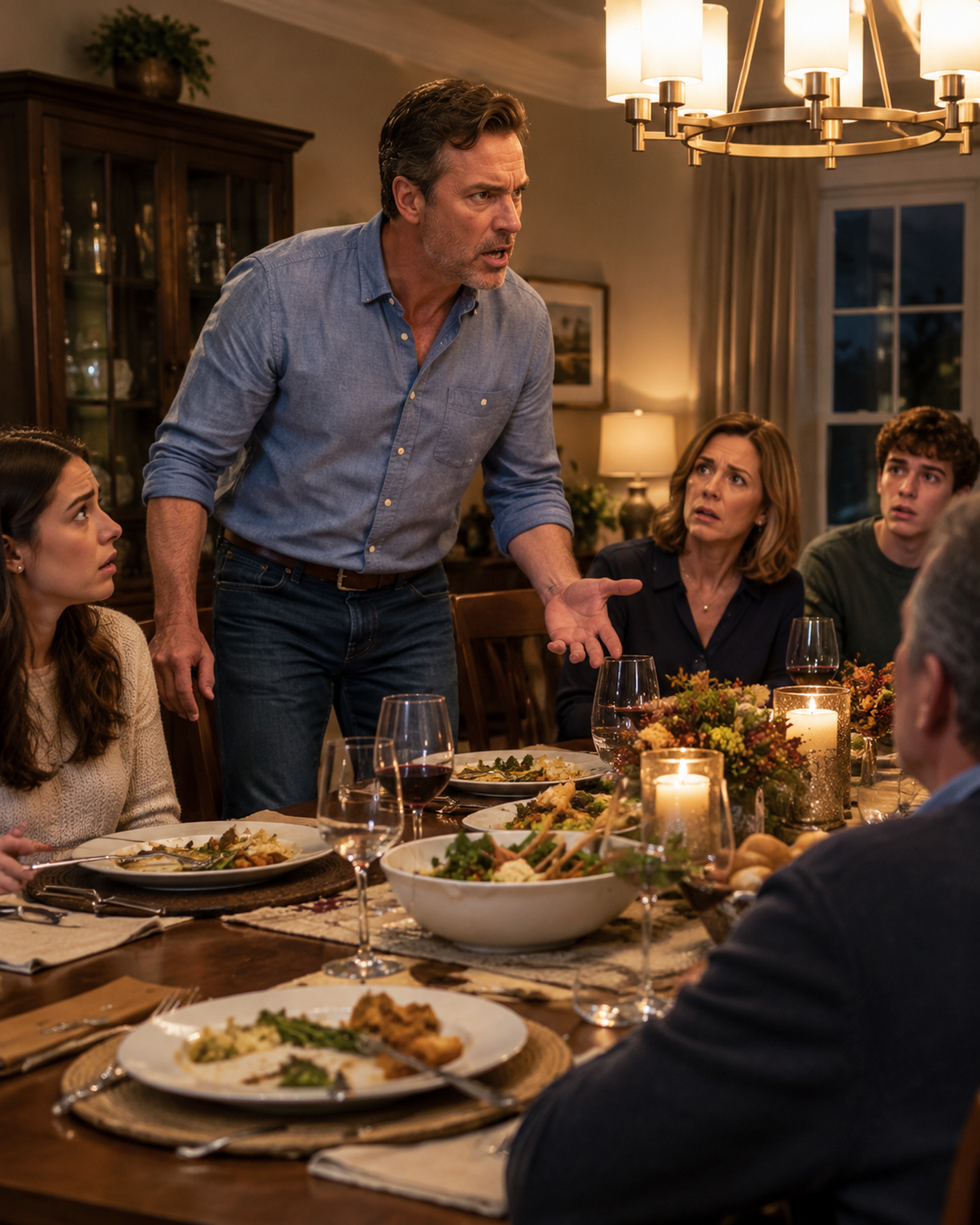
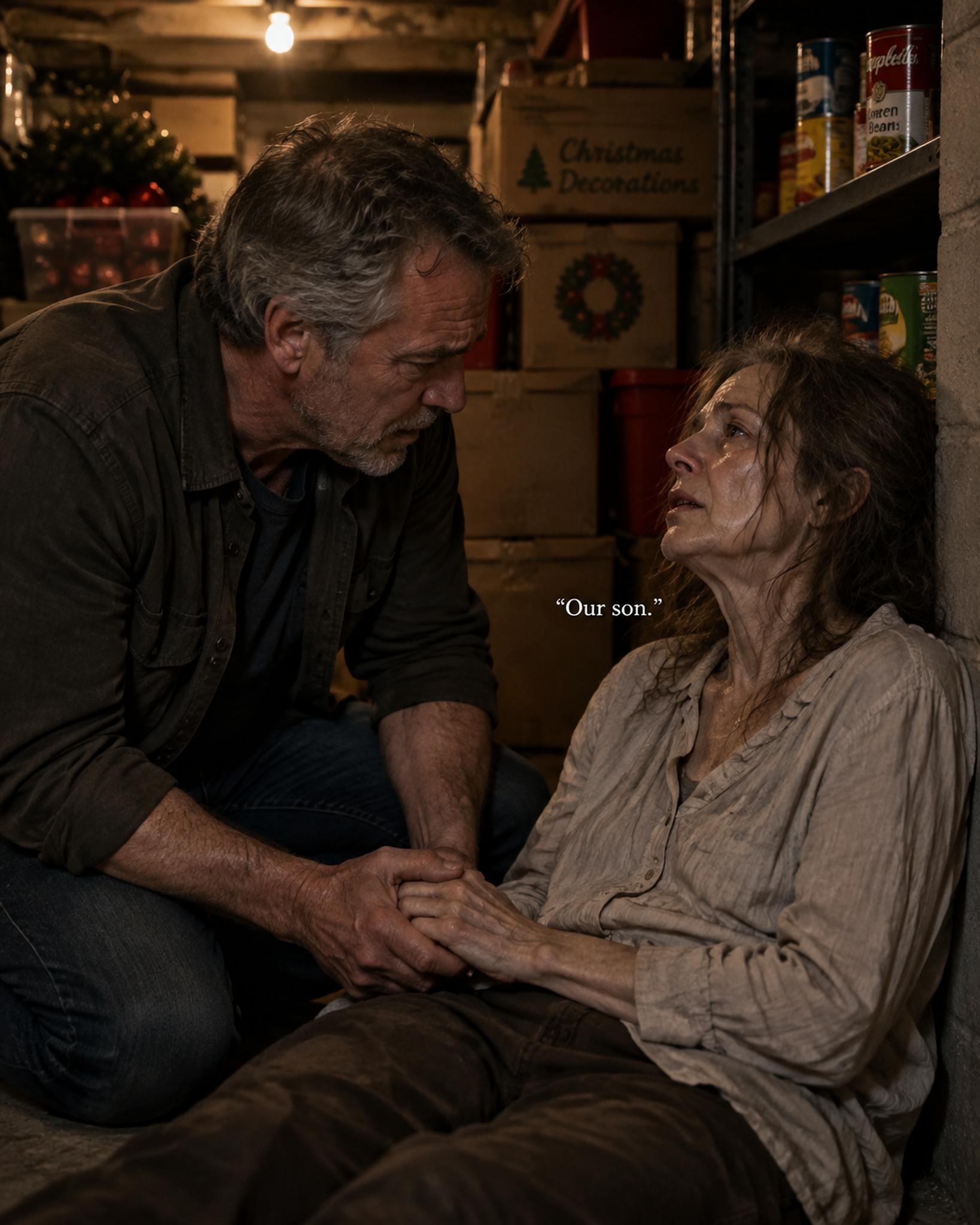
I flew home from a business trip and found my wife collapsed in our locked basement, where she’d been trapped for three days….
The Door I Opened Too Late—and the Son I Could No Longer Protect I flew home from a business trip...
My ex texted, “She’s your problem now,” after her partner left our 12-year-old daughter alone beside a freezing highway….
The Rule He Wrote for Everyone Else My ex texted, “She’s your problem now,” after her partner left our 12-year-old...