I Joked That Even His Best Friend Tried Me—He Overheard And Filed For Divorce Fast
I Humiliated My Quiet Husband With One Joke About His Best Friend.
Then He Put Every Receipt Of My Betrayal In A Divorce Envelope.
I laughed about my husband’s best friend in front of everyone.
Three months later, I was sitting in court while a judge decided when I could see my own children.
The worst part was not that Daniel left me.
It was that he never raised his voice once.
Part 1 – The Joke I Thought Made Me Powerful
If you had asked me back then what destroyed my marriage, I would have said my husband was too sensitive.
I would have told you Daniel Cross could not take a joke, could not handle a confident wife, could not stand the idea that other men still noticed me after two children and seven years of marriage.
I would have made myself sound charming, exhausted, misunderstood.
I was very good at sounding like the woman who had been trapped inside a boring life.
My name is Selene Harrow, and at thirty-four, I thought I was too young to feel invisible.
From the outside, my life looked stable enough to make other people jealous in that quiet suburban way.
Daniel had a solid engineering job, the kind with benefits, clean shirts, early mornings, and a reliable paycheck.
We had a house with white trim, two kids named Jonah and Kora, and a kitchen where homework, grocery lists, unpaid bills, and half-finished coffee cups always seemed to live in the same corner.
People called us dependable.
They said Daniel was a good man, and they said it with the warm finality people use when they think a woman should stop asking for anything more.
Good man.
Steady man.
Patient man.
Those words should have felt like gifts, but to me they started to sound like a sentence.
I wanted sparks, admiration, danger, some proof that I had not become furniture in my own life.
Daniel loved quietly.
That was the problem, or at least that was how I explained it to myself.
He remembered oil changes, packed lunches, school pickup times, my mother’s allergy medication, and which night Jonah had soccer.
He did not flirt across crowded rooms or make people lean in when he spoke.
He simply showed up, and after a while, I began to treat showing up like something too ordinary to respect.
Then there was Victor Lang, Daniel’s best friend since high school.
Victor owned a bar downtown with brick walls, soft amber lights, and a back room where he kept old framed photos of local bands and baseball teams.
He had the kind of easy smile that made you feel selected even when he was only being polite.
When he looked at me, I felt seen in a way I had been hungry for long before I admitted I was hungry.
At first, it was harmless enough to pass any test I wanted to invent.
A compliment about my dress.
A laugh that lasted a little too long.
My hand brushing his arm when I reached for a glass.
I would come home smelling faintly of citrus and bar smoke, telling Daniel I had only stopped for one drink because traffic was bad, because work had been heavy, because I needed five minutes where no one called me Mom.
Daniel never accused me.
He would look up from the sink, nod, and ask whether I wanted dinner warmed.
That should have softened me.
Instead, it annoyed me.
I wanted him to show jealousy, to prove I still mattered enough to make him afraid, but Daniel had always been a man who measured twice before he cut once.
I mistook that restraint for dullness.
My sister Ara helped me make the mistake sound reasonable.
She had never liked Daniel much, not because he was cruel, but because he was quiet in a way she found unimpressive.
When I told her he barely reacted anymore, she laughed and said some men needed reminders that their wives were still desirable. “You are not dead, Selene,” she told me once over lunch. “If Daniel wants a wife who never wants to feel alive, he should have married a lamp.”
I laughed at that harder than I should have.
It gave language to the selfishness I did not want to call selfishness.
Soon I was repeating versions of it to friends, making Daniel the plain background to my sharper, brighter performance.
The more people laughed, the more I believed laughter was proof that I was right.
Daniel’s mother, Margaret, never laughed.
She was a small woman with silver hair, pearl earrings, and eyes that could strip paint without moving a muscle.
At Sunday dinners she watched me over the rim of her iced tea, especially when I teased Daniel for being too predictable or too serious.
She never interrupted me, which somehow made it worse.
Her silence had edges.
I told myself Margaret judged everyone.
I told myself she had never really accepted me.
I told myself she wanted Daniel to marry some softer woman who folded napkins properly and said thank you every time her husband remembered the trash.
I was always telling myself something, because the truth was quieter and much less flattering.
Margaret saw I was not joking for fun anymore.
I was joking to wound.
The first time I mentioned Victor in a way I should not have, we were at home after dinner.
Jonah was building a tower from plastic blocks on the rug, Kora was coloring at the coffee table, and Daniel was rinsing plates in the sink.
I was leaning against the counter, scrolling through a group chat from work, when Victor’s name popped up because someone had seen his bar featured in a local magazine.
I remember smiling before I even spoke.
“Even Victor tried me once,” I said, loud enough for Daniel to hear. “And he is supposed to be your best friend.”
I laughed as if the line were harmless, as if the children were too young to understand tone, as if the kitchen were a stage and Daniel’s discomfort was part of the entertainment.
Daniel stopped rinsing the plate.
He did not slam it down.
He did not turn red.
He simply stood still, water running over his hands, and looked at me in a way I had never seen before.
There was no rage in his face.
That almost offended me.
I expected wounded pride, a question, maybe a sharp little “What is that supposed to mean?” Instead, his expression went blank and heavy, like a door closing behind someone who had already decided not to come back.
I saw it, but I refused to understand it.
“Relax,” I said, still smiling. “It was a joke.”
Daniel turned off the water, dried his hands, and walked past me to help Kora pick up a dropped crayon.
That was all.
No argument.
No scene.
No satisfying proof that I had power over him.
Because he stayed silent, I told myself I had won.
The strange thing about cruelty is how easily it can dress itself as humor when the room rewards it.
A week later, at dinner with friends, I told the story again.
We were in a restaurant with black booths, small candles, and overpriced pasta, surrounded by people who knew us well enough to laugh before they decided whether something was funny.
I lifted my wineglass and said, “Daniel is so secure, he does not even care that his own best friend once tried to flirt with me.”
The table went quiet for half a second.
That half second should have saved me.
Then someone gave a nervous laugh, someone else smirked, and I ran straight through the warning sign because applause had always been easier for me to hear than discomfort.
I added details, half true and half invented, painting myself as irresistible and Daniel as the man lucky enough to have me despite all temptation.
Daniel sat beside me with his fork resting untouched against his plate.
He did not correct me.
He did not defend himself.
Victor, who happened to be there that night because the dinner was partly for a friend’s birthday, looked down at his drink and said almost nothing.
His jaw tightened when I mentioned him, but I took even that as evidence that there was something exciting between us.
When Daniel excused himself early, I waved him off with a smile. “He gets tired,” I told the table. “You know Daniel.
Too much personality in one room and he needs a nap.”
People laughed again, but not like before.
It was thinner, careful, the kind of laughter that tries to step around broken glass.
I ignored the difference.
I had built an entire version of myself around being the woman who could say anything and walk away untouched.
At home, Daniel moved differently.
He was not colder in a dramatic way.
He still made breakfast, still took the trash out, still kissed the kids on their foreheads before leaving for work.
But something in his attention had shifted.
He no longer looked at me as if he was waiting for me to come back to him.
He looked at me as if he was collecting final measurements.
I hated that feeling, so I called it sulking.
I told Ara that Daniel was punishing me with silence because he could not handle the truth that I was still attractive.
She told me not to apologize. “The minute you apologize,” she said, “he will think he owns your confidence.”
That was all I needed to hear.
I turned stubbornness into principle and pride into self-defense.
When Daniel did not confront me, I accused him of being passive.
When he went quiet, I told people he was emotionally unavailable.
When he left the room, I said he was avoiding accountability.
Every word I used made him smaller and made me feel cleaner.
Meanwhile, Victor began stepping back in ways I did not want to notice.
At his bar he still smiled, but the smile no longer lingered.
He checked the door when I sat too close.
He stopped answering late-night messages quickly and began replying in dry little sentences the next morning.
The more he withdrew, the more I convinced myself he was scared of how much he wanted me.
One Thursday evening, after a draining day at the office, I stopped by the bar even though I had told Daniel I was working late.
Victor was wiping down the counter when I arrived.
He looked at the clock before he looked at me. “Selene,” he said quietly, “you probably should not keep coming here like this.”
The sentence should have embarrassed me.
Instead, it challenged me.
I leaned on the bar and smiled. “Why?
Afraid your best friend will get jealous?”
Victor did not smile back. “I am saying this is getting messy.”
I twisted that into drama, into chemistry, into the kind of secret tension I had seen in movies where the neglected wife finally finds someone who understands her.
I did not tell Daniel about that conversation.
I went home and complained that traffic had been terrible, then made a joke about him not noticing anyway because his laptop was more interesting than I was.
He looked at me for one long second. “Do you want me to notice, Selene?”
There it was, the opening.
A decent woman might have heard the hurt under the question.
A frightened woman might have stopped.
I heard only accusation.
So I rolled my eyes and said, “I want you to have a personality.”
Daniel nodded once.
He closed his laptop and stood. “Understood.”
That word followed me into the night.
Understood.
Not fine.
Not whatever.
Understood, as if I had given him instructions and he intended to follow them exactly.
I lay awake beside him for longer than I admitted, listening to the quiet hum of the house and the steady rhythm of his breathing.
After that, small things began disappearing.
Daniel’s laptop stopped living on the kitchen table.
The file drawer in the study, always a messy graveyard of tax forms and warranties, looked strangely neat.
His phone stayed face down, locked, and close to him.
When I asked what he was doing, he said, “Organizing.”
I laughed because the answer sounded so Daniel.
Practical.
Boring.
Unthreatening.
I did not know that while I was calling him dull, he was saving screenshots, timelines, bank statements, location records, and every message I thought I had made disappear by deleting it from my phone.
Margaret started taking Jonah and Kora more often.
She claimed they needed time with their grandparents, fresh air, a break from the tension in the house.
I accused her privately of meddling, but Daniel never argued when she arrived.
He packed their overnight bags with more care than usual, checking toothbrushes, pajamas, school folders, Kora’s stuffed rabbit.
Each time they left, the house seemed to exhale without me.
The children changed too.
Jonah stopped asking me to quiz him on spelling words and brought his workbook to Daniel instead.
Kora began clinging to Margaret’s hand at Sunday dinner, pressing her face into her grandmother’s skirt when voices got too sharp.
I told myself all children go through phases.
I did not want to admit they were learning which adult made the room feel safe.
One night, I found Daniel standing in the doorway of Jonah’s room after the kids had gone to sleep.
He was watching our son breathe, one hand resting on the doorframe.
There was something so private and sorrowful in his posture that I almost asked if he was okay.
Then my pride stepped in before my tenderness could reach him.
“You are being dramatic again,” I whispered.
He did not turn around. “No,” he said. “I am being careful.”
I should have been afraid then.
Not of violence, not of shouting, not of some explosive fight.
Daniel had never been that kind of man.
I should have been afraid of the calm, because calm is what a patient person becomes when grief hardens into a plan.
The final public joke came at a backyard gathering hosted by one of Daniel’s coworkers.
There were string lights, paper plates, children running through sprinklers, and adults pretending not to compare lawns and salaries.
Someone asked how Victor’s bar was doing, and I felt that old itch for attention.
I said, with a laugh I made sure carried, “Victor is doing great.
He has always had excellent taste, even in women he cannot have.”
This time almost no one laughed.
Daniel was standing near the cooler with a bottle of water in his hand.
He looked at me, then at Victor, who had gone pale near the patio steps.
For one breath, the whole backyard seemed to freeze around the splash of the sprinkler.
Daniel set the water bottle down carefully.
Then he walked away.
I followed him halfway to the car, angry because I could feel the room judging me. “Are you seriously leaving over a joke?”
He opened the driver’s door and looked at me across the roof of the car. “No,” he said. “I am leaving because I finally believe you.”
I did not understand what he meant until much later.
At the time, I shouted that he was embarrassing me, that he was making a scene, that everyone would think he was insecure.
He only got into the car and drove away alone, leaving me in the driveway with my pretty blouse, my empty pride, and a backyard full of people who suddenly found their drinks fascinating.
That night, I slept in the guest room to punish him.
In the morning, Daniel had already left for work before the coffee finished brewing.
On the counter was a sticky note about Kora’s dentist appointment, Jonah’s lunch money, and the number for the plumber because the upstairs sink had started dripping again.
No apology.
No accusation.
Just evidence that even while I was trying to hurt him, he was still keeping the house alive.
I should have seen the tragedy in that.
Instead, I called Ara.
She told me Daniel would fold.
She said men like him valued stability more than pride, that he would never risk losing his family over a few comments.
I wanted her certainty so badly that I borrowed it and wore it like armor.
For the next two weeks, I acted as if nothing had changed.
But Daniel had changed.
He stopped asking where I had been.
He stopped reacting when I used sarcasm.
He stopped trying to repair conversations I had broken on purpose.
At night he slept with his back to me, not as punishment, but as distance.
The space between us in the bed felt wider than the house.
Then one Friday, I came home and found the study almost empty.
The top drawer where we kept insurance papers, old tax returns, and the kids’ birth certificates was bare except for a paper clip and one dried-out pen.
The framed photo from our first apartment was gone from the shelf.
Daniel’s laptop bag was not on the chair.
The silence in that room had been packed.
I stood there with my purse still on my shoulder, feeling the first clean thread of fear pull through me.
I called his name, but he was in the garage, labeling a box of tools as if nothing in the world had shifted.
When I asked why he had moved the files, he said, “I need them somewhere safer.”
“Safer from what?”
He looked at me then, really looked, and I saw nothing in his face for me to push against. “From confusion.”
I laughed because I did not know what else to do. “You sound insane.”
He went back to the box. “Maybe.”
That was the last warning he gave me.
I did not know it at the time, because warnings usually arrive dressed as noise.
Daniel’s warning arrived as quiet, as organization, as a locked phone and missing papers and his mother picking up the children without asking me first.
I thought he was retreating because he was weak.
But he was not retreating.
He was building the case that would take my life apart.
And the first envelope was already on its way to my door.
Part 2 – The Envelope On The Counter
By the time the doorbell rang, I had spent months perfecting the art of blaming everyone except myself.
Daniel was cold.
Margaret was controlling.
Victor was confused.
My friends were jealous.
Ara was the only one brave enough to tell the truth, or so I kept saying, because the truth she gave me was always the one I preferred.
I had taken one cruel joke, wrapped it in a hundred excuses, and called it my personality.
That evening looked ordinary at first, which is what still unsettles me when I remember it.
The dishwasher was humming.
A glass of white wine sat near my elbow.
My phone was open to a message thread where Ara had written, “Do not let him make you feel small.” Jonah and Kora were with Margaret for what Daniel called a quiet weekend, and I had told myself I deserved the silence.
When the doorbell rang, I assumed it was a neighbor or a package.
I opened the door in leggings and an old sweater, already annoyed before I saw the man in the dark suit standing under the porch light.
He asked if I was Selene Harrow Cross.
I said yes, and he handed me a thick cream envelope with my name printed across the front in black letters so clean they felt almost cruel.
“You have been served,” he said.
I remember thinking those words sounded fake, like something from television.
Then he walked away, and I stood there holding the envelope while the porch light buzzed above me and the autumn air pressed cold against my bare feet.
I wanted to call after him, to ask what he meant, but some part of me already knew.
My hand knew before my mind did.
It started shaking before I broke the seal.
Inside were divorce papers.
Not a threat.
Not a draft.
Not Daniel being dramatic.
A filed petition, custody requests, financial disclosures, and pages of language that turned my marriage into numbered paragraphs.
My name appeared again and again, attached to dates, incidents, messages, witness notes, and phrases like “pattern of conduct” and “emotional instability in the home.”
The words seemed to move on the page.
I read the same sentence five times and still could not make it belong to me.
Then I saw Victor’s name.
Then I saw dates from nights I had claimed to be working late.
Then I saw references to text messages I had deleted, bar receipts I had tossed, and witnesses who had apparently seen more than I thought anyone had noticed.
Daniel had not been sulking.
Daniel had not been hiding in silence because he was too weak to confront me.
He had been documenting me with the care of a man who built bridges for a living and knew exactly how much weight a structure could take before it failed.
Every joke, every late night, every public humiliation, every little lie I had waved away as harmless had been placed in order and given a number.
I called him first.
Of course I did.
Pride made me angry before shame could make me honest.
The call went straight to voicemail.
I called again, then again, each time feeling more ridiculous and more desperate.
Finally, a text came through from Daniel’s number: “Please communicate through my attorney regarding the divorce and through the parenting app regarding the children.”
Parenting app.
Children.
Attorney.
The words were so bloodless they made me feel suddenly naked.
I wrote back, “Are you serious?
You are destroying our family over jokes?” The message showed as delivered.
He did not answer.
So I called Ara.
She answered on the third ring, cheerful until she heard my voice.
I told her Daniel had served me with divorce papers, that he was trying to make me look unstable, that he had dragged Victor into it like some paranoid fool.
For the first few minutes, she gave me exactly what I wanted.
She called him petty.
She called him insecure.
She said a real man would have talked to me first.
Then I sent her a photo of the page listing the evidence.
Her silence lasted too long.
When she spoke again, her voice had lost some of its heat. “Selene,” she said, “why does he have this much?”
The question felt like betrayal.
I snapped that she was supposed to be on my side.
She said she was, but even as she said it, I could hear the math happening in her head.
There was a difference between defending a sister after a fight and standing beside a sister whose husband had built a folder thick enough to make a lawyer confident.
Next, I called Victor.
He did not answer.
I texted, “Daniel filed.
Your name is in it.
Call me.” Three dots appeared, disappeared, appeared again, then vanished completely.
Ten minutes later he sent back one sentence: “Do not involve me.”
I stared at that message until the screen dimmed.
Do not involve me.
This was the man whose attention had made me feel alive, whose glances I had carried home like stolen jewelry, whose name I had used like a blade at my husband’s expense.
Now that the blade had cut back, Victor wanted his hands clean.
The next morning, I woke up on the couch with the divorce papers scattered across the coffee table.
My wineglass sat empty beside them.
Sunlight came through the curtains in pale stripes, making the legal language look almost ordinary, and for a few minutes I convinced myself I could still control the story.
I would explain that Daniel had misunderstood.
I would say I had been under pressure.
I would say Victor had only been a friend.
I would make Daniel look cruel for taking a few stupid comments and turning them into a lawsuit.
That had always been my gift.
I could tell a story with just enough emotion to make people look where I wanted them to look.
At work, I started with the softer version.
Daniel had blindsided me.
Daniel had become cold.
Daniel was punishing me because I had dared to have a personality.
My coworkers gave me sympathetic looks at first, but I noticed how quickly their eyes changed when I said Victor’s name too casually.
One woman from accounting, Rebecca, put her hand on my arm and said, “Is there more going on than jokes?”
I pulled away as if she had slapped me. “No.
That is what is so insane.”
But even I could hear the lie struggling to stand.
There had been more than jokes, even if I had never crossed the line I knew people were imagining.
There had been intention.
There had been appetite.
There had been the pleasure of making Daniel feel replaceable in his own home.
The law could not always measure that kind of betrayal, but Daniel’s papers seemed determined to try.
At the first meeting with my lawyer, I still thought outrage would help me.
I brought the envelope in my tote bag and dropped it on his desk like proof of Daniel’s cruelty.
My lawyer, Mr.
Henson, was a patient man with tired eyes and a wedding ring he kept turning while he read.
The more pages he turned, the less he looked at me.
“Was there an affair?” he asked.
“No,” I said too quickly.
He looked at me over the top of the papers. “I did not ask whether there was intercourse.
I asked whether there was an affair.”
That sentence knocked the air out of me because it made the word bigger than I wanted it to be.
I wanted affair to mean one thing, something I could deny with technical confidence.
Mr.
Henson was asking about emotional conduct, public humiliation, deception, patterns, the kind of intimacy that does not need a hotel room to poison a marriage.
I hated him for making the question fair.
“Victor flirted,” I said. “I flirted back sometimes.
It was stupid.
Daniel knew it was a joke.”
“Did he?” Mr.
Henson asked.
I had no answer that did not sound weak.
Daniel had heard me call it a joke.
That was not the same as him believing it.
I thought of the way he had stood at the sink with water running over his hands, the way he had set down the bottle in the backyard, the way he had said, “I finally believe you.” A cold pressure settled behind my ribs.
Mr.
Henson explained that Daniel was not simply asking for a divorce.
He was asking for primary weekday custody, a structured parenting plan, and certain protections around communication.
He had documented school routines, medical appointments, bedtime disruptions, and Margaret’s increased involvement.
He had gathered messages showing my late nights, receipts from Victor’s bar, and statements from friends who had witnessed me joking about Victor in front of Daniel.
“Can he do that?” I asked.
“He already did,” Mr.
Henson said gently.
For the first time, I felt less like an injured wife and more like someone arriving late to a game whose rules everyone else had been studying for months.
Daniel had not exploded because explosions waste energy.
He had been building something quiet, legal, and hard to dismantle.
I had spent that same time building excuses.
The law office where Daniel and I first sat across from each other after the filing was polished in that expensive way that makes every flaw in you feel louder.
There was a glass wall overlooking downtown, a long table, bottled water no one touched, and a box of tissues placed in the center like a prediction.
Daniel arrived in a navy suit I did not recognize.
He looked rested.
That hurt more than it should have.
I wanted him ruined.
I wanted dark circles under his eyes, trembling hands, some visible sign that leaving me had cost him.
Instead, he looked like a man who had survived a storm and finally found dry ground.
When I said his name, he did not look at me.
His attorney answered instead.
They laid out finances first.
Daniel had copies of account statements, mortgage information, insurance documents, school expenses, retirement contributions, and household budgets.
He knew which bills I had forgotten, which late fees he had covered quietly, which weekends Margaret had taken the kids because I had claimed to need space.
I sat there as our life became a spreadsheet, and every number seemed to testify against me.
Then came the messages.
Screenshots from my phone.
Screenshots from Victor’s.
Fragments I had deleted on my end but apparently not everywhere.
Nothing graphic.
Nothing that would make a scandalous movie.
That almost made it worse.
It was all tone, implication, little sparks of ego and secrecy. “You always know how to make me feel seen.” “Daniel would not notice if the house caught fire.” “Sometimes I think I married a wall.” Each line looked smaller than I remembered and uglier on paper.
I tried to interrupt.
I said those messages were taken out of context.
I said Daniel had never met my emotional needs.
I said I had been lonely.
Daniel finally looked at me then, not with rage, not with longing, but with a sadness so exhausted it had no room left for me.
“I was lonely too,” he said.
No one spoke for a moment.
His attorney did not move.
My lawyer looked down at his notes.
I felt my face heat because there was no answer that made me look innocent.
I had turned my loneliness into license.
Daniel had turned his into evidence, routines, and a plan to protect the children from the fallout.
When the meeting ended, I followed him into the hallway against my lawyer’s advice. “Daniel, please,” I said, lowering my voice into something I hoped sounded human. “You are taking this too far.”
He stopped near the elevators but did not turn fully toward me. “I took it as far as the children needed me to.”
“They need their mother.”
“They need peace,” he said.
I hated him for saying it because it landed too cleanly.
I wanted a messy argument, something I could twist later, something I could repeat to friends as proof of his cruelty.
Instead, he gave me five words and stepped into the elevator when it opened.
The doors closed on his face before I could decide whether to cry or scream.
Margaret became unavoidable after that.
She did not call to scold me, which would have been easier to survive.
She simply appeared where stability was needed.
School pickup.
Doctor forms.
Soccer practice.
Kora’s library day.
Jonah’s science project.
Every place I had been inconsistent, Margaret stood with a calm expression and Daniel’s permission.
One Sunday, I cornered her in the driveway when she came to get the children.
I told her Daniel was being unfair, that he was trying to erase me, that she was helping him poison my own kids against me.
Margaret listened with her purse tucked under one arm and Kora’s overnight bag in the other.
When I finished, she said, “Selene, Daniel is not poisoning them.
He is cleaning up what you kept spilling.”
The words were not loud, but they cut through me.
I called her cruel.
She only looked toward the front window, where Jonah stood watching us with his backpack on. “That boy has learned to listen before entering a room,” she said. “No child should have to do that in his own home.”
I had no comeback.
Not a real one.
I had sarcasm, anger, accusations, all my usual tools, but they suddenly looked cheap in my hands.
Margaret opened the car door for Kora, and my daughter climbed in without asking me to buckle her.
That small independence hurt worse than Margaret’s words.
Friends changed too.
At first they sent cautious messages.
Are you okay?
Do you need anything?
I answered with long paragraphs about Daniel’s coldness and legal aggression.
But sympathy has a way of shrinking when details leak.
The same people who once laughed when I mocked Daniel now remembered the discomfort after the laughter.
They remembered Victor looking down at his drink.
They remembered Daniel leaving the backyard alone.
At a small dinner I attended out of pure stubbornness, the room shifted when I walked in.
Conversation paused, then restarted too quickly.
A woman who used to laugh at my sharpest comments asked how the kids were, not how I was.
A man who had once called Daniel “too nice for his own good” avoided my eyes all evening.
I realized then that people had not only heard Daniel’s version.
They had reconsidered their own memories.
That is a special kind of humiliation, when the audience that once rewarded you begins replaying the performance and noticing the cruelty.
I had thought laughter meant agreement.
Sometimes laughter is only people’s cowardice in real time.
Later, when the truth becomes safer, they call it what it was.
Victor vanished almost completely.
When I went to his bar after another meeting with my lawyer, the hostess said he was busy in the back.
I could see him through the narrow window in the kitchen door, standing with his phone in his hand, not moving.
He knew I could see him.
He still did not come out.
I waited fifteen minutes because pride can be pathetic when it has nowhere else to sit.
Finally, one of the bartenders brought me a glass of water I had not ordered and said, “Victor thinks it would be better if you did not come here for a while.” Not forever.
Not because of Daniel.
Not even because he was sorry.
For a while, as if I were bad weather passing through his business.
On the sidewalk outside, I texted him, “You helped create this.”
His reply came three minutes later. “No.
You did.”
I wanted to throw the phone into the street.
Instead, I stood under the bar’s red sign and cried in a way I hoped no one recognized.
Victor had been brave only when the cost was Daniel’s dignity.
The moment the cost touched his own name, he became careful.
Maybe he had always been careful and I had mistaken his cowardice for desire.
The custody motion arrived on a Wednesday.
By then, I had started sleeping badly, waking at two or three in the morning with legal phrases crawling through my head.
Primary residence.
Best interest.
Communication protocol.
Documented pattern.
I opened the new packet at the kitchen table and saw Daniel’s proposed weekly schedule for Jonah and Kora.
Weekdays with him.
Alternating weekends with me.
Shared holidays under a detailed calendar that made my motherhood look like an appointment.
I called Mr.
Henson in a panic.
He told me to breathe.
I told him Daniel could not take my children.
He corrected me gently and said Daniel was not taking them; he was asking the court to formalize a structure based on evidence of stability.
The distinction made me furious because it sounded like language designed to make loss polite.
That night I tried one more time to control the story.
I posted a vague line online about people who weaponize children when their pride is hurt.
Within minutes, Ara liked it.
Two old coworkers sent hearts.
Then nothing.
No flood of support.
No chorus telling me to stay strong.
The silence underneath the post felt public, and I deleted it before midnight.
Daniel must have seen it, because the next morning his attorney sent a reminder through mine about social media conduct during custody proceedings.
Even my vague little performance had been noticed, folded, and placed into the growing file.
I felt watched, but not unfairly.
I felt watched the way a person feels watched after leaving footprints across wet cement and then complaining someone followed them.
The children came home for one weekend before the first temporary custody hearing.
I had planned to make the house warm, to cook pancakes, to prove to them and myself that nothing had changed.
But children know when an adult is performing.
Jonah thanked me for breakfast as if he were a guest.
Kora asked if she could call Grandma before bed.
When I said she could talk to me instead, her eyes filled with tears she tried to hide.
“Did I do something?” I asked, too sharply.
She shook her head, but Jonah looked up from his plate. “We just do not like when people get mad.”
There it was.
Not Daniel’s manipulation.
Not Margaret’s poisoning.
Just a child telling the truth in the plainest language possible.
We do not like when people get mad.
I had filled the house with tension and called it personality.
I had made love feel conditional on who won the room.
After they went to sleep, I sat in the hallway between their bedrooms.
Daniel used to do that when one of them had a fever or nightmares.
I had mocked him for hovering.
Now I understood the ache of wanting to guard a peace you had already damaged.
The night before the first hearing, I barely moved from the kitchen table.
The house felt too large without Daniel’s quiet routines humming through it.
No keys in the bowl by the door.
No work boots near the garage.
No low voice reminding Jonah to brush his teeth.
I used to call those things boring.
Without them, the house sounded abandoned.
Ara called around nine and tried to rally me.
She said judges loved mothers, that Daniel was overreaching, that tears would show I cared.
But there was a thinness in her voice now, a carefulness she had never used with me before.
When I asked if she still thought Daniel would fold, she did not answer directly.
She said, “Just tell them you want your family.”
After we hung up, I looked at the table where the first joke had lived.
I could almost see myself there, leaning against the counter, laughing about Victor while Daniel stood at the sink.
If I could step back into that scene, I do not know whether I would stop myself.
That is the ugliest confession.
At that time, I wanted attention more than peace, victory more than tenderness, and an audience more than a marriage.
The next morning, I dressed in a navy blouse because my lawyer said it looked serious.
I put on light makeup, enough to look tired but not messy.
I practiced sentences in the mirror.
I never meant to hurt him.
I was overwhelmed.
I love my children more than anything.
Each sentence was true in pieces, but not whole enough to save me.
When I arrived at court, Daniel was already there.
He stood beside Margaret, speaking quietly with his attorney.
He wore a gray suit and held a folder against his side.
Margaret touched his arm once, and he gave her a small nod.
The sight made something inside me twist because they looked like a family unit moving around a wound I had created.
I wanted him to look over.
I wanted some flicker of the old Daniel, the man who checked whether I had eaten, who brought me medicine when I had migraines, who once drove forty minutes in rain because I forgot my presentation folder at home.
He did not look over.
Not because he did not know I was there, but because he no longer needed to prove anything to me with his eyes.
Inside the courtroom, every sound seemed too clear.
Papers sliding.
Shoes against the floor.
The judge adjusting her glasses.
My lawyer whispered instructions, but my attention kept drifting to Daniel’s hands.
They were folded on the table, steady and still, the same hands that had fixed cabinet hinges, packed school lunches, held Kora when she cried after vaccines, and once reached for mine in movie theaters.
Now those hands held nothing of mine.
The hearing began with temporary arrangements, but nothing about it felt temporary.
Daniel’s attorney spoke first, calm and organized, laying out the timeline as if assembling a machine.
Public humiliations.
Late nights.
Communication with Victor.
Escalating conflict in the home.
Increased reliance on Margaret for childcare.
Daniel’s proposed schedule.
Daniel’s adjusted work hours.
Daniel’s plan for school transportation, medical appointments, homework, meals, and therapy if needed.
Therapy.
The word made me flinch.
Not because I thought therapy was wrong, but because hearing it in court made the damage sound visible.
Daniel was not asking the judge to punish me.
He was showing her that he had noticed the children were hurting and had planned for what came next.
Revenge would have been easier for me to fight.
Structure made him look responsible.
When my turn came, I cried.
Some of the tears were real, some were strategic, and by then even I could not separate them.
I said I had made mistakes.
I said Daniel had withdrawn instead of communicating.
I said I never intended to damage the children.
I said a marriage should not be ended because of careless words and misunderstandings.
The judge listened without expression.
That was worse than anger.
She looked at the evidence, at the school records, at the texts, at the witness notes.
She asked whether I disputed the late nights at Victor’s bar.
I said I disputed the interpretation.
She asked whether I disputed the comments made publicly about Victor and Daniel.
My mouth opened, then closed, because half the people who had heard them had apparently written statements.
Daniel did not speak until the judge asked him a direct question about the children.
His voice was low, steady, and careful.
He said Jonah had become anxious before gatherings.
He said Kora had started asking whether grown-ups could stop loving children the way they stopped loving each other.
He said he wanted their routines protected while the divorce moved forward.
Then the judge asked if he believed I should be cut out of their lives.
Daniel looked down at his hands, then up again. “No,” he said. “They love their mother.
I am asking that conflict not be the place where they live.”
That sentence broke something in me because it was not cruel.
A cruel man would have been simpler.
A cruel man would have given me something clean to hate.
Daniel remained fair enough that I had to stand in the shadow of my own unfairness.
The temporary order gave Daniel primary weekdays.
I heard the words and felt them hit after a delay, like watching glass fall before hearing it shatter.
Weekends with me.
Certain holidays.
Communication through the parenting app.
No unapproved schedule changes.
No disparaging comments about the other parent in front of the children.
No disparaging comments.
Even the court knew my mouth had become a weapon.
When the hearing ended, I sat frozen while people rose around me.
Daniel gathered his folder.
Margaret touched his shoulder again.
He walked past me without slowing, and I smelled his familiar soap for one brief second, something clean and ordinary that made memory feel vicious.
I almost reached for his sleeve.
My lawyer’s hand landed lightly on my wrist before I could.
“Do not,” he whispered.
So I watched Daniel leave.
Again.
This time with the court’s permission, with the children’s weekday lives carefully packed into his schedule, with my own signature waiting somewhere down the road.
I had spent years believing he would never walk away because he loved stability too much.
I had never considered that one day stability would be the reason he left.
That night, the house did not feel like a home waiting for children.
It felt like a set after the actors had gone.
Their shoes were still near the door.
Kora’s drawing was still on the fridge.
Jonah’s cereal bowl sat in the dishwasher.
Everything proved they existed, and nothing proved they would return the same way again.
I sat at the kitchen table with the temporary order in front of me and finally understood the shape of Daniel’s silence.
It had not been emptiness.
It had been a room where he stored every fact I forced him to collect.
While I performed for friends, he prepared for court.
While I flirted with danger, he learned how to protect our children from it.
And then, just after midnight, my phone lit up with one message from Victor.
It said, “Daniel’s attorney called me.
I told them everything.”
Part 3 – The Man Who Never Looked Back
I read Victor’s message until the words blurred.
I told them everything.
Four words, and somehow they made the floor feel farther away.
There had been a time when I thought Victor’s attention made me powerful.
Now he was not even a lover, not even a partner in crime, not even a loyal friend.
He was a witness.
My first instinct was to call him and scream.
I wanted to ask what exactly he had said, whether he had made me sound desperate, whether he had admitted flirting, whether he had protected himself by pushing every ugly implication onto me.
But the temporary order sat on the table in front of me, and for once fear beat impulse.
Every call, every message, every threat could become another page in Daniel’s file.
So I did nothing.
That was new for me.
I sat in the kitchen with both hands around my phone and let the urge pass through me like a fever.
In the quiet after it passed, I felt something worse than anger.
I felt recognition.
Victor had only done what I had done for months: protected himself first and called it reasonable.
The weeks between the temporary hearing and the final proceedings changed the way people moved around me.
At work, conversations became polite but short.
My manager suggested I take a few personal days, using that careful corporate voice people use when they are trying not to say your chaos has entered the office.
I took the days because I could not stand the idea of Rebecca from accounting seeing me cry in the restroom again.
Ara came over once with takeout and a determined expression.
For ten minutes she tried to sound like the old version of herself.
She said Daniel had always been cold, that Margaret had always wanted control, that everyone was acting like I had committed a crime.
Then she saw the stack of court documents on the table, the parenting calendar on the fridge, the silent house around us, and her voice softened in a way I did not want.
“Selene,” she said, “did you ever actually tell him you were sorry?”
I almost threw her out.
Not because the question was unfair, but because it was the first honest thing she had said to me in months.
I had said versions of sorry in my head.
I had said I was sorry Daniel was upset, sorry things had gone this far, sorry he felt hurt.
But I had not said the clean sentence.
I am sorry I humiliated you.
I am sorry I used your best friend to make you feel small.
I am sorry I treated your patience like a leash.
I told Ara she was turning on me.
She closed the takeout containers slowly and looked toward the living room, where the toy box sat untouched. “No,” she said. “I think I helped you lie to yourself.”
After she left, I hated her for a while.
Then I hated myself because part of me missed the lie.
It had been warm in there, inside the story where I was spirited and Daniel was dull and everyone else was too uptight to understand my hunger.
Reality was colder.
In reality, Daniel’s dullness had been reliability, his quiet had been restraint, and my spark had burned people who trusted me.
My weekends with Jonah and Kora began under supervision that was not official but felt present anyway.
Daniel dropped them off without entering the house.
He would pull into the driveway, help them gather their backpacks, kiss their heads, and wait by the car until they reached the porch.
He spoke kindly to them, briefly to me, and never about anything beyond logistics.
“Kora has a spelling list in the front pocket,” he said the first Saturday. “Jonah’s inhaler is in the blue pouch.
They both ate lunch.”
“Daniel,” I said, because his name felt like the only door left.
He paused with his hand on the car door.
“Can we talk?”
“About the kids, yes.”
That was when I understood how completely I had lost access to him.
Marriage gives people hidden doors into each other: late-night confessions, old jokes, softened tones, the right to say a name and expect the person to turn fully toward you.
Daniel had closed every hidden door.
He had left only the public entrance, guarded by schedules and court orders.
The children were careful with me that weekend.
Too careful.
Jonah asked before opening snacks.
Kora apologized when she spilled water.
I made pancakes shaped like hearts, and both of them smiled because they were sweet kids who wanted me to be okay.
That made it worse.
They were trying to comfort the adult who had made comfort necessary.
At bedtime, Kora asked if Daddy was mad at her.
I sat on the edge of her bed, suddenly afraid of every word I might choose.
The old me would have said Daddy was mad at Mommy, not you, and thought that was harmless honesty.
The court order, and maybe some small growing piece of conscience, stopped me.
“No, baby,” I said. “Daddy loves you very much.
Grown-up problems are not your fault.”
She hugged her rabbit and looked at me with Daniel’s eyes. “Are you mad at Daddy?”
I wanted to say yes.
I wanted to give my anger somewhere to live.
Instead, I swallowed hard and said, “I am sad about a lot of things.
But that is not your job to fix.”
It was the first decent thing I had said in a long time.
It did not undo anything.
Decency, I learned, is not a magic eraser.
Sometimes it is only a small candle lit in a house already damaged by smoke.
The final negotiation was brutal in its cleanliness.
Daniel did not ask for drama.
He did not make speeches about betrayal.
He did not call me names.
Through his lawyer, he requested the house be sold or refinanced under strict terms, debts divided, retirement accounts addressed, and the parenting schedule made permanent with room for review if I demonstrated consistency over time.
Consistency over time.
That phrase became a wall I had to climb inch by inch.
I wanted one grand apology to fix everything, one emotional scene where Daniel looked at me and remembered the woman he had married.
But the law, like children, trusts patterns more than speeches.
Daniel had patterns.
I had performances.
At the settlement conference, I tried once more to speak to him privately.
Not to manipulate, I told myself, though I no longer trusted my own motives completely.
I asked for five minutes.
His attorney looked at him.
My attorney looked at me as if warning me not to ruin the thin ground beneath my feet.
Daniel agreed to speak in the hallway with both attorneys nearby.
For a moment we stood beside a vending machine that hummed too loudly.
It was a ridiculous place to apologize for destroying a family, under fluorescent lights with a poster about courthouse parking taped crookedly to the wall.
Daniel waited.
He gave me nothing to lean on, no warmth, no anger, not even impatience.
“I am sorry,” I said.
He watched me carefully. “For what?”
The question stripped the apology bare.
I could not hide inside general sadness.
I could not say for everything and hope he filled in the blanks.
So I said it as plainly as I could. “For humiliating you.
For using Victor to make myself feel important.
For making our home feel unsafe for the kids.
For calling it a joke when I knew it hurt you.”
Something moved in his face then.
Not forgiveness, but recognition.
Maybe he had waited months to hear those words.
Maybe he had stopped waiting before the envelope ever reached my door.
“Thank you for saying that,” he said.
My heart leapt at the gentleness in his tone.
I mistook it for an opening because hope can be selfish too. “Does it change anything?”
Daniel looked toward the closed conference room door where our lawyers waited. “It changes that you finally said the truth.
It does not change what the truth did.”
I had no argument.
The vending machine hummed between us.
Somewhere down the hall, a door opened and someone laughed, and the ordinary sound felt obscene.
Daniel stepped back first, not coldly, just finally, and returned to the room.
The final hearing came on a gray morning with rain streaking the courthouse windows.
I remember the smell of wet coats and coffee.
I remember Margaret sitting two rows behind Daniel, hands folded around a tissue she never used.
I remember Ara sitting behind me, silent and pale, no longer the loud defender, just my sister watching consequences become official.
The judge reviewed the agreement and the remaining disputes.
Daniel would have primary weekday custody.
I would have alternating weekends, certain holidays, and additional time if I followed the schedule consistently and completed co-parenting counseling.
The house would be sold unless I refinanced within a time frame I knew I could not meet.
Communication would remain through the parenting app except in emergencies.
Each term sounded practical.
That was what made it devastating.
My old life was not being smashed in a fit of rage.
It was being dismantled with measured language, item by item, until nothing remained vague enough for me to bend.
Daniel sat across from me, calm as ever, but I no longer saw weakness in that calm.
I saw the discipline it had taken not to become what I accused him of being.
When the judge asked whether I understood the terms, I said yes.
My voice sounded far away.
She asked whether I agreed voluntarily.
I wanted to laugh at the word voluntary, because who would voluntarily accept seeing her children less?
But the deeper truth was that I had volunteered for this long before court.
I volunteered each time I chose applause over respect.
I volunteered each time I turned Daniel’s pain into a punchline.
So I said yes again.
The gavel fell.
It was not loud, but it ended everything anyway.
Afterward, people moved in that awkward post-court rhythm, gathering coats, folders, handbags, dignity.
Daniel signed where he needed to sign.
I signed where I needed to sign.
Our attorneys exchanged papers.
Margaret stood but did not approach me.
Ara put a hand on my back, and for once I let her.
Daniel walked toward the door.
I do not know what I expected.
A glance.
A pause.
Some final look that said seven years had meant something, even if they were over.
But he kept walking.
His shoulders were straight, his folder tucked under one arm, his pace steady.
At the threshold, he turned only because his attorney said something to him, not because I existed behind him.
That was my last image of my husband inside our marriage: not a man storming out, not a man broken by betrayal, not a man begging me to understand what I had done.
Just a man leaving a room he had already left emotionally months before.
A man who had run out of warnings and chosen peace.
The house was waiting when I returned, but it did not welcome me.
Court papers sat in my bag like stones.
The kitchen counters were clean because Daniel had always been the one who left them that way before bed.
The fridge still held Kora’s drawing of our family from months earlier: four stick figures under a yellow sun, all holding hands.
She had drawn Daniel taller than everyone and me with red hair even though my hair was brown.
I took the drawing down, then put it back because removing it felt like another lie.
The children would be with Daniel that week.
Margaret had picked them up from school and taken them to his new rental, a small townhouse close enough to their school that their mornings would not be disrupted.
He had chosen the place for them, not for himself.
Of course he had.
I walked through the rooms and saw evidence of what I had not valued.
The hallway where Daniel used to crouch to tie Kora’s shoes.
The garage shelf where he kept extra batteries, light bulbs, and winter gloves.
The bedroom where I had slept beside a man I kept calling boring while he quietly carried the parts of our life I considered beneath me.
The house was full of his care, even after he was gone.
Ara called that evening.
I almost did not answer, but loneliness is persuasive.
For a while neither of us said much.
Then she apologized, not dramatically, not in the old loud way.
She said she had encouraged the worst part of me because it made both of us feel smarter than the lives we had chosen.
I wanted to tell her she was too late, but I was too tired to punish the only person still calling.
“I still helped ruin it,” I said.
“Yes,” she whispered.
It was the first time she did not rescue me from my own sentence.
Victor never contacted me again after his message.
I learned through a mutual friend that he had given a statement confirming the flirtation, the late visits, the way I used his name in front of Daniel.
He had apparently insisted nothing physical happened.
That detail, once so important to my defense, now felt almost irrelevant.
I had not needed to sleep with Victor to betray my husband.
I had made Daniel live inside the threat of it and then laughed when he bled.
Weeks passed in a rhythm I did not recognize.
Weekdays were quiet.
Weekends were bright and painful.
I learned the children’s new routines from the parenting app: spelling tests, soccer practice, dentist appointments, library books due Friday.
Daniel entered the updates with clinical politeness.
Kora has a mild cough.
Jonah needs poster board.
Pickup at .
Thank you.
Thank you.
That phrase at the end of his messages hurt because it was the politeness of strangers.
Once, Daniel used to text me pictures of ridiculous grocery store displays and ask whether we needed milk.
Now he thanked me for confirming pickup time.
I had wanted more excitement.
I got formal courtesy.
During my weekends, I tried to become reliable.
I set alarms.
I planned meals.
I listened more than I spoke.
Sometimes I failed.
Sometimes I snapped too quickly, then saw Jonah go still and felt shame rush through me like heat.
I apologized without explaining myself.
That was new too.
No because.
No but.
Just, “I am sorry.
You did not deserve that tone.”
The first time I said it, Jonah looked suspicious, as if apologies were traps.
Over time, he relaxed a little.
Kora began asking me to brush her hair again.
These were not victories big enough to post online.
They were tiny, fragile returns.
I learned to treat them with reverence.
Daniel did not soften toward me, but he did not sabotage me either.
When I was on time for six exchanges in a row, he noted it through the app.
When Kora wanted to bring a craft project to my house, he packed the supplies.
When Jonah forgot his inhaler, Daniel drove it over and left it in the mailbox because boundaries mattered more than nostalgia.
He was fair, and fairness forced me to keep seeing the difference between punishment and consequence.
One Saturday, months after the divorce was finalized, I saw him at Jonah’s soccer game.
Daniel stood near the sideline in a gray jacket, holding a paper cup of coffee.
Margaret stood beside him, cheering whenever Jonah touched the ball.
I arrived late by four minutes, breathless and embarrassed, expecting judgment.
Daniel glanced at me, then back at the field.
At halftime, Jonah ran over to us.
For one impossible second, the three of us stood close enough to look like a family from a distance.
Jonah talked fast about a near goal, grass stains on his knee, and how his coach said he was improving.
Daniel listened with a small smile.
I listened too.
Neither of us interrupted.
Then Jonah ran back, and the space returned.
“He seems happier,” I said quietly.
Daniel kept his eyes on the field. “He is sleeping better.”
There was no accusation in his voice, but the words found me anyway.
Sleeping better.
How many nights had our children gone to bed with adult tension in their small bodies?
How many times had I chased attention so loudly that peace had to leave the room?
I nodded because no defense belonged there.
“I am glad,” I said.
Daniel looked at me then.
Not warmly, not coldly.
Simply directly. “Good.”
That was all.
But that single word was more honest than any dramatic reconciliation would have been.
Good meant he wanted me to care about the children more than the story.
Good meant I had said the right thing for once and did not need a reward for it.
Good meant we were not enemies, but we were not returning.
Sometimes people ask what happened with Victor, as if he was the center of the story.
He was not.
He was only the mirror I used to admire myself while my marriage cracked behind me.
The real story was Daniel standing at the sink, hearing me humiliate him, and deciding silently that love without respect was not a home.
The real story was my children learning to move carefully through rooms I had made unstable.
The real story was a woman who confused attention with worth until attention became evidence against her.
I wish I could say I changed all at once.
That would make a cleaner ending.
The truth is uglier and more useful.
I changed in humiliating little increments: by reading court orders, by packing weekend bags, by watching Daniel’s car leave with my children, by learning that being right in my own head did not make me safe from the damage I caused outside it.
The envelope stayed in a drawer for a long time.
I could not throw it away.
Some nights, when the house was too quiet, I took it out and looked at my name printed across the front.
Selene Harrow Cross.
A name from a life where I thought I could wound someone indefinitely and still keep the benefits of being loved by him.
Eventually, I removed Cross from my paperwork.
The day the new documents arrived, I expected relief.
Instead, I felt the strange weight of accuracy.
I was no longer Daniel’s wife.
I had made sure of that long before the court did.
I still see Margaret at exchanges sometimes.
She is polite, distant, watchful.
Once, while Kora hugged me goodbye, Margaret’s eyes softened for half a second.
Not forgiveness.
Not approval.
Maybe only the recognition that I was trying not to spill as much as before.
From Margaret, half a second was practically a speech.
Ara and I are different now too.
We do not feed each other’s pride the way we used to.
Sometimes she catches herself making a sharp joke about her own boyfriend and stops.
Sometimes I hear my old voice in someone else’s mouth and feel my stomach tighten.
It is shocking how familiar cruelty sounds once you stop calling it confidence.
As for Daniel, he built a quiet life without me.
The townhouse became a place where the children had labeled bins, bedtime routines, weekend pancakes, and a small herb garden Kora insisted on planting by the back steps.
Jonah joined a robotics club.
Kora learned to ride a bike in the parking lot behind the school.
Daniel sent me photos when the parenting app required it or when the children asked him to, and I learned not to treat those photos like invitations back into his life.
I once believed Daniel’s quiet meant he could be pushed forever.
Now I know quiet people often have the clearest limits.
They may not announce every wound.
They may not fight for an audience.
But when they finally leave, they leave with the map already drawn, the bags already packed, and the receipts already copied.
The cruelest part is that Daniel did not become a stranger.
He became exactly who he had always been: careful, steady, protective, and unwilling to let chaos become the weather his children breathed.
I was the one who changed shape depending on who was watching.
I was the one who performed confidence because I did not know how to sit with emptiness.
I was the one who turned a marriage into a stage and then acted shocked when the curtain fell.
If you are waiting for the moment where I get him back, it never comes.
That is not this kind of story.
Some doors do not close to make you chase harder.
Some doors close because the person on the other side finally chose air.
What I got instead was every other weekend, a parenting app, a sold house, a smaller apartment, and the slow education of consequence.
I got the memory of a man standing at a sink, water running over his hands, deciding not to beg me for respect.
I got the knowledge that my children still loved me, but trust had to be rebuilt in minutes and habits, not speeches and tears.
And I got the silence Daniel left behind.
At first, I thought that silence was punishment.
Then I thought it was cruelty.
Now I understand it was the last gift he had the strength to give himself.
He did not spend the rest of his life explaining pain to someone committed to misunderstanding it.
He did not beg an audience to agree he had been wronged.
He simply gathered the proof, protected the children, and walked away.
The first time I laughed about Victor, I thought I was reminding Daniel I had options.
I never imagined I was reminding him he did too.
I thought my husband was too ordinary to leave, too patient to fight, too loyal to choose himself.
I learned too late that loyalty is not the same as surrender.
Now, when the house is quiet and the kids are with him, I sometimes hear my old laughter in my head.
It no longer sounds powerful.
It sounds like a warning I refused to hear.
Because the day Daniel stopped arguing was not the day he gave up.
It was the day he started leaving.
Recommended Stories
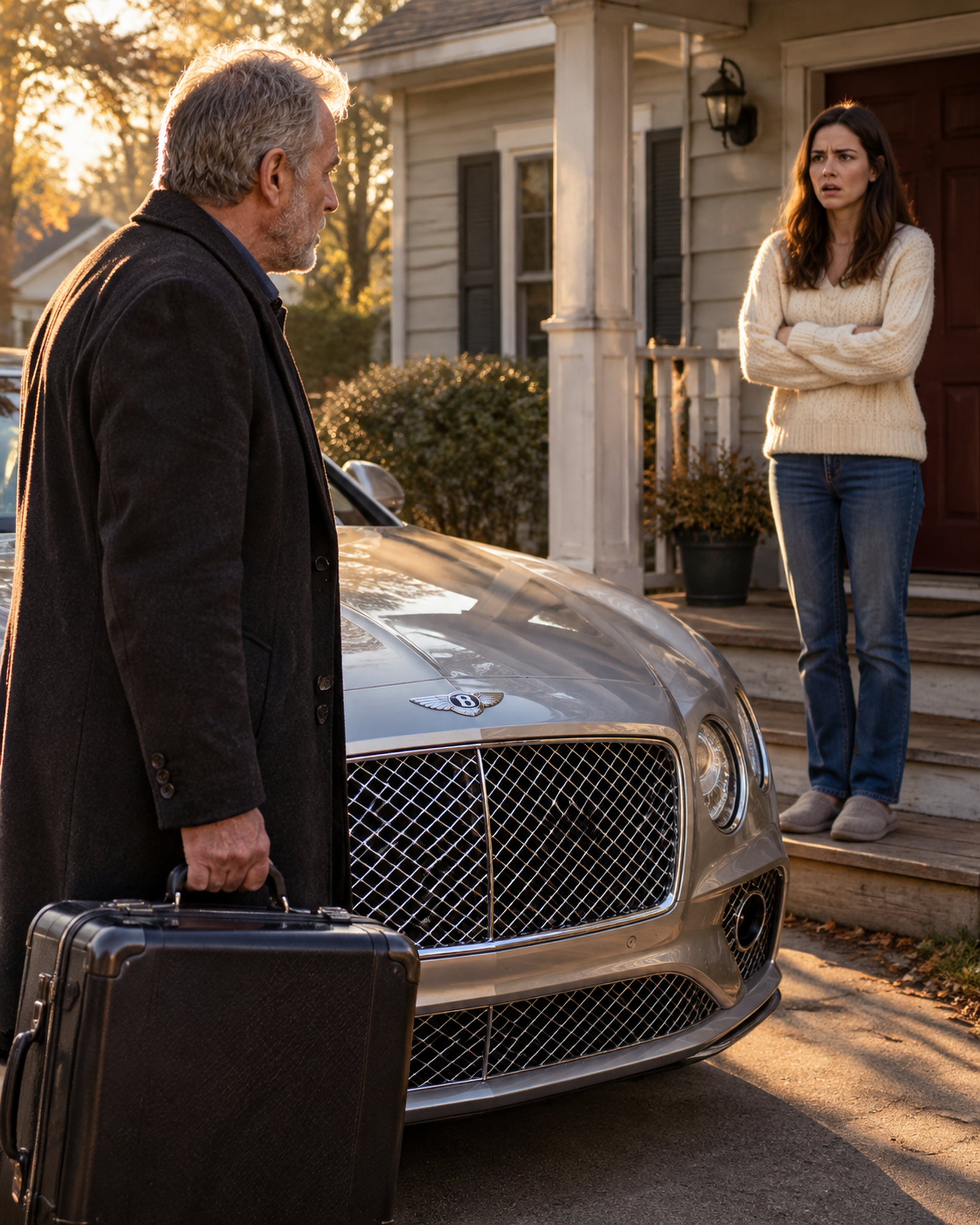
My daughter-in-law told me to leave my own home just minutes after my wife’s funeral, convinced i had nothing to my name—but when a silver…
The Home She Never Knew I Had My daughter-in-law told me to leave my own home just minutes after my...

The Billionaire Left the Same $10 Tip Every Morning… Until She Finally Asked Why…
THE BILLIONAIRE LEFT THE SAME $10 TIP EVERY MORNING… UNTIL SHE FINALLY ASKED WHY The first time I returned Ethan...

My son seated me beside the kitchen door at his wedding—even though I had paid the $80,000 deposit for the entire celebration…
The Seat Beside the Kitchen Door—And the $80,000 Wedding Decision My Son Never Expected My son seated me beside the...